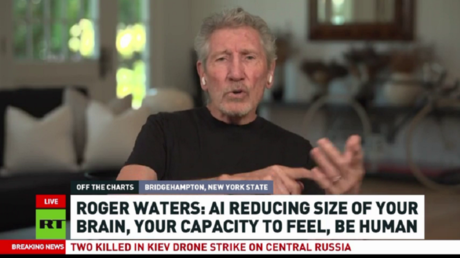
War has always been a racket. It is an industry built on the quiet arrangement between political power and corporate greed. When Roger Waters stands on a stage or speaks out against how modern systems strip away our shared empathy, he touches a raw nerve. People don't want to admit that the machinery running our world relies entirely on our collective detachment. Technology and artificial intelligence have accelerated this detachment. We watch global conflicts play out like video games on our screens, stripped of blood, soil, and human consequence.
It is easy to dismiss rock stars when they talk politics. You might think they should stick to music. But ignoring the message because you dislike the messenger is a lazy trap. The intersection of automated warfare, corporate profit margins, and the erosion of basic human dignity demands our attention. If you look closely at how modern defense contractors operate alongside software developers, a clear pattern emerges. Suffering has been digitized, and someone is cashing the checks.
The Business Model of Modern Conflict
Defense budgets hit record highs across the globe. Stock prices for major military contractors soar every time tensions rise in Eastern Europe, the Middle East, or the South China Sea. This isn't an accident. It is a predictable financial cycle where public tax dollars funnel directly into private portfolios.
When you hear about advanced military hardware utilizing machine learning for target acquisition, remember who pays for the research and who reaps the dividends. Governments buy the gear, citizens foot the bill, and shareholders collect the profits. The system is designed to sustain itself through perpetual crisis. Peace ruins the quarterly earnings report of a weapons manufacturer.
We need to look past the patriotic slogans and check the balance sheets. The people orchestrating these policies rarely send their own children to the front lines. They sit in boardrooms while algorithms calculate acceptable civilian casualties.
How Algorithms Distance Us From Reality
Technology changes how we process violence. Screens sanitize everything. When a drone strike is executed via a joystick miles away from the impact zone, war becomes an abstract concept.
Artificial intelligence accelerates this distance. Automated systems filter data, spot targets, and recommend strikes with minimal human intervention. This shift makes violence efficient, clean, and terrifyingly casual. We stop seeing the faces of the people on the receiving end.
Data points replace human beings. Refugees become migration metrics. Destroyed hospitals become infrastructure damage reports. This linguistic laundering numbs our collective conscience. When empathy is replaced by computational efficiency, atrocities become easier to justify and harder to notice.
The Erosion of Common Humanity
Empathy requires friction. It requires looking someone in the eye and listening to their story. Digital ecosystems are engineered to eliminate friction, but they also eliminate genuine human connection.
Algorithms feed you outrage because outrage keeps you clicking. They polarize societies so effectively that imagining the humanity of an ideological opponent feels impossible. This is where the warning from cultural critics like Waters carries weight. If a population can be convinced that their neighbors, or people halfway across the world, are subhuman threats, they will happily support policies that harm them.
The digital space reduces complex moral questions to binary choices. You are either with us or against us. Nuance dies in the comment section. Without nuance, compassion cannot survive.
Who Actually Benefits From The Chaos?
Follow the money. It always leads back to a small group of corporate entities and financial institutions that hedge their bets on global instability.
Think about the supply chains powering modern conflicts. Energy giants, tech conglomerates, and private security contractors all find ways to monetize instability. They market their surveillance tools and weapon systems as necessary defenses against threats they often helped manufacture in the first place.
The public absorbs the cost through inflation, higher taxes, and a general degradation of civil liberties. Meanwhile, the executive suite enjoys record payouts. The social contract is broken. Governments no longer serve the wellbeing of their populations; they protect the operational continuity of the military-industrial-technological complex.
Reclaiming Our Focus
You cannot opt out of this system entirely, but you can stop buying the propaganda.
Start by questioning the narratives fed to you by mainstream media outlets that treat war like a sporting event. Pay attention to how language is used to sanitize violence. Look past the tech hype and ask who benefits when a new automated surveillance system or weapon platform gets deployed.
Protect your capacity for empathy. Refuse to let algorithms dictate who you should hate. Real change starts when ordinary people reject the false divisions pushed by elites who profit from our division. Stay critical. Stay grounded. Keep your humanity intact.


