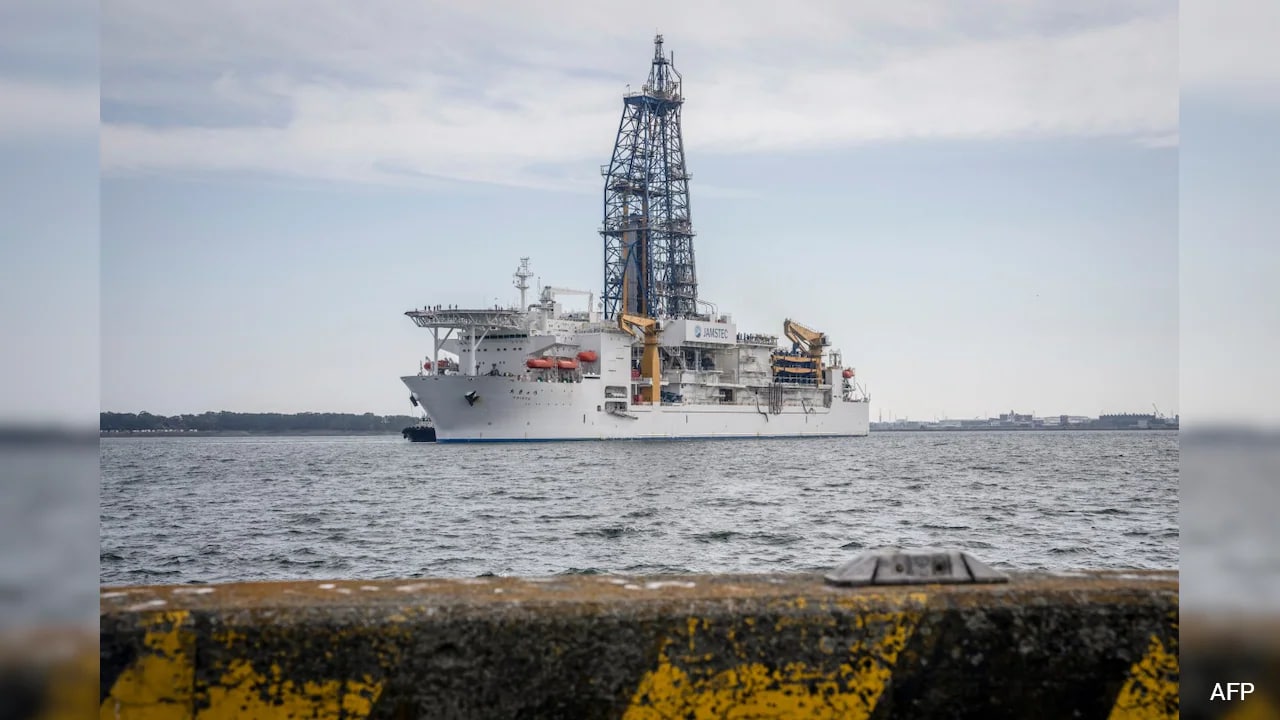
The United States government is moving aggressively to industrialize the abyssal plain, and Pacific island communities are treating the initiative as an existential threat.
Washington is fast-tracking commercial mineral extraction across vast swaths of the Pacific Ocean, bypassing international regulatory frameworks and local governance structures to secure critical metals like cobalt, nickel, and copper. For the administration, this is framed as a strategic imperative to secure supply chains for defense systems and advanced technology. For the indigenous populations of American Samoa, Guam, and the Commonwealth of the Northern Mariana Islands, the push represents a modern iteration of resource extraction where external powers reap the financial rewards while local populations absorb permanent ecological damage.
The mechanics of this federal acceleration stem from executive actions aimed at bypassing traditional environmental scrutiny. Agencies such as the newly redesignated Marine Minerals Administration (MMA) and the Bureau of Ocean Energy Management (BOEM) have initiated lease-sale procedures for thousands of square kilometers of ocean floor near U.S. Pacific territories. These zones, sitting right on the doorstep of island communities, are targeted for exploratory dredging and commercial mining of polymetallic nodules and ferromanganese crusts.
The Anatomy of a Forced Industry
Insiders recognize that the urgency in Washington is driven by a deep anxiety over foreign dominance in critical mineral processing, particularly China's near-monopoly on rare earths. Yet, the chosen remedy bypasses conventional geopolitical competition on land and dives straight into the least-understood biosphere on Earth.
The technical blueprint for deep-sea mining involves lowering massive, multi-ton robotic harvesters onto the seafloor. These tracked vehicles crawl across sediment plains or scrape underwater mountains, vacuuming up mineral-rich nodules and pumping them via slurry pipes to surface vessels waiting above.
The immediate byproduct of this extraction is a mechanical catastrophe for benthic life. Plumes of sediment rich in heavy metals and toxic particles are churned up into the water column. Ocean currents can carry these artificial turbidity plumes hundreds of miles, choking mid-water filter feeders and disrupting pelagic food webs. Furthermore, the deafening acoustic signature of heavy machinery operating at high pressure interferes with cetacean communication and navigation, a danger flagged repeatedly by marine biologists who note that deep-sea ecosystems evolve under conditions of profound silence and stability.
Local Resistance and Institutional Blindness
Territorial leaders report a total absence of meaningful prior consultation.
Governors and regional lawmakers across the Northern Mariana Islands and Guam learned about proposed lease blocks spanning tens of thousands of square kilometers through federal press releases rather than diplomatic engagement. In response, regional pushback has intensified. Guam enacted legislation restricting deep-sea mining vessels from utilizing local ports for refueling and resupply, aiming to create a logistical bottleneck for any corporate operator attempting to service offshore rigs.
The disconnect between federal ambitions and territorial realities exposes a structural flaw in how distant capitals view maritime zones. To Washington, Exclusive Economic Zones surrounding remote territories are treated as federal assets available for immediate development. To the people inhabiting these islands, the ocean is an interconnected provider of food security, cultural identity, and economic livelihood through sustainable fisheries.
Lawmakers representing these territories point out an additional structural insult under antiquated mining statutes. Corporations extracting minerals from federal waters near these islands are not legally mandated to share substantial revenue streams with the local territorial governments bearing the brunt of the environmental risk.
Financial Engineering Versus Ecological Reality
Proponents of the industry argue that the transition to green energy and advanced defense manufacturing requires quantities of metal that terrestrial mines cannot sustainably supply without severe land-based human rights abuses. Startups and mining conglomerates maintain that technological safeguards can minimize environmental fallout.
Critics counter that the risk-to-reward ratio is entirely skewed. Financial models presented by mining firms often promise marginal royalty percentages or speculative community funds, figures that pale in comparison to the potential devastation of regional tuna fisheries and marine biodiversity.
The international community remains fractured. While small island states like Nauru and the Cook Islands have embraced seabed mining exploration under varying regulatory frameworks, nations supporting a moratorium argue that rushing into extraction before baseline scientific studies are complete violates the precautionary principle. By going it alone and sidestepping the International Seabed Authority, the U.S. strategy risks establishing a precedent of lawless oceanic extraction.
As lease sales approach and regional opposition solidifies into legislative bans, the Pacific is becoming a primary theater for a high-stakes conflict over the definition of progress. The outcome will determine whether the international community treats the deep sea as a common heritage of humankind or a final frontier for unbridled corporate exploitation.


