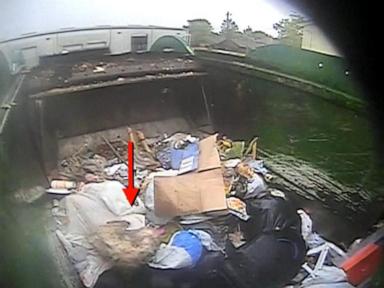
We love a good rescue story. A dog hauled out of a garbage truck, bruised, terrified, and clinging to survival, gets pulled up by a smiling sanitation worker. Weeks later, they live happily ever after in a suburban backyard. The internet melts down with collective joy. The headlines write themselves.
Strip away the warm fuzzies, and you are left with a masterclass in emotional manipulation masking systemic failure. Expanding on this theme, you can find more in: Vows in the Digital Age Why American Nuns Are Taking to the Microphone.
Every viral rescue video serves as a brilliant band-aid slapped over a gaping arterial wound in our animal welfare infrastructure. We treat the miraculous survival of a single stray as a heartwarming triumph instead of what it actually is: an indictment of a broken municipal system that should never have allowed that animal to be compacted in the first place.
I have spent two decades auditing municipal waste management and urban animal control contracts. I have watched cities blow millions on reactive emergency rescue PR campaigns while starving preventative spay-neuter programs of basic funding. We cheer for the driver who plays hero, yet we ignore the glaring operational negligence that put the dog inside the hydraulic metal maw of a waste disposal vehicle to begin with. Analysts at Apartment Therapy have shared their thoughts on this matter.
The Feel-Good Trap
The human brain loves a simple narrative arc. Victim meets danger. Savior intervenes. Redemption achieved.
Media algorithms feed on this sequence because outrage and uplift drive engagement metrics through the roof. When a local news station broadcasts a segment about a garbage-truck pup landing a luxury forever home, viewers feel a rush of dopamine. They donate twenty bucks to the local shelter, share the post, and pat themselves on the back for supporting animal welfare.
Nothing changes structurally.
The shelter down the street remains at three hundred percent capacity. Euthanasia numbers tick upward quietly behind closed doors. Municipal budgets for stray containment stay flatlined.
By hyper-focusing on the statistical anomaly—the dog that miraculously survived a crushing mechanism—we create a dangerous cognitive bias. We begin to view animal rescue as a lottery where a lucky few win the jackpot, while the thousands languishing in concrete-floored holding facilities are rendered invisible.
The Economics of Stray Populations
Let us look at the actual math.
Stray animal populations do not swell because of evil citizens tossing pets into dumpsters. They swell because of municipal underinvestment in regional population control. A single unspayed female cat and her offspring can theoretically produce thousands of descendants over a few years. Dogs follow a similar, albeit slower, exponential curve.
When a city cuts funding for free mobile veterinary clinics in low-income neighborhoods, the stray population explodes. When animal control response times stretch to seventy-two hours, frightened dogs wander into industrial zones, slip into commercial dumpsters seeking warmth, and end up in the back of waste haulers.
The garbage truck rescue is not a heartwarming miracle. It is a downstream symptom of upstream policy failures.
Yet, charities lean into these stories because they convert. A heartbreaking photo of a grease-stained terrier generates ten times the donation revenue of a dry, data-driven report on municipal zoning laws regarding stray containment. The industry monetizes our collective empathy, trading long-term structural solutions for short-term emotional spikes.
The Driver as Accidental Savior
Let us talk about the worker.
Sanitation crews perform brutal, essential labor. They deal with biohazards, heavy lifting, and erratic traffic at dawn. Thrusting a driver into the spotlight as an animal rights champion turns a systemic municipal failure into a feel-good human interest segment designed to distract viewers from city budget meetings.
Imagine a scenario where the sanitation department prioritizes automated optical sorting or mandatory pre-compaction checks at commercial transfer stations. Imagine waste management companies investing in infrared sensors inside hopper blades to prevent live cargo from entering the crushing phase.
Instead of demanding those technological upgrades, we celebrate when a driver happens to look into a hopper at the exact second a puppy's head pops up.
It is miraculous. It is also an appalling baseline for modern logistics.
If your safety protocol relies on a human being spotting a moving blur of fur inside a ton of wet cardboard and coffee grounds before pulling a lever, your operation is prehistoric.
The Forever Home Illusion
Then comes the adoption narrative. Driver adopts dog. End scene.
What happens six months later when the dog exhibits severe, debilitating panic responses triggered by the sound of heavy machinery or diesel engines? What happens when the underlying trauma of being compressed in a waste truck manifests as resource guarding or sudden aggression?
We rarely talk about the fallout of emergency adoptions. Animals pulled straight from high-stress trauma events require specialized behavioral rehabilitation. Placing them directly into the homes of well-meaning workers without mandatory behavioral assessments is a roll of the dice.
Sometimes it works out. Often, it results in secret surrenders, backyard chaining, or quiet rehoming through classified ads because the reality of managing a traumatized animal clashes with the fairy-tale expectations set by the original news broadcast.
Honesty requires us to admit that impulsive adoption fueled by viral fame often leads to secondary abandonment.
Dismantling the Rescue Complex
If we genuinely care about animal welfare, we need to stop rewarding the spectacle of rescue and start auditing the mechanics of prevention.
Stop funding organizations that rely solely on tear-jerking emergency campaigns without publishing transparent metrics on their spay-neuter outputs.
Demand that waste management companies operating in your municipality implement mandatory loading bay cameras and automated stop-mechanisms on all collection vehicles.
Hold city councils accountable for animal control funding instead of buying a raffle ticket from a shelter that posts viral videos to cover up its operational mismanagement.
The next time you see a heartwarming clip of an animal pulled from the jaws of a disaster, do not hit share. Ask why the disaster happened in the first place.
Until we stop celebrating the band-aids, the bleeding will never stop.


