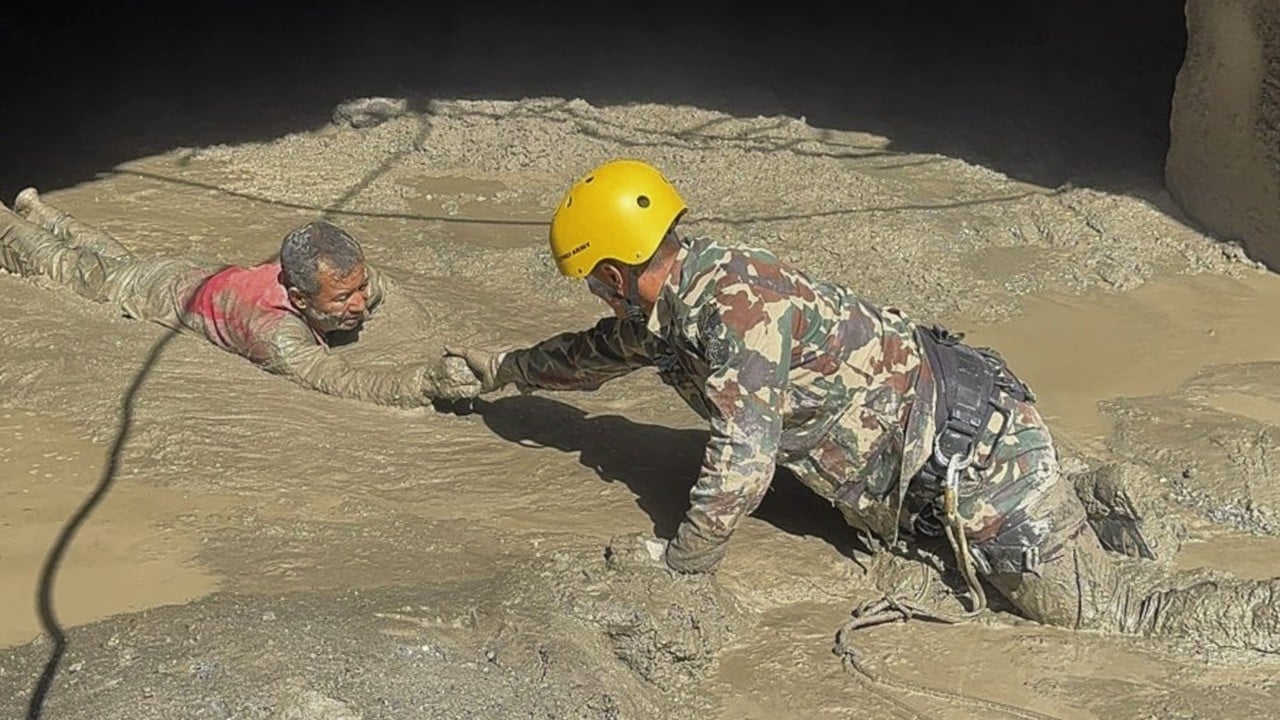
Hope arrived through a narrow drill hole this weekend. Nepali army rescue teams broke through the upper section of a mud-swamped hydropower tunnel, immediately feeding air pipes and small cameras into the darkness. More than one hundred workers might still be breathing beneath layers of thick debris.
The disaster started on a Wednesday morning when a massive wall of mud, rock, and water tore down from the Himalayan border region. Scientists point to a sudden glacial collapse as the trigger for the catastrophic flash floods that caught communities and infrastructure off guard. Along the Trishuli and Bhote Koshi river corridors, torrents of debris obliterated roads, bridges, and energy projects.
Hydropower sites became death traps. Hundreds of workers went missing instantly as debris plugged tunnel entrances with four to five feet of heavy sediment.
Inside the Tunnel Rescue Operation
Finding survivors trapped underground requires a brutal mix of heavy machinery, precision drilling, and sheer grit. At the Upper Trishuli-1 and surrounding hydropower sites, army personnel have worked around the clock to locate entry points completely disguised by landslides.
The math of underground survival is unforgiving. When air supplies dwindle, every minute counts. Rescuers managed to drill a small opening into a blocked chamber, shoving flexible air pipes through the gap to pump fresh oxygen to anyone still holding on.
Specialized teams from neighboring countries, including technical squads from India and China, arrived with heavy gear and advanced monitoring equipment. But technology only goes so far when you are dealing with up to five feet of thick, compacted mud inside a confined space. Soldiers and engineers have had to clear debris manually in tight corridors where heavy excavators cannot fit.
The Threat of Secondary Disasters
Rescue efforts face constant interruptions from nature. A massive barrier lake formed upstream after landslide debris choked off a river channel, trapping millions of cubic meters of water.
Authorities had to temporarily halt operations and evacuate ground teams when that natural dam began overflowing. While state reports indicate the lake has largely drained itself safely through natural channels, the margin for error in the Himalayas remains razor-thin. High temperatures continue to drive rapid glacial melt, keeping disaster management authorities on high alert for fresh surges.
Military helicopters have evacuated over three thousand people from cut-off zones, hauling survivors to safety while ground crews push deeper into the wreckage. Foreign aid, including financial packages from regional partners and emergency supply flights, continues to land in Kathmandu to support the overwhelmed local infrastructure.
The priority right now remains simple. Every drill bit that punches through the mud represents a lifeline for the workers still waiting in the dark. As extraction teams push past the blockages, the focus shifts entirely to clearing paths wide enough to pull survivors back into the light.