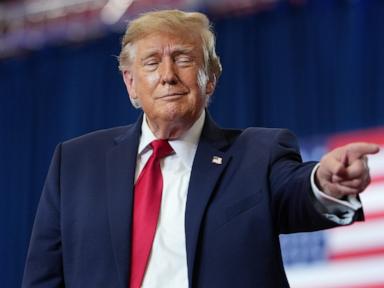
History rarely cuts the party in power much slack during a midterm election. For Republicans in 2026, that historical gravity isn't just a background threat—it's a direct consequence of Donald Trump's governing style, his policy gambles, and the rigid loyalty tests he's enforced across the GOP.
When a president centralizes an entire political movement around his own brand, he owns everything that happens on his watch. Every grocery bill. Every tariff hike. Every chaotic news cycle out of Washington. Right now, the political bill for the first two years of Trump's second term is coming due, and vulnerable House and Senate Republicans are the ones stuck holding the tab. For an alternative view, read: this related article.
The Historical Trap Trump Walked Straight Into
If you've watched American politics over the last few decades, you know the midterm curse is brutal. Since World War II, the president's party has lost House seats in almost every midterm cycle, with the lone exceptions of 1998 and 2002. Even in 2018, during Trump's first term—when the economy was humming along with low unemployment and steady growth—Republicans still got hammered, losing 41 House seats and surrendering the Speaker's gavel to Nancy Pelosi.
That's the baseline reality. Yet instead of governing in a way that cushions swing-district lawmakers from that inevitable backlash, the White House has spent the last two years feeding the base red meat while alienating the exact suburban independents who decide control of Congress. Similar coverage on this trend has been provided by USA Today.
Here's the problem with governing strictly through executive bravado. It plays great at rallies in deep-red districts, but it leaves a Republican running in a purple district in Pennsylvania, Michigan, or California completely exposed. You can't run away from a president who dominates every waking second of the national conversation. Voters don't view the local GOP congressman as an independent check anymore. They view them as a rubber stamp.
How Economic Promises Turned Into Political Liabilities
Voters sent Trump back to the White House in 2024 largely because they were frustrated with the cost of living and believed he could bring prices down fast. That was the core pitch. Lower inflation, cheaper gas, and an immediate economic boom.
Two years later, reality looks a whole lot messier.
Broad tariffs—long Trump's favorite economic weapon—don't work like magic wands. Economists across the spectrum, from the nonpartisan Tax Foundation to Wall Street analysts at Goldman Sachs, repeatedly warned that aggressive import taxes act as a direct tax on American consumers and businesses. When you slap steep tariffs on foreign goods, supply chains snarl, retaliatory tariffs slam American farmers, and retail prices creep back up.
Try explaining the theoretical long-term benefits of protectionism to a family paying more for building materials, electronics, or everyday household items. It doesn't fly.
Republicans spent years hammering Democrats over inflation. Now, voters are looking at their bank accounts and asking why the promised overnight fix hasn't materialized. When you campaign on being the ultimate dealmaker who will fix the economy on day one, anything short of perfection feels like a broken promise. Swing voters have zero patience for excuses when they feel squeezed at the checkout counter.
The Primary Trap That Weakened the GOP Roster
You can't talk about a Republican midterm reckoning without talking about candidate quality. We saw this movie in 2022, when the GOP fumbled what should have been a massive red wave by nominating flawed, hyper-partisan candidates in key Senate races across Georgia, Pennsylvania, and Arizona.
Did the party learn its lesson? Not really.
Trump's iron grip on the Republican primary electorate means that aspiring candidates still have to pass a strict ideological purity test just to get out of the gate. To win a GOP primary today, you often have to embrace positions that are toxic in a general election. You have to defend every controversial tweet, every pardon, and every contentious executive action without flinching.
Once November rolls around, those primary soundbites become million-dollar attack ads funded by Democratic super PACs.
I've watched countless campaigns try to execute the "general election pivot," where a candidate suddenly softens their tone and pretends to be a pragmatic moderate after spending six months acting like a firebrand. It almost never works anymore. Everything is recorded, clipped, and served directly to swing voters on their phones before they even finish their morning coffee. By forcing GOP candidates to run exclusively for an audience of one at Mar-a-Lago, Trump has repeatedly saddled his party with nominees who struggle to appeal to anyone outside the hardcore MAGA faithful.
The Suburban Voter Problem Hasn't Gone Away
Look at the electoral map. Control of the House of Representatives comes down to a few dozen genuinely competitive districts, and almost all of them run through America's suburbs.
These are districts filled with college-educated voters, suburban parents, and ticket-splitters who care deeply about stability, predictability, and institutional norms. They might like conservative tax policies or worry about border security, which is why some of them gave Republicans a chance in 2024.
But their patience is razor-thin.
When the White House picks endless fights with the courts, threatens massive cuts to popular federal programs, or injects chaos into basic governance, suburban voters recoil. They don't want constant drama. They want competence. And when they look at the Republican Party right now, they don't see a sober governing coalition—they see an apparatus entirely dedicated to serving one man's grievances.
Where the GOP Is Most Vulnerable
The structural map in 2026 puts Republicans on defense in places they simply cannot afford to lose:
- The New York and California House seats that delivered the GOP its narrow majority in the first place. These districts voted for Joe Biden in 2020 and remain deeply skeptical of Trump's brand of politics.
- Rust Belt battlegrounds in Michigan, Wisconsin, and Pennsylvania, where union households and independent voters are closely scrutinizing whether Trump's trade and manufacturing policies actually delivered local jobs.
- Sun Belt growth corridors in Arizona, Nevada, and North Carolina, where shifting demographics and rapid suburban expansion have turned once-reliable red turf into permanent toss-ups.
If Democrats only need to flip a handful of seats to take back the House, Republicans have almost zero margin for error. A two- or three-point national swing against the president is all it takes to wipe out a razor-thin majority.
The Turnout Paradox Without Trump on the Ballot
Here is a dirty little secret that keeps Republican strategists awake at night. Trump is a generational turnout machine—but only when his own name is actually at the top of the ticket.
In 2016, 2020, and 2024, Trump managed to bring millions of low-propensity, working-class voters to the polls who rarely participate in politics otherwise. These voters don't care about the Republican National Committee. They don't care about traditional conservative orthodoxy. They care about Donald Trump.
When Trump isn't on the ballot, a huge chunk of that coalition simply stays home.
Meanwhile, the demographic coalition that now powers the Democratic Party—college-educated suburbanites and older, highly engaged voters—shows up religiously in every single election, whether it's a presidential race, a midterm, or a local school board contest. That creates a massive structural turnout gap in off-year elections. Republicans have spent years trying to figure out how to transfer Trump's personal electoral magic to down-ballot candidates, and they still haven't cracked the code.
Why Republican Lawmakers Have No Escape Hatch
In past presidencies, vulnerable lawmakers had a clear playbook when a president's approval rating dipped. They distanced themselves. They voted against the White House on high-profile bills, held town halls emphasizing their independence, and built a personal brand separate from Washington.
That playbook is dead in today's GOP.
Any Republican who publicly breaks with Trump risks an immediate, vicious backlash. Within hours, they face primary threats, attacks from conservative media ecosystems, and abandonment by party donors. The fear of a primary challenge keeps almost every elected Republican locked in formation, even when they privately know the administration's policies are hurting them back home.
So they stay quiet. They defend the indefensible. They hope the political weather magically improves before Election Day.
It's a classic collective action problem. Every individual Republican feels safer staying loyal to Trump in the short term, even though that collective obedience drags the entire party down in November.
What Actually Happens If the Reckoning Hits
If voters hand Democrats control of the House—or make major gains in the Senate—the final two years of Trump's presidency change overnight.
Forget major legislative wins. Forget sweeping tax overhauls or conservative policy breakthroughs. A Democratic House means immediate subpoena power, relentless oversight hearings, investigations into administration officials, and constant legislative gridlock. The White House will spend the rest of its term playing defense, governing almost exclusively through executive orders that will immediately get tied up in federal court.
And inside the Republican Party, the blame game will start before the final ballots are even counted. Establishment Republicans will point fingers at Trump's interference and reckless rhetoric. Populist loyalists will accuse vulnerable lawmakers of not hugging Trump tightly enough.
If you want to track whether Republicans can actually dodge this midterm bullet, stop listening to partisan spin and watch three concrete indicators over the coming months:
- Generic ballot polling in D+2 to R+2 districts. If Democrats hold a consistent lead of four points or more on the generic congressional ballot, narrow GOP majorities rarely survive.
- Consumer sentiment and core inflation data. Watch whether everyday prices stabilize or if tariff-driven cost increases keep household budgets tight heading into the fall.
- Suburban fundraising numbers. When Democratic challengers in swing districts start consistently outraising GOP incumbents quarter after quarter, it's a blaring siren that independent donors and grassroots voters are mobilized for a wave.
Political gravity always wins in the end. You can bend the rules of politics for a while with sheer force of personality, media dominance, and partisan loyalty, but you can't suspend them forever. Donald Trump built a party entirely in his own image, and when voters head to the polls, they're going to render a verdict on the exact product he sold them.