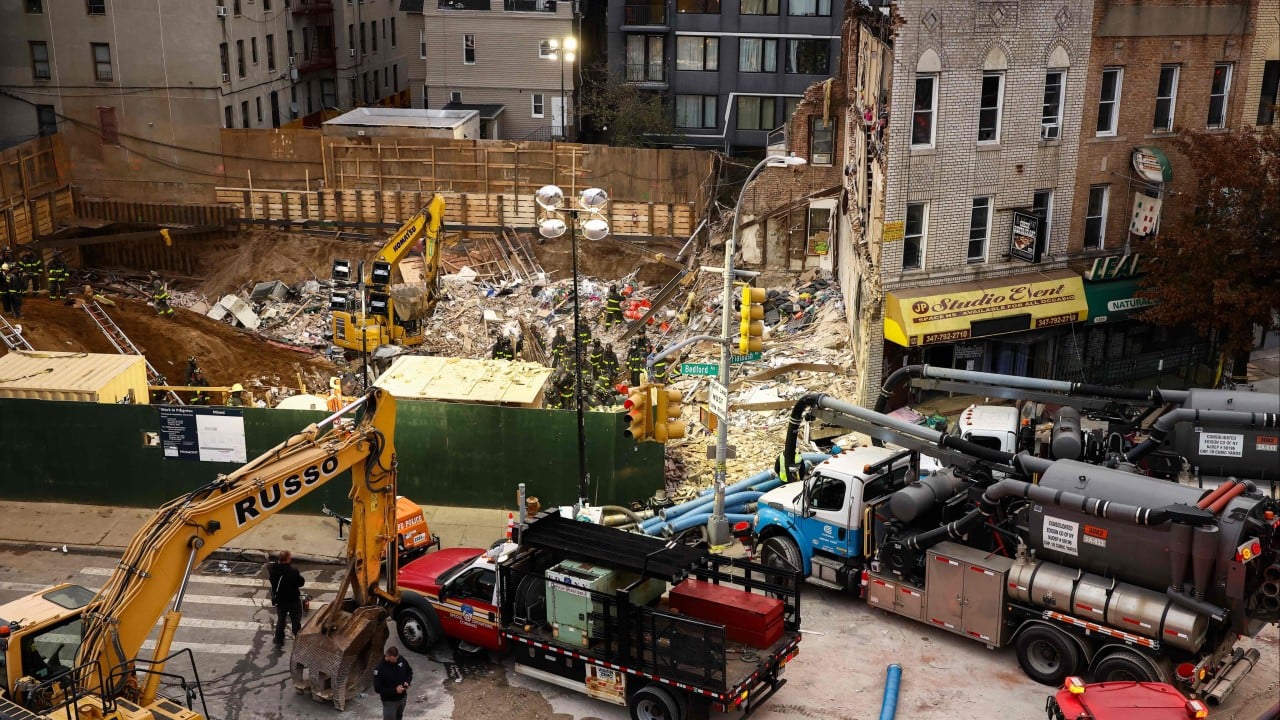
Dust.
That is the first thing anyone who has ever stood three blocks downwind of a collapsed building remembers—not the sirens, not the shouting, not even the hollow thud that vibrates straight through the soles of your shoes, but the fine, chalky grit of pulverized plaster and old brick settling onto coffee cups, car hoods, and unblinking eyes. Recently making headlines in this space: What Most People Get Wrong About Israel Katz Saying Strikes Need No Opposition Approval.
When a New York building collapse pushes the death toll to eight and rescuers are still combing through jagged heaps of concrete and timber for survivors, a wire headline reduces hours of terror and heroism to a single climbing integer. Eight. A number easy to skim between meetings. Yet behind that digit are families waiting by phones that will not ring with good news, first responders listening through concrete fissures for a single tap or breath, and a city forced to confront a quiet truth we prefer to leave buried behind drywall: buildings grow old, and gravity never forgets a weakness.
To be clear, the competitor headline gives us the bare skeleton of an ongoing tragedy—eight confirmed dead in a New York building collapse while search-and-rescue crews continue working through the rubble—without naming the specific street, exact cause, or final count while operations remain active. Rather than inventing unverified street names or fictional casualty totals from that specific scene, this piece explores what happens in the hours after a structural failure strikes a dense city, why rescues slow down when unstable slabs threaten a second collapse, and how ordinary walls carry extraordinary stakes. More insights into this topic are covered by NPR.
The Sound Before the Silence
Listen closely to a hundred-year-old apartment block in Manhattan, Brooklyn, or Queens on an ordinary Tuesday morning. A radiator clanks as steam pushes through iron pipes. A delivery truck idles outside, sending a low hum through the pavement. Upstairs, someone drags a wooden chair across pine floorboards.
Buildings talk all the time. Most of us tune them out because their voice is usually harmless—the groan of timber expanding in summer humidity, the faint hairline crack spreading above a doorway frame after winter freeze-thaw cycles. Structural engineers think of a building's load path the way a doctor thinks of circulation: weight travels downward from roof to joists, from joists to walls or columns, and from walls down into the soil beneath the foundation. When every link holds, the structure feels permanent, almost immortal.
Note: The following neighbor and scene moments are a hypothetical composite built from documented urban collapse responses to show how ordinary mornings unravel.
Picture Maria, a hypothetical bakery prep cook living one block over with her brother, waking to the smell of yeast and burnt espresso before her alarm goes off. At first she thinks a subway train is running unusually close beneath the avenue. Then comes a dry, rushing roar—like a freight train barreling through a living room—followed by a dull, heavy crunch that makes the silverware rattle inside her cabinet. By the time she pulls on sneakers and reaches the corner, yellow caution tape is already fluttering in the breeze, and the air tastes of lime dust and wet ash.
That shift from familiar neighborhood noise to sudden, heavy quiet is what haunts bystanders long after the street reopens. A place where people made toast, argued over rent, checked their watches, and stepped out for air has turned overnight into a mountain of broken masonry.
Why Rescuers Move Like Watchmakers
From a distance, a rescue operation looks chaotic: dozens of helmets, flashing lights, heavy machinery staged down the block, and teams stepping carefully over twisted rebar. Up close, it looks less like a sprint and more like defusing a bomb in slow motion.
When a building collapses in New York, searchers face two enemies at once: time and instability. In the first hours, every minute matters for anyone trapped inside a void—a small pocket of open space created when beams angle against one another instead of pancaking flat. Rescuers call out, then hold absolute silence, waiting to hear a voice, a whistle, or a shoe tapping against a pipe.
Yet heavy excavators cannot simply roar in and rip debris away. A crooked concrete slab balanced on a snapped joist can shift with a single careless pull, burying both survivors and the firefighters trying to reach them. Crews often shore up sagging walls with timber or steel struts, cut away tangled cables with saws, and use listening devices and cameras pushed into narrow gaps before moving a single large piece of rubble.
"In a collapse, you don't fight the clock by rushing blindly. You fight it by staying alive long enough to reach the person on the other side of the wall."
That tension explains why news updates often arrive slowly and painfully. A confirmation that the death toll has reached eight does not mean the search has given up; it usually reflects how carefully crews must work through layered debris where every inch carries risk. Families waiting behind police barricades sometimes feel tortured by the pace, wondering why machines aren't moving faster. The answer is heartbreakingly simple: moving too fast can turn a rescue site into another trap.
What Hides Behind Brick and Plaster
How do buildings in a city famous for skyscrapers and historic brownstones fail in the first place? Rarely from a single dramatic villain alone. More often, structural failure is a slow story of small compromises stacking up over decades.
Consider a simple analogy. Imagine a woven canvas bag carrying groceries home from the corner store. A single frayed thread near the handle does not spill the apples. Even two or three worn spots might hold if you lift gently. The trouble starts when moisture rots the fibers, someone tosses an extra six-pack of soda inside, and nobody notices the seam pulling apart until the bottom drops out on the sidewalk.
In real buildings, those worn threads take familiar forms:
- Water intrusion and corrosion: Rain seeping through aging roof flashing or cracked masonry slowly rusts embedded steel or rots timber beam ends where they rest inside brick pockets. Rusted iron expands, pushing concrete and brick apart from the inside out.
- Unpermitted or poorly planned alterations: Knocking out a load-bearing partition to open up a room, adding heavy equipment or tile layers without checking floor capacity, or cutting chases through structural members can quietly reroute weight onto walls never meant to bear it.
- Aging mortar and foundation stress: Lime-based mortar in older structures erodes over time, especially when exposed to freeze-thaw cycles or ground settlement, weakening how bricks lock together under lateral and vertical loads.
- External impacts and adjacent work: Deep excavation next door, gas explosions, vehicle strikes, or shifting soil can destabilize an adjoining wall that looked fine from the street.
I have stood inside older walk-ups where a door refused to latch cleanly or a floor sloped noticeably toward a radiator, and watched residents shrug it off as "old-building charm." Sometimes it is harmless settling. Sometimes it is a quiet clue that something beneath the floorboards is working overtime. I don't pretend to have all the answers when an engineer walks through a damaged building—honestly, even seasoned inspectors sometimes have to peel back plaster and test materials before they know the full picture—and that uncertainty is part of what makes structural risk so unnerving. We live inside complex assemblies of stone, steel, and wood while trusting that someone else did the math right and kept up the maintenance.
The Invisible Ledger of Urban Density
New York's magic has always been proximity. Millions of people stack their lives on top of one another on narrow islands and peninsulas, sharing walls, utility lines, sidewalks, and subway platforms. That closeness gives the city its energy, its corner bodegas open past midnight, and its sense of shared pulse.
It also magnifies consequences. When a structure gives way in a dense neighborhood, the shockwave ripples outward immediately. Gas and electric utilities may shut off service to surrounding blocks as a precaution, leaving neighbors without heat or cooking stoves. Adjacent buildings get evacuated while engineers check whether shared party walls were yanked off balance. Small businesses on the ground floor lose days or weeks of income overnight.
History shows that major structural tragedies rarely change everything in a single day, yet they often sharpen how cities police safety afterward. Over the decades, codes and inspection rules in major cities have evolved in response to painful lessons—requiring periodic facade checks on tall buildings, stricter oversight of renovations, and closer scrutiny of aging masonry and structural framing. Still, rules on paper only protect people when inspections happen thoroughly, permits match reality, and owners fix problems before a warning sign becomes a headline.
Standing With Those Still Waiting
When the death toll rises to eight and rescuers are still searching for survivors, statistics can make us feel numb or helpless. We scroll, we sigh, and we wonder what we could possibly do from miles away—or even from a few blocks over.
Start by refusing to turn real people into background noise. Eight lives lost is eight distinct mornings that ended before they should have, eight sets of keys left on tables, eight absences that will echo through holidays and ordinary Tuesdays alike. If you live in an older building, pay attention to real warning signs—bulging or cracking masonry, persistent water leaks near beams, sagging floors, or unpermitted construction next door—and report hazards through official channels rather than ignoring them. If you want to help directly after a disaster, vetted local relief efforts and blood or community support drives matter far more than rushing toward active emergency zones where you could get in the way of responders.
At dusk, floodlights hum against the gray haze over the rubble, casting long shadows across wet asphalt while exhausted crews trade shifts and keep listening for a sound no one has heard yet. A wall falls in seconds, a city holds its breath for days, and the real measure of our streets is whether we care enough to protect the living before the brick comes down.


