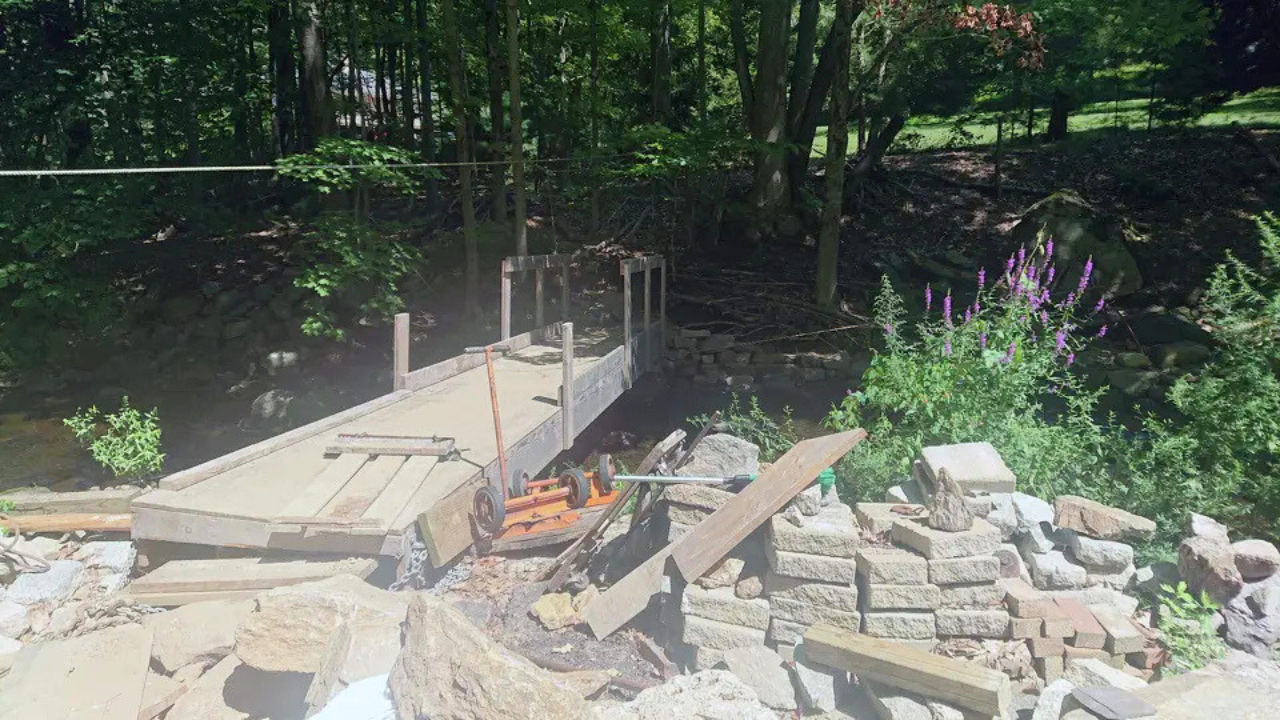
When an individual bypasses environmental permitting to construct a permanent stream crossing or stabilization structure, they are not merely modifying physical geography; they are triggering a complex sequence of regulatory enforcement, financial liability, and legal restitution. The incident involving a Connecticut homeowner who constructed an unauthorized bridge to mitigate local erosion—only to face a judicial mandate for complete brook restoration—illustrates the structural friction between private property maintenance impulses and public environmental jurisdiction. To understand why such remediation orders are absolute, one must deconstruct the statutory mechanisms governing inland wetlands, watercourses, and the economic rationale behind strict enforcement regimes.
The Jurisdictional Framework of Inland Watercourses
Private property ownership does not confer unencumbered sovereignty over hydrological systems. Surface water systems, regardless of whether they traverse private parcels, function as interconnected ecological infrastructure. In jurisdictions like Connecticut, statutory authority is vested in municipal inland wetlands and watercourses agencies, operating under state environmental protection frameworks. You might also find this connected coverage insightful: Behind Mark Carney’s European Pivot Lies a Desperate Search for Economic Shelter.
The regulatory boundary is defined by two primary operational concepts:
- Direct Impact Zones: Activities that involve physical alteration, excavation, filling, or obstruction within a regulated watercourse or wetland.
- Upland Review Areas: Buffers, typically extending fifty to one hundred feet from the wetland boundary, where activities can indirectly alter hydrology, sedimentation rates, and thermal profiles.
When a property owner introduces an unpermitted structure—such as an improperly sized culvert, a retaining wall, or a private bridge—they alter the cross-sectional area of the channel, disrupt natural bedload transport, and modify hydraulic roughness. These physical interventions create immediate externalities downstream, transferring erosion risks to neighboring parcels or public infrastructure. Consequently, statutory frameworks prohibit unpermitted alterations to preserve flood storage capacity and protect aquatic habitat integrity. As discussed in recent coverage by The New York Times, the effects are notable.
The Economic and Legal Mechanics of Restoration Orders
Judicial or administrative orders requiring the complete removal of an unauthorized structure and the physical restoration of a brook are driven by a specific legal and economic calculus. Regulatory bodies do not evaluate alterations solely on their functional utility to the property owner; they evaluate them against baseline environmental integrity and legal compliance costs.
The enforcement mechanism operates through three distinct phases:
- Cease and Desist Issuance: Immediate administrative halting of work upon detection of an unpermitted activity. This prevents further compounding of environmental damage and locks in the baseline for remediation.
- Administrative Hearing and Fact-Finding: Evaluation of expert testimony from hydrologists, soil scientists, and engineers to quantify the structural and ecological deviation from natural conditions.
- Mandatory Remediation Decree: A legally binding order requiring the violator to return the site to its pre-alteration condition. This often includes removing artificial materials, re-establishing natural channel geometry, and implementing bioengineering stabilization that complies with statutory permits.
From a regulatory perspective, permitting retroactivity is rarely granted for major structural modifications because it creates a moral hazard. If unauthorized construction were routinely regularized via post-hoc permitting, property owners would bypass the administrative review process—which includes public notice, environmental impact analysis, and engineering scrutiny—in favor of unilateral action, seeking forgiveness rather than permission.
The Cost Function of Unauthorized Intervention
Attempting to solve an on-site erosion problem via unpermitted civil works introduces a disproportionate financial risk profile. The total cost function of unauthorized remediation ($C_{total}$) can be expressed through the accumulation of multiple distinct expense vectors:
$$C_{total} = C_{initial} + C_{fines} + C_{legal} + C_{restoration}$$
- Initial Capital Outlay ($C_{initial}$): The direct cost of materials, labor, and equipment used to construct the unauthorized structure.
- Statutory Fines and Penalties ($C_{fines}$): Daily or cumulative financial penalties levied by municipal or state agencies for operating without a permit, which escalate with the duration of the violation.
- Legal Defense Expenses ($C_{legal}$): Retaining legal counsel to contest enforcement orders or negotiate consent decrees. Given the strict liability nature of environmental statutes, these costs rarely result in a dismissal of the core violation.
- Restoration and Mitigation Costs ($C_{restoration}$): The expenditure required to demolish the unauthorized structure, haul away debris, restore the natural streambed substrate, and hire certified professionals to monitor ecological recovery over a multi-year compliance window.
When these variables are aggregated, the total cost of an unpermitted intervention invariably exceeds the projected cost of properly engineering the project through the legal permitting process from inception.
Operational Alternatives for Erosion Mitigation
Managing watercourse bank erosion requires adherence to hydro-geomorphic principles rather than ad-hoc structural additions. Unpermitted bridges or rigid concrete walls often exacerbate erosion by concentrating flow velocity against unarmored banks downstream of the obstruction.
Effective, compliant stabilization strategies rely on bioengineering and integrated watershed management:
- Live Fascines and Brush Mattresses: Utilizing dormant cuttings of root-sprouting species (such as willow or dogwood) bundled and staked along the bank to bind soil mechanically as root systems develop.
- Rootwads and Toe Wood: Installing anchored timber and root systems at the base of the bank to dissipate hydraulic energy while providing structural cover for aquatic organisms.
- Cross-Vanes and Rock Sills: Engineered in-stream structures designed by licensed hydraulic engineers to redirect high-velocity flows toward the center of the channel, relieving pressure from vulnerable streambanks without obstructing the natural floodway.
Strategic Allocation of Capital and Compliance
Property owners facing chronic erosion must navigate the regulatory landscape through formal administrative channels. Securing an inland wetlands permit requires comprehensive site-specific data, including professional engineering drawings, hydrological calculations demonstrating no net loss of flood storage, and a mitigation plan for construction-phase sedimentation.
The operational directive for property management in proximity to natural watercourses is structural compliance. Bypassing statutory oversight to achieve short-term physical stability inevitably invites long-term financial liabilities and judicial mandates that nullify the original capital investment, returning the landscape to its original state under court supervision.