Cold. That is the first thing you notice when you step into a high-containment biological facility in winter, even before you pass the heavy steel doors and the negative-pressure airlocks. Frost rims the vents outside. Inside, the air tastes slightly metallic, recycled through filters meant to trap organisms small enough to unmake a city.
People tend to think of the plague as a dusty chapter in a history book. Rats. Fleas. Medieval priests swinging censers through narrow cobblestone alleys while bells tolled in the fog. We like to put Yersinia pestis safely behind glass, separated from us by centuries of antibiotics and sanitation.
Except the bacterium never left. And in Russia, tucked behind guarded gates and bureaucratic silence, researchers spend their days studying some of the deadliest pathogens on earth—pathogens that carry a double weight: the genuine need to understand and counter natural or emerging threats, alongside a history of state secrecy that makes outsiders lean forward with unease.
When a mysterious outbreak, a sudden shift in official reporting, or a quiet rumor surfaces around a closed research town, the questions arrive fast. What is actually happening behind those walls? Are scientists racing to prevent a catastrophe, or are they guarding secrets that could turn dangerous if mishandled?
I have spent years reporting on biosecurity, public health emergencies, and how closed institutions talk—or refuse to talk—when something goes wrong. You learn quickly that the scariest part of a containment story is rarely a Hollywood explosion. It is a spreadsheet that stops updating. It is a local doctor who notices a strange fever a week before Moscow acknowledges a problem. It is the gap between what people on the ground experience and what gets released in a press statement.
To make sense of how high-containment plague research works in practice, let us construct a hypothetical scenario—not a claim about any single confirmed incident, but a composite sketch drawn from real-world biosafety protocols, historical patterns, and how outbreaks unfold in remote regions.
Picture a fictional researcher we will call Nadia, working at a regional anti-plague institute deep in the Eurasian interior. Her commute is short, maybe twenty minutes by bus past snow-dusted concrete apartment blocks. Half the town works at the institute or supplies it. Everyone knows someone who works there. That intimacy is comforting until a patient arrives at the local clinic with swollen, agonizingly tender lymph nodes—a classic hallmark of bubonic plague—or worse, a cough that turns bloody and spreads through the air as pneumonic plague.
Now Nadia has to make a choice that sits at the heart of every containment dilemma. Report immediately through channels that might trigger a political lockdown, or verify every single detail first so she is not accused of causing panic?
The Weight of History in a Quiet Town
You cannot understand Russian plague research without feeling the shadow of history pressing against the glass.
During the Soviet era, biological research expanded on a scale that still staggers historians. Alongside legitimate public health institutes—some of which had existed since the late nineteenth century to fight natural outbreaks of plague, cholera, and anthrax in borderlands and steppes—the state built an enormous offensive bioweapons apparatus known as Biopreparat. Scientists worked on weaponizing pathogens, modifying them to resist standard treatments or evade vaccines.
When the Soviet Union collapsed in 1991, that sprawling system did not vanish overnight. Salaries evaporated. Funding dried up. Facilities sat in remote towns with dwindling oversight while economic chaos gripped the country. International cooperation programs stepped in during the 1990s and early 2000s to help secure dangerous strains, upgrade biosafety laboratories, and redirect former weapons scientists toward peaceful biomedical work.
Yet over the past two decades, the pendulum swung back toward suspicion and opacity. Western intelligence agencies, independent researchers, and public health experts have repeatedly pointed to a lack of transparency around certain Russian biological facilities, military-linked research, and dual-use capabilities—work that can serve defensive protection or offensive ends depending on intent. Russian officials, for their part, regularly reject accusations of treaty violations, accuse Western nations of operating their own risky biological networks near Russian borders, and treat detailed disclosures about sensitive labs as matters of national security.
Here is the uncomfortable truth: both sides have reasons to distrust the narrative coming from the other, and ordinary citizens—both inside Russia and neighboring countries—are the ones living closest to the consequences if biosafety slips.
Think of a sealed laboratory like a pressure cooker. Let us use a metaphor: containment is not a solid wall; it is a constant negotiation between pressure, temperature, and human fallibility. A pressure cooker works brilliantly when the valve is clean, the seal is intact, and the cook pays attention. It becomes terrifying the moment someone ignores a hiss or forces the lid shut when something is boiling over.
Inside High Containment: Where Routine Meets Risk
What actually happens inside a high-containment plague lab on an ordinary Tuesday?
Less drama. More repetition.
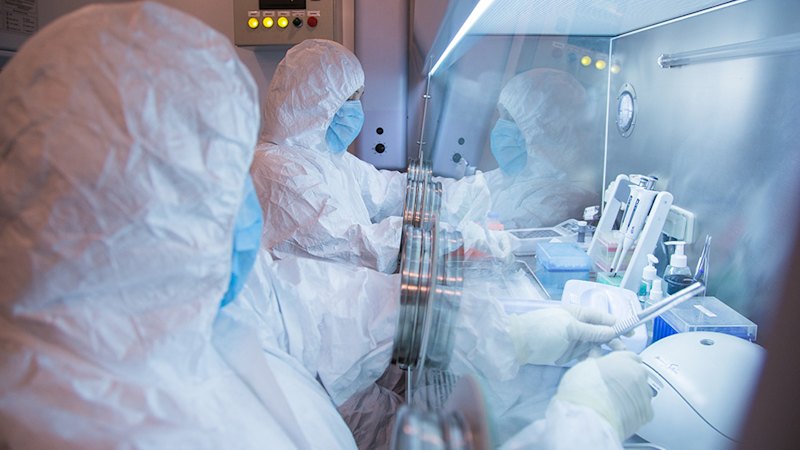
If you have never seen a Biosafety Level 3 or Level 4 environment, your mind probably jumps to hazmat suits and alarms blaring in red light. In reality, much of the work in plague labs happens in Biosafety Level 3 (BSL-3) spaces, where pathogens that can cause serious or potentially lethal disease via inhalation are handled inside certified biosafety cabinets.
A scientist like our hypothetical Nadia puts on protective gear, checks airflow gauges, and works slowly. Every movement inside a biosafety cabinet is deliberate. Fast movements create turbulence in the air curtain that protects the worker's face. Pipetting requires steady hands. Waste must be autoclaved or chemically inactivated before leaving the room.
Why keep live plague bacteria around at all if antibiotics like streptomycin, gentamicin, or doxycycline can cure most cases when caught early?
Because nature keeps adapting, and threats do not stand still. Researchers study how Yersinia pestis behaves in animal reservoirs like marmots, gerbils, and ground squirrels across vast stretches of Central Asia, the Caucasus, and southern Russia. They track genetic variations, test diagnostic assays so clinics can spot an infection in hours instead of days, and evaluate how strains respond to treatments—including strains engineered or selected for antibiotic resistance.
Wait. Read that last part again.
Studying resistance and virulence is essential for defense. If a dangerous pathogen develops resistance to frontline drugs, public health officials need to know before an outbreak spirals. At the same time, the exact same scientific knowledge required to understand how to make a bacterium hardier or more transmissible overlaps uncomfortably with dual-use concerns.
That overlap is why secrecy around plague labs makes people nervous. Secrecy is meant to protect state interests and prevent proliferation. Yet when an unusual illness appears nearby and official information is sparse or delayed, secrecy breeds speculation. Rumors fill the vacuum where facts should be.
Consider what happens next: a local rumor turns into a regional panic, or worse, a real case goes unrecognized for days because doctors were not alerted early enough.
The Human Element Behind Every Protocol
Let us step away from policy papers and geopolitics for a moment and look at the people inside the system.
Imagine a lab technician—let us call him Viktor—who has spent fifteen years calibrating equipment in a remote town. His pay is modest. His work is invisible. If he does everything right every single day for a decade, nothing happens. No headlines. No medals. Just another quiet year.
The paradox of biosafety is that perfection produces boredom, and boredom is dangerous when you are handling an agent that can kill a human being in days if pneumonic plague takes hold.
Pneumonic plague is brutal. Unlike bubonic plague, which typically spreads through flea bites and causes painful swollen lymph nodes called buboes, pneumonic plague infects the lungs and can pass directly from person to person through respiratory droplets. Without rapid antibiotic treatment, mortality is notoriously high, and symptoms can worsen with terrifying speed.
Now imagine Viktor's family living three miles away. His daughter goes to school. His elderly mother visits the local market. Viktor knows what Yersinia pestis can do. He knows the protocols down to the last checklist. He also knows how human beings behave when tired, under pressure, or trying to get home before a blizzard shuts down the road.
I am not saying Viktor is careless. Most biosafety professionals take their responsibilities seriously because they understand the stakes better than anyone. What I am saying is that institutions run on human beings, and human beings are subject to fatigue, institutional incentives, political pressure, and fear of blame.
When a system rewards quietness and punishes bad news, honest reporting becomes risky. Think about how often public health crises—anywhere in the world, not just in Russia—get worse during the first seventy-two hours because someone hesitated to sound the alarm.
Why Mystery Surrounds These Facilities
Why do stories about Russian plague labs so often carry the word "mystery" in their headlines?
Several forces converge at once.
First, geography and history. Many anti-plague institutes and closed research centers sit far from major international hubs, often in regions with a legacy of military-industrial secrecy. Independent journalists face steep legal and physical hurdles when investigating sensitive state institutions, and official disclosures tend to be tightly controlled.
Second, information warfare and geopolitical tension. In recent years, accusations and counter-accusations around biological research have become a regular feature of global information disputes. When narratives are weaponized by rival governments or amplified on social media without hard evidence, separating verified laboratory facts from rumor becomes exhausting work.
Third, the nature of the disease itself. Plague is rare enough in modern times to feel exotic and frightening, yet real enough that sporadic natural cases still pop up in endemic regions around the globe—including parts of Asia, Africa, and even the American Southwest. When a mysterious cluster of severe pneumonia or unexplained deaths occurs anywhere near a research site, people naturally connect the dots—sometimes accurately, sometimes jumping ahead of the evidence.
I will admit something candidly: even for people who study this field every day, uncertainty is maddening. You want a clean ledger. You want to know with one hundred percent certainty whether an event was a natural spillover from wildlife, a routine seasonal illness misread early on, or a biosafety lapse behind closed doors. Real life rarely hands you a clean ledger on day one.
Good analysis requires sitting with that uncertainty without inventing false certainty—and without dismissing real risks just because proof is hard to obtain.
What Real Security Actually Looks Like
If secrecy is part of the problem, what does genuine protection look like?
Not theatrical lockdowns. Not shouting matches across borders. Real biosecurity is unglamorous, verifiable, and rooted in transparency where it matters most for public health.
It looks like strong lab design and strict maintenance—reliable negative pressure, working alarms, rigorous training, and a culture where a near-miss or a minor breach can be reported without destroying a worker's career. When staff fear punishment for speaking up, small mistakes stay hidden until they grow into big ones.
It looks like rapid, honest communication with local healthcare workers and neighboring communities when unusual illnesses appear. Early detection is the single greatest shield against any infectious disease. A patient diagnosed early and started on effective antibiotics has a vastly better chance of survival, and contact tracing can stop onward spread before chains of transmission take root.
It also looks like international norms that treat biological safety as a shared human interest rather than just another geopolitical chessboard. Microbes do not check passports or wait for diplomatic summits. A pathogen that escapes containment or mutates in the wild does not care which side of a border you stand on.
Let us return to our hypothetical scenario for one final beat. Suppose Nadia, the fictional researcher at the start of our story, chooses clarity over cover-up. She flags an anomalous sample early, pushes for rapid diagnostic confirmation, and ensures local clinics know what signs to watch for. Nothing dramatic happens on television. A potential outbreak is quietly blunted before it ever reaches the headlines.
That is what success in biological safety actually looks like: the crisis that never became a crisis.
Outside the lab, the winter wind keeps blowing across the snow. Behind the steel doors, the air hums steadily through its filters, keeping the cold out and the danger in. Every day that passes without a single misstep is a triumph of quiet discipline—and a reminder of how thin the line can be between an ordinary afternoon and a public health emergency.