Five people collapsed inside a single Northern California house before 8:15 in the morning, and two of them never walked back out. If you only skimmed the initial breaking news wire about the suspected mass drug overdose at a California home, you probably read four choppy paragraphs and moved on. That brief wire story left out almost every detail that actually matters to people living in Butte County—or anyone trying to understand why small towns keep getting hit by multi-casualty poisoning events.
Let's look at what police actually found on November 21, 2026, why first responders struggled even with Narcan on hand, and the bigger public health reality turning rural Northern California into an epicenter for contaminated street drugs.
Inside the November 21 Oroville Emergency Call
Around 8:10 a.m. on Saturday, November 21, 2026, emergency dispatchers received urgent reports of multiple people overdosing inside a residence on the 100 block of Hammon Park Drive (listed in some initial dispatches as Hammond Park Drive) in Oroville, California. Oroville sits roughly 70 miles north of Sacramento in Butte County, a community of around 20,000 residents that knows the opioid crisis far too intimately.
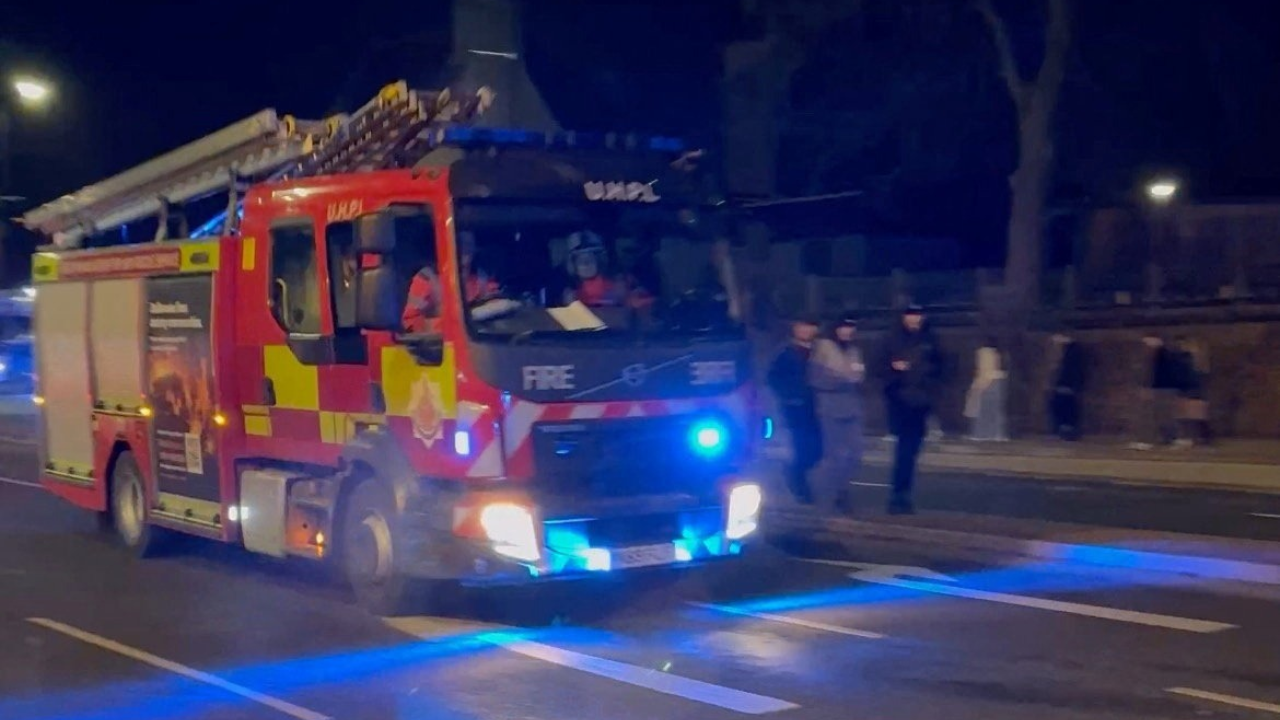
When Oroville Police Department officers breached the scene, they didn't find a single person in distress. They walked into a chaotic multi-victim medical emergency. One person was already deceased. Four others were actively showing acute signs of severe drug toxicity, several of them completely unresponsive.
Officers immediately started CPR and deployed nasal Narcan while waiting for paramedics to arrive. Despite rapid intervention, a second victim died right there inside the home. Emergency medical crews rushed the three remaining survivors to nearby hospitals. Two went in critical condition—later confirmed by police to be a 22-year-old man and a 23-year-old woman suffering from severe internal organ complications tied to the substance use—while the fifth victim was stabilized.
There was another heartbreaking detail buried in later police updates that early wire reports missed entirely. While clearing and searching the residence, investigators discovered two children inside the home. Both children were physically unharmed and immediately placed into temporary protective custody with Butte County Children's Services.
Why the Victim Identities and Timeline Matter
Early news alerts kept everything anonymous, calling it a mystery at an unnamed California house. Over the following days, local reporting and Oroville police updates brought human faces into focus—though reporting discrepancies early on created some confusion.
Initial broadcast summaries briefly mentioned two men in their early twenties, while subsequent updates citing the San Francisco Chronicle and Oroville Police Department identified the two deceased Oroville residents as 32-year-old Jamaine Nash and 23-year-old Kyrell Wynn, a local artist who recorded music under the name Cartier Ky. Meanwhile, the two survivors fighting for their lives in critical care were identified by age and gender as a 22-year-old man and a 23-year-old woman.
Notice the ages. Almost everyone caught in this event was in their twenties or early thirties.
When five adults ingest something together at a house gathering and all five drop simultaneously, you aren't looking at isolated individual misuse. You're looking at a shared batch—a single bag, pressed pill supply, or shared surface contaminated with a lethal dose of synthetic opioids or adulterants.
Why Narcan Didn't Save Everyone on Scene
Here's something most people misunderstand about naloxone, commonly known by the brand name Narcan. Public health campaigns rightly call it a miracle drug because it knocks opioids off brain receptors within minutes and restores breathing.
It isn't magic.
First, timing dictates everything in hypoxia. Once an opioid shuts down a person's respiratory drive, brain damage begins within four to six minutes, and cardiac arrest follows quickly after. If a victim has already been down for twenty minutes before someone wakes up at 8:00 a.m. and dials 911, no amount of nasal spray can restart a heart that stopped long before sirens arrived.
Second, modern street batches rarely contain just one pure substance. Toxicology investigators in Northern California routinely encounter illicit fentanyl mixed with potent synthetic analogs, veterinary sedatives like xylazine, or high-dose stimulants like methamphetamine.
- Fentanyl analogs bind so tightly to mu-opioid receptors that standard single-dose naloxone sprays often fail to reverse respiratory depression, requiring multiple stacked doses or intravenous administration.
- Non-opioid sedatives such as xylazine or benzodiazepine analogs cause deep central nervous system depression that Narcan cannot reverse at all, because those chemicals don't target opioid receptors.
- Organ failure cascades happen fast when extreme respiratory arrest combines with stimulant toxicity or severe hypoxia, explaining why the two hospitalized survivors in Oroville suffered acute internal organ complications rather than simply waking up fine after an emergency room visit.
Oroville police have not yet released final toxicology results, because forensic lab panels take weeks to confirm exact chemical compounds. Until those lab reports come back, investigators are treating the residence as an active criminal and public health investigation, asking anyone with information about where the drugs originated to call Oroville Police at 530-538-2444.
Butte County's Quiet Overdose Crisis Nobody Outside NorCal Watches
If you live in San Francisco or Los Angeles, national media cameras show up every time a bad batch hits a downtown block. Rural counties north of Sacramento rarely get that sustained spotlight, even when their per-capita numbers are significantly worse.
According to Butte County Public Health, the county's age-adjusted drug overdose death rate sits at roughly twice the California statewide average. Data compiled by the Butte Glenn Opioid Safety Coalition and Enloe Health's regional opioid summit reports show that Butte County has repeatedly posted some of the highest opioid-related emergency department visit and hospitalization rates in California—at times running three times higher than the state average.
Why does a smaller county like Butte get hit so hard?
Geography and supply chains play a massive role. Highway 70 and Highway 99 run straight through the region, acting as major transit corridors connecting Sacramento and the Bay Area to rural Northern California communities. By the time illicit powders or counterfeit pills reach smaller towns like Oroville, they've often been cut multiple times by mid-level distributors using cheap blenders or pill presses. Hotspots—tiny pockets of pure synthetic opioid clumped unevenly inside a larger batch—become practically guaranteed. One line or pill has almost nothing in it; the next pill from the exact same bag carries five times a lethal dose.
Limited local emergency infrastructure compounds the risk. In dense urban centers, ambulances sit three minutes away from almost every block, and outreach teams hand out naloxone on street corners daily. In spread-out rural neighborhoods, longer response times and fewer 24-hour harm reduction drop-in centers mean friends or family members are the only real first responders on site during those first critical five minutes.
What You Should Actually Do If You Encounter a Suspected Overdose
Reading about tragedies like the Hammon Park Drive incident leaves most people feeling helpless, especially if you have loved ones struggling with substance use or attending parties where pills or powders might circulate. You aren't helpless, provided you know what actually works in the first three minutes—and what mistakes waste precious time.
- Call 911 immediately before doing anything else. California's Good Samaritan Law (Health and Safety Code Section 11376.5) provides limited legal protection from low-level possession charges for people who call 911 in good faith during a medical overdose emergency. Fear of arrest is the number one reason people delay calling until someone turns blue. Make the call first, put the phone on speaker, and unlock the front door so paramedics don't have to break it down.
- Administer Narcan right away, then prepare to give a second dose. Spray one full dose into one nostril while the person lies on their back. Don't prime or test the plunger first—you'll waste the single dose inside that device. If they don't start breathing within two to three minutes, spray a second device into the other nostril.
- Perform rescue breathing, not just chest compressions. In an opioid overdose, the heart usually keeps beating until lack of oxygen stops it. Tilt the head back, lift the chin, pinch the nose, and give one slow breath every five seconds until the chest rises. If there is no pulse, switch to full CPR.
- Never leave a revived person alone. Naloxone wears off in 30 to 90 minutes, while synthetic opioids like fentanyl can linger in the body for hours. Someone who wakes up talking can easily slip back into fatal respiratory arrest once the Narcan clears their receptors.
- Keep free naloxone and test strips in your home or car. Any California resident can obtain free naloxone through community distribution programs or pharmacies without a personal prescription under the statewide standing order. If you live in Butte County, local clinics, Enloe Health outreach programs, and the Butte County Department of Public Health maintain free distribution points—pick up a two-pack today and keep it somewhere everyone in your household knows how to find.