Mass shootings don't happen in Poland. Not like this.
If you've spent any time studying European crime statistics, you know Poland is statistically one of the safest countries on the continent. Gun ownership is strictly regulated, violent street crime is rare, and mass casualty events are practically unheard of. That's exactly why the news breaking out of Krakow has paralyzed the entire nation. Meanwhile, you can find other events here: The Quiet Phone Calls That Keep the Lights On in the Middle East.
Following an initial shooting incident in Krakow that left six people dead, police moved in on the gunman's residence. What they found behind closed doors turned a localized tragedy into a national nightmare. Investigators discovered three additional bodies inside the shooter's home, bringing the confirmed death toll to nine—excluding the perpetrator, if he is among the dead, or ten depending on how authorities classify the final count in their ongoing forensic sweep.
Honestly, the sheer scale of the violence has caught Polish law enforcement and everyday citizens completely off guard. When breaking news drops with a headline like "three more bodies found at gunman's home after six killed in Krakow," the internet immediately fills up with wild rumors, mistranslations, and baseless speculation. Let's cut through the noise and look at what is actually verified, how Polish gun laws failed or were bypassed here, and why this specific case hits a raw nerve across Central Europe. To explore the complete picture, check out the recent article by The Guardian.
The Timeline of the Krakow Tragedy
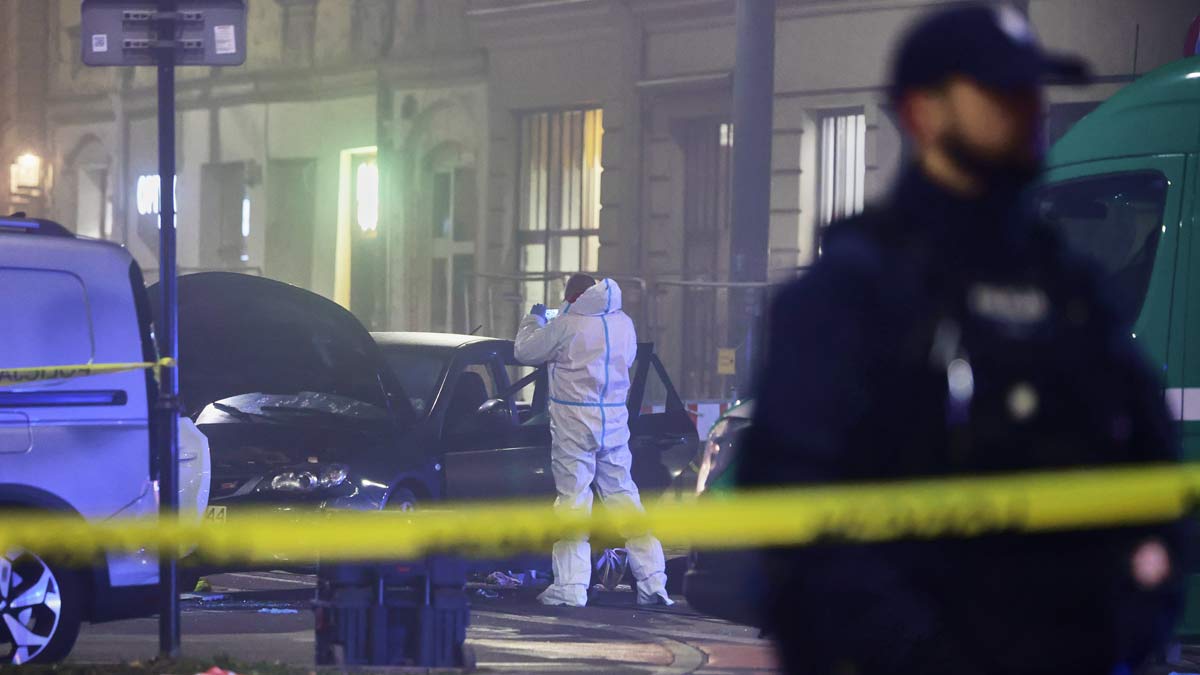
Early reports from local authorities painted a chaotic picture. Emergency services were initially called to a scene in Krakow where six victims had suffered fatal gunshot wounds. Police locked down the surrounding district almost immediately, deploying counter-terrorism units and forensic teams to secure the perimeter.
While securing the primary scene and identifying the suspect, investigators obtained an emergency warrant to breach the gunman's private residence. They expected to find ammunition, maybe a manifesto, or digital devices that could explain why someone would carry out a targeted attack in Poland's second-largest city.
Instead, they found three more bodies.
At this stage of an active Polish prosecutor's office (Prokuratura) investigation, officials keep details tightly under wraps. Under Polish criminal procedure, prosecutors rarely release the names of victims or specific causes of death until next-of-kin are formally notified and preliminary autopsies are completed. What we do know is that the three individuals found at the residence died prior to the police breach, pointing toward a domestic precursor event—a pattern criminologists recognize all too well in mass murder cases.
Why Mass Shootings Are So Rare in Poland
To understand the shockwave hitting Warsaw, Gdansk, and Krakow right now, you have to understand Poland's baseline reality.
According to data from the Small Arms Survey and Eurostat, Poland consistently ranks near the bottom of European nations for civilian gun ownership per capita. You can't just walk into a shop and buy a handgun because you feel like it. Getting a firearms license in Poland requires:
- Passing rigorous psychological and psychiatric evaluations
- Undergoing an extensive background check by the local police commander
- Proving a legally recognized "valid reason" (such as documented sport shooting, hunting, or verified personal protection against an imminent, proven threat)
- Submitting to mandatory safe-storage inspections at your home
Because of these hurdles, gun violence simply isn't part of the daily news cycle. When a shooting does make headlines, it usually involves an isolated domestic dispute with a legally registered hunting rifle or an illegal, Cold War-era weapon trafficked from the east.
An incident involving nine victims across two locations shatters that sense of security. People are asking one fundamental question right now. How did he get the gun?
Legal Permit vs. Black Market Weapons
Whenever a mass shooting happens in a strict gun-control country, public debate immediately splits into two camps. One side argues the vetting process failed; the other argues criminals ignore laws anyway. Both angles matter here, and investigators are looking closely at the origin of the firearm used in Krakow.
If the gunman held a valid Polish sporting or hunting license, the Ministry of the Interior and Administration will face intense pressure to overhaul psychological screening protocols. Mental health evaluations in Poland are typically valid for five years for certain permit holders, which leaves a massive window where a person's psychological state can deteriorate without triggering an administrative review.
On the other hand, Poland shares a long eastern border, and the ongoing conflict in neighboring Ukraine has raised persistent alarms among Europol analysts about weapons smuggling across Eastern Europe. While Polish border guards have intercepted numerous attempts to bring illicit firearms into the Schengen zone, black-market handguns and converted blank-firing pistols remain a known headache for organized crime units.
Until the Krakow Regional Prosecutor's Office releases ballistic findings and permit records, anyone claiming definitively whether the gun was legal or illegal is guessing. Don't fall for social media threads claiming otherwise.
The Domestic Precursor Pattern in Multi-Location Shootings
Finding three additional bodies at the shooter's home is grim, yet from a behavioral threat assessment standpoint, it isn't surprising.
Criminologists who study mass casualty events—including researchers at The Violence Project and European threat assessment networks—have documented a consistent link between domestic violence and public mass shootings. In a high percentage of cases where a perpetrator kills multiple people in a public or semi-public setting, the violence actually begins at home against family members, partners, or roommates.
The sequence usually follows a specific psychological collapse. A perpetrator experiences a severe personal crisis—financial ruin, divorce, eviction, or acute psychiatric break. They kill those closest to them first, either out of a twisted desire to "spare" them from shame or out of pure domestic rage. Once that line is crossed, the perpetrator feels they have nothing left to lose and moves to a secondary location to target acquaintances, coworkers, or strangers.
The discovery of three victims inside the Krakow residence fits this exact profile. It strongly suggests the attack wasn't a random act of ideological terrorism, nor was it a sudden, impulsive snap. It points to a localized, escalating crisis that started behind closed doors before spilling out onto the streets of Krakow.
How Polish Media and Authorities Handle Active Investigations
If you're following this story from the US, the UK, or elsewhere in Western Europe, you might notice that Polish news outlets like TVN24, Onet, and RMF FM seem unusually cautious compared to American cable news. There's a good reason for that.
Polish press law (Prawo prasowe) strictly prohibits publishing the full surnames or unblurred faces of suspects and victims without explicit prosecutorial consent. Even after a suspect is formally charged, media outlets refer to them only by their first name and the first letter of their surname (for example, "Jan K.").
Similarly, the police press office (Rzecznik Prasowy) avoids speculating on motive during the first 48 to 72 hours. Their priority is preserving the integrity of witness testimonies. If police publicly announce that the shooter used a specific caliber or targeted a specific group before interviewing every bystander, witness memories get contaminated.
So if you feel like information is trickling out slowly, that's not a cover-up. That's standard European judicial procedure working exactly as designed.
What Happens Next in the Krakow Investigation
Over the next several days, the investigation will move through three distinct phases that will finally give the public concrete answers:
- Autopsy and Toxicology Reports: Forensic pathologists in Krakow will determine the exact time of death for the three victims found at the house compared to the six victims at the primary scene. Toxicology screens on the gunman will also reveal whether alcohol, narcotics, or prescription medications played a role.
- Digital Forensics: Cybercrime units will extract data from the shooter's phone, computer, and router. They'll check search histories, recent banking transactions, and messaging apps to see if anyone knew what he was planning or if he tried to purchase ammunition illegally online.
- Permit and Medical Audits: If the shooter had any contact with psychiatric services or held a firearms license, prosecutors will seize those medical and administrative files to see if warning signs were missed.
How to Follow Breaking International Crime News Without Getting Misled
Major tragedies always trigger waves of misinformation online, especially when language barriers separate local reporting from international audiences. If you want accurate updates on the Krakow shooting as prosecutors release official statements, stick to primary Polish wire services like PAP (Polska Agencja Prasowa) or established broadcasters like RMF24, using browser translation tools rather than relying on unverified aggregator accounts on X or TikTok.
Pay close attention to official statements directly from the Regional Prosecutor's Office in Krakow (Prokuratura Okręgowa w Krakowie). Everything else right now is noise.