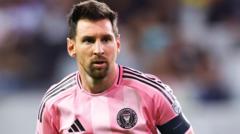
Lionel Messi has officially moved from the pitch to the boardroom in a way that signals the beginning of his post-playing empire. While the world watched him dismantle MLS defenses with Inter Miami, the eight-time Ballon d’Or winner quietly finalized a 100 percent ownership stake in UE Cornellà, a club nestled in the shadows of the Camp Nou. This isn't a vanity project or a retirement hobby. By acquiring full control of the Catalan side, Messi has secured a strategic foothold in the most fertile talent-producing region in Europe.
The move, confirmed on April 16, 2026, involves the total acquisition of the club’s management, finances, and future operations. Cornellà currently competes in the Tercera RFEF, the fourth tier of the Spanish pyramid, and is actively fighting for promotion. For a man who spent 21 years in Barcelona, this is more than a sentimental return; it is a cold, calculated investment in "human capital."
The Talent Factory Logic
Most superstar owners aim for the top flight immediately, chasing television rights and global prestige. Messi is doing the opposite. He is buying at the source. UE Cornellà is not a brand; it is a factory. The club’s academy has a storied history of outperforming its modest budget, having polished stars like Jordi Alba, David Raya, and Gerard Martín before they reached the elite level.
In the brutal economics of modern football, the "sell-on" is king. By owning a club with an established scouting network and a reputation for technical excellence, Messi is positioning himself to profit from the development of the next generation. If Cornellà produces even one €20 million player every few years, the club pays for itself ten times over. It is a venture capital model applied to the grass of Catalonia.
Emotional Ties Meet Hard Business
Critics might argue that a fourth-tier club is beneath the Messi brand. They are missing the point. The proximity to Barcelona is the true asset. Cornellà is located in the Baix Llobregat, a region where Messi is still treated as a deity. This provides him with an unrivaled advantage in recruitment.
Imagine being a 14-year-old prospect in Spain. You have offers from three different clubs. One of them is owned by Lionel Messi, who has already integrated the club into his broader "Messi Cup" ecosystem. The choice becomes a formality. Messi isn't just buying a team; he is buying the first right of refusal on the best young talent in Spain. This is a vertical integration of a career that began at La Masia and will now continue by competing with it for the stars of 2030.
The Portfolio Pivot
This acquisition is the latest piece in a diversifying business empire that includes:
- Play Time: His San Francisco-based investment vehicle.
- Sorare: A significant stake in the blockchain fantasy sports market.
- The Messi Cup: A global youth tournament infrastructure.
A New Type of Rivalry
The timing of the deal is impossible to ignore. Just as Messi has solidified his Spanish base, Cristiano Ronaldo has reportedly taken a stake in UD Almería. The rivalry that defined a generation of football has shifted from the grass to the balance sheet. While Ronaldo has focused on a club already established in the higher tiers, Messi is betting on the "build-from-scratch" model.
The risk for Messi is the volatility of the lower leagues. Promotion in Spain is a meat grinder. A single bad season can trap a club in the semi-professional wilderness for years, draining capital without the relief of TV revenue. However, Messi has never been one to fear a crowded box. He is betting that his name, combined with Cornellà’s existing infrastructure, will be enough to bypass the typical financial hurdles of the Spanish Tercera.
The Professional Path
The immediate objective is clear: guide Cornellà to professional status. This means reaching at least the Segunda División, where the financial landscape changes entirely. To do this, Messi is expected to overhaul the club's training facilities and expand its reach into South American scouting, effectively creating a bridge for young Argentinians to enter the European market through a familiar, trusted channel.
This isn't just a purchase. It is a declaration that the Messi era isn't ending; it is simply changing shape. The man who once let his feet do the talking is now letting his equity do the same. By the time he hangs up his boots at Inter Miami, he won't just be a retired legend. He will be a tycoon with a private army of talent developing in the heart of Spain.
The move forces a question upon the rest of the industry. If the greatest player in history believes the real value is in the fourth tier, what are the giants in the first tier missing? The answer is likely sitting in the UE Cornellà youth academy right now, wearing a jersey owned by the man they all grew up trying to emulate.