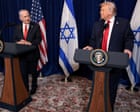
The fragile momentum toward a comprehensive peace agreement between Washington and Tehran is collapsing, not because of a sudden breakdown in communication, but due to a deliberate political calculation in Jerusalem. Israeli Prime Minister Benjamin Netanyahu is actively maneuvering to prevent the finalization of the current United States and Iran peace framework. For Netanyahu, an end to hostilities on terms negotiated by Washington represents a strategic disaster that threatens both his domestic survival and Israel's regional hegemony. By linking Israel's ongoing military campaign in Lebanon to the wider war, Netanyahu has successfully frozen progress, leaving American mediators stuck in a diplomatic gridlock.
To understand the current impasse, one must look at the immense stakes of the negotiations. The tentative framework proposed during the Islamabad talks requires Iran to completely dismantle its enriched uranium stockpile and accept intrusive international monitoring. In return, Washington would lift its devastating naval blockade on Iranian ports, unwind primary and secondary economic sanctions, and unfreeze tens of billions of dollars in blocked assets. Read more on a similar issue: this related article.
For the White House, this is a path to stabilizing the global energy market and securing the reopening of the Strait of Hormuz. For Netanyahu, however, the deal is a fundamental betrayal of Israel's long-term security strategy, which centers on the permanent containment and ultimate neutralization of the Islamic Republic.
The Lebanon Leverage Point
Netanyahu's primary mechanism for disrupting the peace talks is the war in Lebanon. Iran has made it clear that any permanent settlement with the United States must include an immediate halt to all Israeli military operations against Hezbollah. By refusing to halt the bombing of Beirut and southern Lebanon, Netanyahu effectively holds the remote controls to the American diplomatic process. Further journalism by NBC News explores related views on this issue.
The strategy works on a simple premise. Every time American and Iranian negotiators edge closer to a memorandum of understanding, a fresh wave of Israeli airstrikes in Lebanon triggers a predictable reaction from Tehran. The Iranian leadership, desperate to show its remaining allies that its regional deterrence is not entirely shattered, responds by threatening to cut off indirect talks with Washington. This dynamic creates a vicious cycle.
- The American dilemma: Washington needs a rapid exit from a conflict that has already cost tens of billions of dollars and threatened global trade.
- The Israeli veto: Jerusalem controls the kinetic trigger on the ground, meaning it can escalate the violence at will to disrupt diplomatic breakthroughs.
- The Iranian red line: Tehran cannot accept an agreement that leaves its primary proxy network in the Levant completely exposed to destruction.
This arrangement means the White House is constantly negotiating a peace deal that it cannot enforce without forcing an unprecedented, public break with its closest regional ally.
Domestic Survival as Foreign Policy
The standard analysis suggests that Netanyahu's actions are guided purely by a hawkish view of Israeli national security. That is an incomplete reading of the situation. The deeper truth is that the prime minister’s international strategy is inextricably linked to his immediate domestic political vulnerabilities.
The Knesset is on the verge of dissolution, and early autumn elections are looming. Netanyahu's political fortunes have fluctuated wildly throughout the latest phase of the conflict. Massive initial surges in his polling numbers followed highly successful intelligence and military operations against regional adversaries. Yet those gains have steadily evaporated as the war dragged into a costly stalemate, accompanied by deep economic strains inside Israel.
Netanyahu enters the upcoming election cycle with a major narrative problem. He cannot claim an absolute victory over Iran, nor can he show that the regional threat has been permanently eliminated. If a peace deal is signed tomorrow, the war ends, and the public focus shifts immediately back to his domestic record.
Furthermore, the long-delayed corruption trial involving charges of fraud and bribery has resumed. For years, Netanyahu has successfully argued that a wartime leader cannot be distracted by judicial proceedings. A permanent peace deal strips away that shield. The continuation of the conflict is quite literally a condition for his political, and potentially personal, freedom.
The Friction in the Trump Netanyahu Alliance
The current diplomatic gridlock is creating intense, underlying friction between Netanyahu and the White House. During his first term, the American president routinely aligned with Netanyahu’s maximum pressure campaign against Iran. Today, the strategic priorities of the two men have diverged significantly.
The current administration is facing a unique set of constraints. High energy prices and global supply chain disruptions caused by the closure of the Strait of Hormuz are hurting the American domestic economy ahead of the upcoming congressional elections. The White House desperately needs a visible foreign policy win to demonstrate economic stewardship and leadership.
[White House Priorities]          [Netanyahu Priorities]
  - Reopen Strait of Hormuz         - Prolong regional conflict
  - Stabilize global oil prices     - Avoid domestic elections
  - Secure a swift diplomatic win   - Destroy Iranian regional influence
The tension became undeniable during a tense phone call where American officials leaked details to the press to signal that Washington would not allow Jerusalem to dictate the terms of global trade. Following that call, Netanyahu was forced to publicly state that Israel would not strike Beirut unless provoked. But hours later, drone strikes resumed, proving that tactical compliance does not equal strategic alignment. Netanyahu knows that while the White House might complain, no American president wants to take the political risk of cutting off military aid to Israel during an active, multi-front war.
The Problem of Total Victory
The core structural flaw in Netanyahu’s strategy is the pursuit of an impossible political objective: the complete capitulation of Iran and the absolute erasure of its regional influence. Decades of economic warfare and months of intense aerial bombardment have severely weakened the regime in Tehran, but they have not broken its grip on power.
By insisting that any deal short of total victory is a capitulation, Netanyahu is locking both the United States and Israel into a perpetual war of attrition. Iran still retains significant asymmetric capabilities. It can continue to threaten maritime traffic, deploy drone swarms, and leverage its remaining regional networks to inflict steady economic pain on the West.
A peace deal that forces Iran to give up its nuclear ambitions and stabilize shipping lanes is a pragmatic compromise for a weary Washington. For Netanyahu, it is an unacceptable status quo that leaves a hostile regime intact on Israel's doorstep. As long as the Israeli leadership views a diplomatic compromise as a defeat, any peace deal drafted in Islamabad or Washington will remain dead on arrival.
The current impasse will not be resolved by a more cleverly worded memorandum of understanding. It will only break when the United States decides to exercise its real leverage over Israel's military logistics, or when the Israeli electorate decides that the cost of Netanyahu's perpetual war has finally exceeded the value of his security promises.


