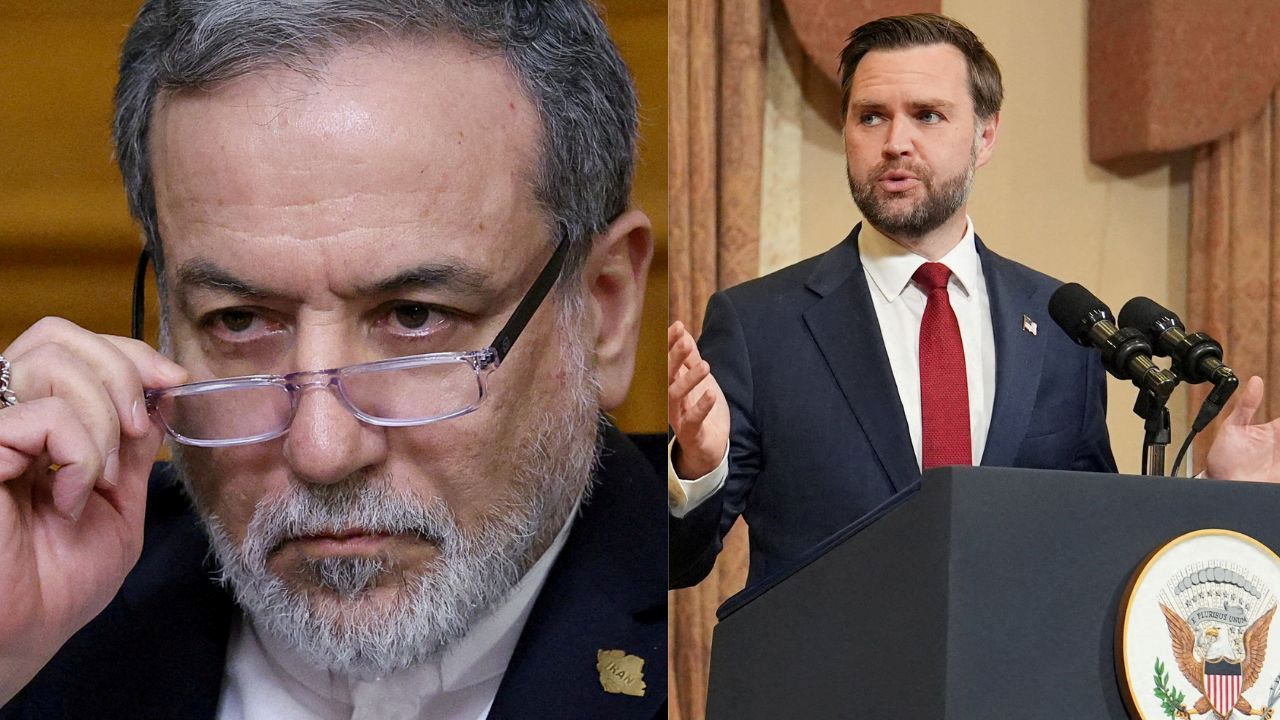
The diplomatic theater staged at the Burgenstock resort overlooking Lake Lucerne has all the elements of a high-stakes corporate takeover being run like a reality television finale. On Monday afternoon, Vice President JD Vance stood before cameras to declare that two days of intense, volatile negotiations between Washington and Tehran had established a firm foundation for a permanent deal to end the latest Middle East war. He brushed off the dramatic near-collapse of the talks less than twenty-four hours earlier with a casual wave of his hand, describing the tense back-and-forth as containing a little bit of threatening and a little bit of whining.
That glib summary masks a much darker and more complicated reality. The direct talks in Switzerland are not a smooth exercise in statecraft but a desperate scramble to codify an unstable memorandum of understanding while the principals involved actively sabotage their own envoys. While Vance spoke of immense progress, the core mechanics of the proposed deal reveal a fragile framework built on short-term economic concessions and highly questionable security guarantees.
This is not a traditional treaty process. It is a sixty-day sprint designed to freeze a regional conflict that has threatened to drag the global economy into chaos, and every party at the table is playing a double game.
The Good Cop Bad Cop Strategy Out of Control
The negotiations almost ended before they truly began on Sunday night. As Iranian representatives sat down with an American team that included presidential envoy Steve Witkoff and Jared Kushner, a series of fiery social media posts and media appearances from President Donald Trump threw the summit into immediate disarray. From thousands of miles away, Trump threatened to strike Iran very hard if it did not immediately halt the operations of its proxy networks in Lebanon.
The reaction from Tehran was swift. The Iranian delegation, led by chief negotiator Mohammad Bagher Ghalibaf, packed their bags and walked out of the luxury mountainside venue in a public display of outrage. State-run media outlets in Iran immediately broadcast denunciations of American bad faith, while military commanders announced a symbolic closure of the crucial Strait of Hormuz shipping lane.
It looked like total failure. Yet by Monday morning, the Iranians were back at the table.
This whiplash dynamic has become the defining feature of the administration's foreign policy. On the surface, it looks like a coordinated good cop, bad cop routine where Trump wields the heavy stick of military threats while Vance offers the carrot of sanctions relief. The truth inside the diplomatic channels is far less organized. Career diplomats and regional mediators from Qatar and Pakistan spent the night conducting frantic shuttle diplomacy between the suites, trying to convince the Iranians that Trump's rhetoric was intended for domestic consumption rather than an immediate declaration of war.
The strategy is high-risk. It assumes the other side will always distinguish between posturing and a genuine red line. In this instance, the Iranians decided that the financial rewards on the table were too massive to walk away from over a series of online provocations, but that calculations can change in an instant if a single missile is fired in error.
The Trillions At Stake In The Sanctions Game
To understand why Iran returned to the negotiating table despite the public insults, one has to look directly at the economic balance sheet. The preliminary agreement offers Tehran immediate, oxygen-producing relief for its suffocating economy. The draft text includes temporary sanctions waivers specifically tailored for Iranian oil and petroleum derivatives, allowing the country to legally export its energy reserves to global markets without relying on the expensive, discounted ghost fleets it has used to bypass Western restrictions for years.
More importantly, the deal provides a mechanism for Iran to regain access to billions of dollars in frozen foreign assets currently locked up in international banks due to banking restrictions.
Washington has long insisted that economic pressure would eventually force Iran to abandon its regional ambitions. The current situation proves the exact opposite. Decades of sanctions have failed to break the regime, but they have created a scenario where the promise of sudden cash infusion is the only lever powerful enough to bring them to a summit.
The administration plans to establish a strict oversight process to ensure these returned funds are spent on civilian infrastructure and citizen programs rather than state-sponsored militancy. Veteran financial investigators know this is an illusion. Money is fungible. If the Iranian state receives five billion dollars for agricultural development or healthcare, it frees up five billion dollars from its domestic budget to fund its regional operations and missile development. The White House is effectively gambling that a temporary economic truce will buy enough stability to claim a foreign policy victory, ignoring the long-term reality that a wealthier adversary is ultimately a more dangerous one.
The Nuclear Inspection Concession
The most significant technical breakthrough claimed by Vance is Iran's formal agreement to invite inspectors from the International Atomic Energy Agency back into its heavily fortified nuclear sites. According to American officials, these inspections could begin almost immediately, targeting facilities that have been shielded from international eyes for months.
On paper, this looks like a massive concession by Iranian President Masoud Pezeshkian.
The reality on the ground tells a very different story. Even as Vance praised the inspection agreement, Pezeshkian was delivering a speech to domestic audiences declaring that Iran would never back down from its inherent right to enrich uranium. The compromise reached in Switzerland does not dismantle Iran's nuclear infrastructure. It merely allows international monitors to watch it operate.
Furthermore, the most sensitive enrichment activities are believed to be buried deep within underground complexes that were targeted by American airstrikes last year. These facilities have been heavily reinforced and redesigned. An inspection regime that relies on host-country cooperation is always vulnerable to delays, blocked access, and sudden expulsions whenever political tensions flare up. The administration is celebrating the return of the inspectors as a triumph, but seasoned non-proliferation experts view it as a cosmetic victory that leaves Iran's actual breakout capacity fully intact.
The Southern Lebanon Blind Spot
The immediate catalyst for these talks was the need to guarantee a fragile ceasefire in southern Lebanon, where Israeli forces and Hezbollah have been locked in a brutal war of attrition. The Swiss framework attempts to solidify this calm by creating a high-level deconfliction cell involving the United States, Iran, Qatar, and Pakistan to oversee the political transition.
There is a glaring flaw in this structure. Neither Israel nor Hezbollah is an actual signatory to the document being drafted in Lucerne.
Israeli Prime Minister Benjamin Netanyahu has repeatedly stated that his military will maintain its operations in southern Lebanon until every threat to northern Israeli communities is completely neutralized. Concurrently, Hezbollah leaders have made it clear that they will not accept any deal that forces them to withdraw their forces from the border region while Israeli troops remain on Lebanese soil.
The negotiators in Switzerland are trying to build a regional peace by dealing with the sponsors rather than the combatants. While Iran holds immense leverage over Hezbollah through funding and logistics, the group has its own domestic political imperatives and cannot be turned off like a light switch by a memo signed in a Swiss hotel. By treating the local actors as mere puppets, the American delegation risks creating an agreement that looks spectacular in a Washington press release but falls apart the moment the first mortar round is fired across the Blue Line.
The High Cost of the Sixty Day Clock
The joint statement released by the Qatari and Pakistani mediators establishes a strict sixty-day roadmap to transform the current memorandum into a final, binding treaty. This short timeframe is intended to prevent the talks from dragging out indefinitely while the situation on the ground deteriorates.
The ticking clock actually works to Iran's advantage. Tehran knows that the administration is desperate for a definitive diplomatic win to justify its regional strategy and quiet its domestic critics. By dragging out the technical discussions on asset transfers and oil verification until the final hours of the deadline, the Iranian negotiators can force additional concessions from an American team that cannot afford to let the clock run out.
The administration has placed its chips on a strategy of transactional diplomacy, betting that economic incentives and unpredictable rhetoric can rewrite the geopolitical rules of the Middle East. The initial progress reported from Lake Lucerne is real, but it is a progress bought with immense financial concessions and built upon verification mechanisms that have failed repeatedly in the past. As the technical teams sit down to hammer out the details over the coming weeks, the fundamental contradiction of the summit remains unresolved. You cannot build a durable peace when one leader is threatening destruction from a smartphone while the other side is waiting for the check to clear.


