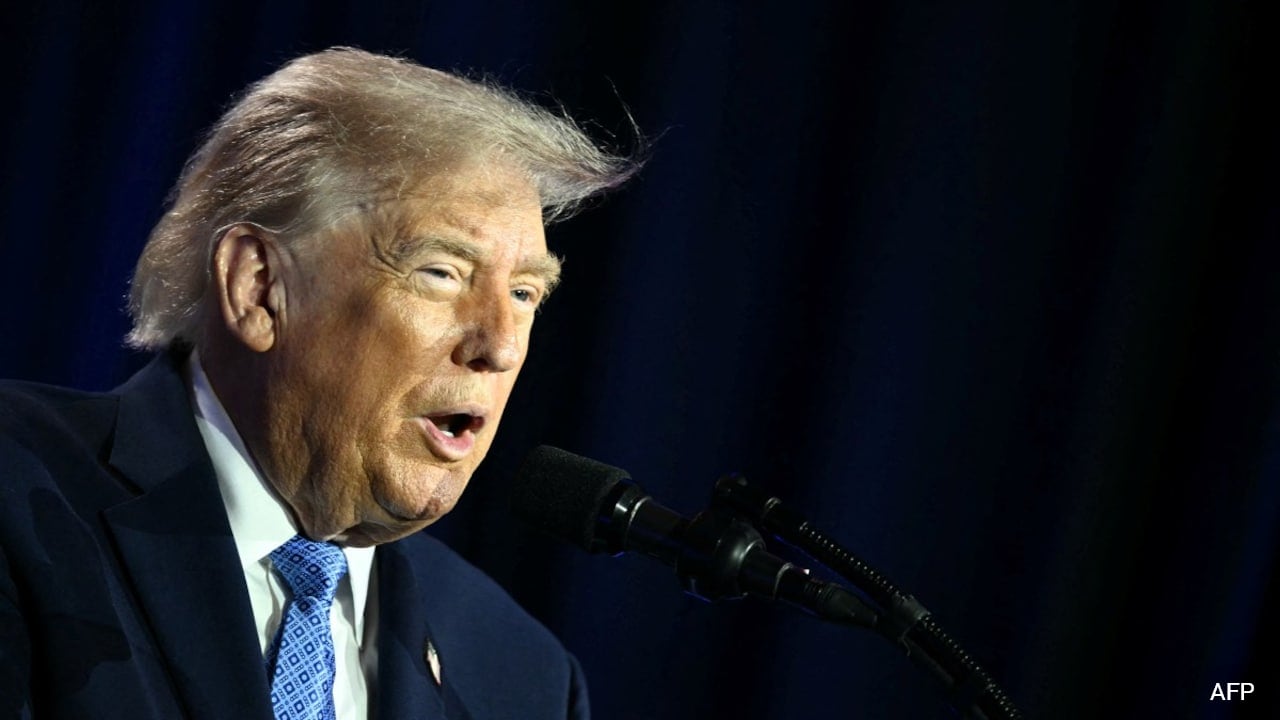
The political press corps loves a predictable script. Every time a major political figure stands before a crowd of religious voters and deploys aggressive, polarizing rhetoric, the reaction machine fires up on cue. Headlines scream about incendiary language. Pundits wring their hands over the breakdown of civil discourse. Analysts trace the deep tribal lines dividing the country, treating the event as a shocking deviation from some mythical golden era of polite consensus.
They are missing the entire mechanics of modern power.
The lazy consensus in political journalism views high-decibel rhetoric as a dangerous error or a desperate ploy. It is neither. It is a highly rational, hyper-efficient optimization strategy for a fractured media ecosystem. The mainstream media covers these speeches as if they are designed to persuade neutral observers or convert political opponents. They are not. Treating political theater as a failed attempt at national unity is like criticizing a professional fighter for not trying to hug their opponent.
To understand how power actually accumulates today, you have to discard the outdated idea that politics is a debate won by the side with the most reasonable policy proposals. Politics is an identity market. The leaders who dominate this market do not succeed by smoothing over differences; they succeed by sharpening them until they can cut through the endless noise of the modern attention economy.
The Persuasion Myth and the Reality of Mobilization
For decades, the political establishment has operated under the assumption that campaigns are won in the middle. The conventional wisdom states that candidates must appeal to the undecided moderate, the suburban independent, or the swing voter who weighs both sides with sober detachment.
I have spent years analyzing voter behavior data, campaign spending patterns, and media consumption metrics. The data tells a completely different story. The mythical swing voter is a disappearing species. The overwhelming majority of citizens have deep-seated partisan identities, even if they label themselves independents to feel above the fray.
When a politician launches a fierce rhetorical attack on their opposition, they are not trying to win over the people on the other side. They are executing a classic activation play. In a nation where voter turnout can swing an election by five to ten percentage points, motivation matters far more than persuasion.
Consider the mechanics of a high-energy speech delivered to a core demographic, such as religious conservatives or progressive activists. The goal is to raise the stakes of the conflict. By framing the political struggle not as a disagreement over tax rates or regulatory frameworks, but as an existential battle over fundamental values, a leader achieves three immediate objectives:
- They lower the cost of attention. In an era where billions of dollars are spent competing for human focus, boring policy papers get ignored. Outrage creates its own distribution network.
- They enforce internal discipline. By drawing a bright line between the in-group and the out-group, they make it incredibly difficult for internal critics to dissent without looking like traitors to the cause.
- They drive immediate financial and physical action. High anxiety and intense group loyalty are the primary drivers of small-dollar donations and volunteer hours.
The shock expressed by commentators is actually the fuel that drives this engine. Every outraged reaction piece published by an adversarial media outlet confirms to the core base that their leader is fighting the right enemies. The condemnation becomes the validation.
The Flawed Premise of People Also Ask
Look at the questions people search for online whenever a political firestorm erupts. The queries themselves reveal a fundamental misunderstanding of the system.
Why do politicians use such divisive language?
The premise of this question assumes that divisive language is a bug in the system. It is the defining feature. Politicians use this language because moderation is a statistical dead end in a primary election and a recipe for low turnout in a general election.
When a candidate uses language that alienates half the country, they are deliberately sacrificing voters they were never going to get anyway in order to lock down the fanatic loyalty of the voters they absolutely need. It is a basic calculation of return on investment. A highly motivated minority that shows up at the ballot box will beat a lukewarm majority that stays home every single time.
Does harsh rhetoric hurt the country over the long term?
This question asks about long-term civic health, but political actors operate on short-term survival timelines. A campaign is measured in weeks and months, not decades.
While political polarization certainly erodes trust in shared institutions, criticizing a politician for causing polarization is like criticizing a tech company for chasing clicks. The incentives of the system dictate the behavior of the actors within it. Until the underlying structural incentives change—such as the way congressional districts are drawn or the way social media algorithms distribute content—expecting politicians to prioritize abstract civic harmony over concrete electoral victory is wishful thinking.
The Hidden Cost of the Counter-Strategy
Many political strategists advise their clients to take the high road. They preach the gospel of unity, aiming to project a calm, reassuring presence that contrasts with the fiery rhetoric of their opponents.
This approach has a glaring, hidden downside that its proponents rarely admit: it is incredibly boring.
In a media environment dominated by rapid-fire content creation, calm assurance reads as lack of passion. When one side is fighting what they describe as a holy war for the soul of the nation, a measured response about bipartisan committees and incremental policy shifts feels completely inadequate to the base.
This creates a severe asymmetric disadvantage. The aggressive communicator commands the news cycle, dictates the terms of the debate, and forces their opponent to spend all their time reacting to accusations. The calm communicator is left explaining nuances, and in politics, if you are explaining, you are losing.
Imagine a scenario where a corporate brand faces a highly aggressive competitor that accuses them of destroying local communities. If the brand responds with a data-heavy report on supply chain efficiency, they lose the emotional narrative completely. Voters, like consumers, do not make decisions based on spreadsheets. They make decisions based on stories, identity, and tribal belonging.
The Playbook for Navigating the Noise
If you want to understand what is actually happening in the political arena rather than what pundits wish was happening, you have to change how you consume information. Stop looking at the words being said and start looking at the reactions they are designed to provoke.
- Map the incentives. Whenever a public figure makes a statement that seems unnecessarily hostile or extreme, ask yourself who benefits from the anger. Follow the money, the clicks, and the turnout models.
- Ignore the outrage cycle. The media coverage of a controversial speech is part of the performance. The criticism and the praise are two sides of the exact same coin, both serving to elevate the prominence of the speaker.
- Look at structural actions over rhetorical flourishes. Politicians often use extreme language to satisfy their base precisely because they cannot or will not deliver on major policy promises. Aggressive speech is frequently a cheap substitute for difficult structural change.
The assumption that political conflict is a sign of a broken system is a comforting lie. Conflict is the natural state of a free society composed of diverse groups with competing interests and values. The figures who rise to the top are not those who pretend the conflict does not exist, but those who weaponize it most effectively.
The next time a major speech dominates the news cycle with incendiary rhetoric, do not look for the nearest commentator to tell you how terrible it is for democracy. Look at the numbers. Look at the fundraising totals. Look at the voter engagement metrics. The strategy works, and because it works, it is not going away. The sooner we accept the reality of the identity market, the sooner we can stop being shocked by its predictable results.