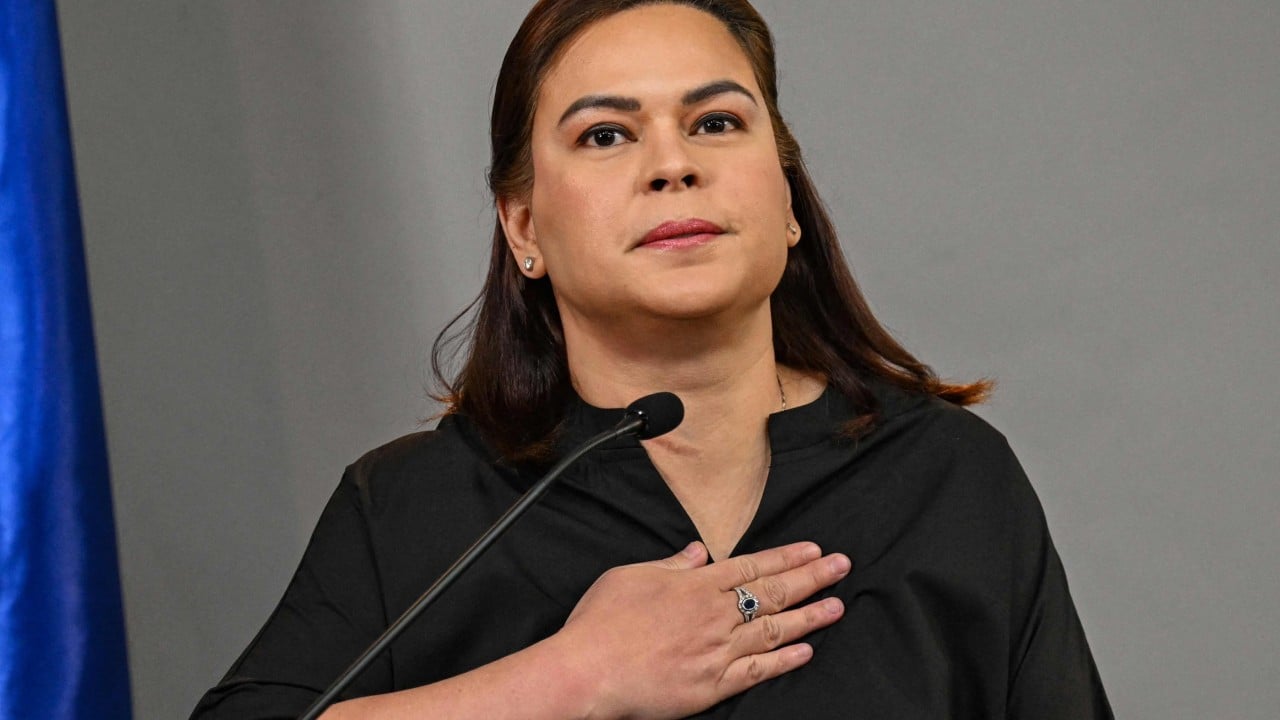
The lightning-fast, late-night coup that unseated Philippine Senate President Tito Sotto has fundamentally upended the political calculus for Vice President Sara Duterte's upcoming impeachment trial. By installing Alan Peter Cayetano—a staunch ally of the Duterte family—at the helm of the upper chamber, the pro-Duterte faction did not just shift committee assignments. They constructed a formidable legislative fortress. The 13 senators who executed this mutiny have seized absolute control over the rules, pacing, and eventual adjudication of the impeachment court. This sudden realignment effectively derails what the administration of President Ferdinand Marcos Jr. envisioned as a swift, clinical removal of the Vice President from office.
While the House of Representatives overwhelmingly voted to transmit the articles of impeachment, the ultimate power to convict or acquit rests entirely with the 24-member Senate. Conviction requires a two-thirds supermajority, meaning 16 senators must vote guilty. By cementing a solid, 13-member voting bloc under Cayetano's leadership, the Duterte loyalists have created an mathematical impossibility for the anti-Duterte forces. They do not merely have the numbers to prevent a conviction; they possess the raw legislative power to dictate how the trial itself is run.
The Arithmetic of Acquittal
To understand the sheer magnitude of the Senate leadership change, one must look closely at the constitutional math governing impeachment trials. The 1987 Philippine Constitution mandates that no elective official can be convicted without the concurrence of two-thirds of all the members of the Senate. In a fully constituted 24-man chamber, that magic number is 16.
The sudden coup on May 11, which saw the minority "Duterte bloc" swell to 13 members to elect Cayetano, completely shatters the administration's legislative strategy. If these 13 senators hold the line, the prosecution cannot possibly reach the required 16 votes. The maximum number of votes the anti-Duterte faction can muster is 11, assuming every single remaining senator sides against the Vice President.
This numerical reality transforms the entire nature of the proceedings. The trial is no longer a legal determination of guilt regarding the House's allegations of unexplained wealth, misuse of state confidential funds, or alleged death threats against the President. Instead, it has transformed into a raw, unadulterated test of partisan discipline and political survival.
Power of the Gavel
The influence of a Senate President during an impeachment trial goes far beyond casting a single vote. As the presiding officer of the chamber when it does not involve the President—where the Chief Justice normally steps in—or as the primary architect of the Senate's internal rules, the Senate President holds immense procedural sway.
Controlling the Calendar
Cayetano now wields the power to determine when the Senate convenes as an impeachment court and how long the daily sessions will last. He can deliberately slow down the proceedings, stretching the trial across months or even years. This tactical foot-dragging serves a dual purpose. It allows public anger over the allegations to cool while simultaneously draining the political capital of the Marcos administration. Conversely, if the Duterte legal team believes they have the upper hand, Cayetano can expedite hearings to force a quick acquittal before new evidence emerges.
Defining Evidentiary Rules
The Senate acts as an independent body that creates its own rules for impeachment trials. Under Cayetano's leadership, the newly formed majority can vote to adopt highly restrictive rules regarding what evidence is admissible. They can reject bank documents, disregard House depositions, or limit the scope of witness testimonies under the guise of procedural technicalities.
Gatekeeping Subpoenas
During the preliminary stages, the Senate leadership decides which witnesses are called and what documents are subpoenaed. A hostile Senate leadership could have aggressively dug into the Vice President's financial records. A friendly leadership can quietly quash requests from House prosecutors, ensuring that highly damaging evidence never sees the light of day in open session.
The Standoff in the Plenary
The geopolitical and domestic stakes of this legislative shift became blindingly obvious just 48 hours after the Senate coup. The chamber descended into unprecedented chaos when gunfire erupted within the Senate complex on the night of May 13. The catalyst was an attempt by the National Bureau of Investigation to arrest Senator Ronald "Bato" Dela Rosa.
Dela Rosa, the former national police chief who spearheaded the Rodrigo Duterte administration’s bloody war on drugs, is wanted by the International Criminal Court for alleged crimes against humanity. Having spent months in hiding, Dela Rosa suddenly reappeared during the Senate coup to cast his crucial 13th vote for Cayetano. Following the vote, the new Senate leadership immediately granted him "protective custody" within the building.
The subsequent armed standoff and unexplained gunfire underscore a critical reality. The fight for the Senate presidency was never just about protecting Sara Duterte from impeachment. It was a coordinated, desperate defensive maneuver by a political dynasty facing total legal annihilation. With former President Rodrigo Duterte already in ICC custody in The Hague, his loyalists view the Philippine Senate as their absolute last line of defense against both domestic prosecution and international warrants.
+-------------------------------------------------------------+
|                THE PHILIPPINE SENATE FORTRESS               |
+-------------------------------------------------------------+
|                                                             |
|   [ Duterte-Aligned Majority Bloc ]  --> 13 Senators        |
|   (Led by Senate President Cayetano)                        |
|   * Controls trial rules, pacing, and subpoenas.            |
|   * Grants protective custody to allies (e.g., Dela Rosa).  |
|   * Holds absolute veto power over conviction.              |
|                                                             |
|                              vs.                            |
|                                                             |
|   [ Marcos-Aligned/Independent ]     --> 11 Senators        |
|   (Requires 16 votes to convict Sara Duterte)               |
|                                                             |
+-------------------------------------------------------------+
|   RESULT: Impeachment conviction is mathematically dead     |
|           unless the 13-member bloc fractures.              |
+-------------------------------------------------------------+
The Vulnerability in the Stronghold
While the pro-Duterte faction currently celebrates its tactical victory, their newly minted majority is built on exceptionally shaky ground. It is an alliance born of convenience and shared fear, not deep ideological alignment. This makes the bloc highly susceptible to sustained pressure from the executive branch.
Several of the 13 senators who voted for Cayetano are currently implicated in massive corruption investigations concerning provincial flood-control project anomalies. The Marcos administration retains complete control over the Department of Justice, the Bureau of Internal Revenue, and the distribution of crucial infrastructure allotments.
Malacañang Palace understands that every politician has a breaking point. The administration does not need to convince the entire Senate to turn on the Vice President. They only need to break five senators away from the Duterte bloc to reach the 16-vote threshold required for a conviction.
The coming weeks will witness an intense, behind-the-scenes war of attrition. The executive branch will likely utilize the full coercive power of the state—wielding audits, frozen project allocations, and potential criminal indictments—to chip away at Cayetano’s fragile coalition. The senators in the middle will have to calculate what poses a greater threat to their political survival: the wrath of the Duterte family’s fiercely loyal base, or the immediate, devastating legal and financial leverage of a sitting President.
The Road to 2028
The battle for the Senate presidency has effectively transformed Sara Duterte’s impeachment trial into the opening salvo of the 2028 presidential campaign. The Vice President has made no secret of her intentions to seek the highest office in the land, positioning herself as the populist alternative to the current administration.
If Cayetano successfully insulates her from conviction, the trial could backfire spectacularly on the Marcos camp. An acquittal will be framed by the Duterte machinery as a total vindication, transforming the Vice President into a political martyr who successfully withstood the entire might of the state apparatus.
However, if the administration manages to fracture the Senate majority and secure a conviction, the political landscape changes completely. A conviction carries the penalty of perpetual disqualification from holding any public office. For the Duterte dynasty, the stakes in the upper chamber are absolute. They are fighting for nothing less than their continued relevance in Philippine political history.
The weaponization of Senate procedures, the dramatic shielding of an ICC fugitive, and the high-stakes mathematical standoff all point to a singular conclusion. The Senate floor is no longer acting as a traditional court of law. It has become a fortified trench in a brutal war of political survival, where the rules of evidence matter far less than the loyalty of the person holding the gavel.