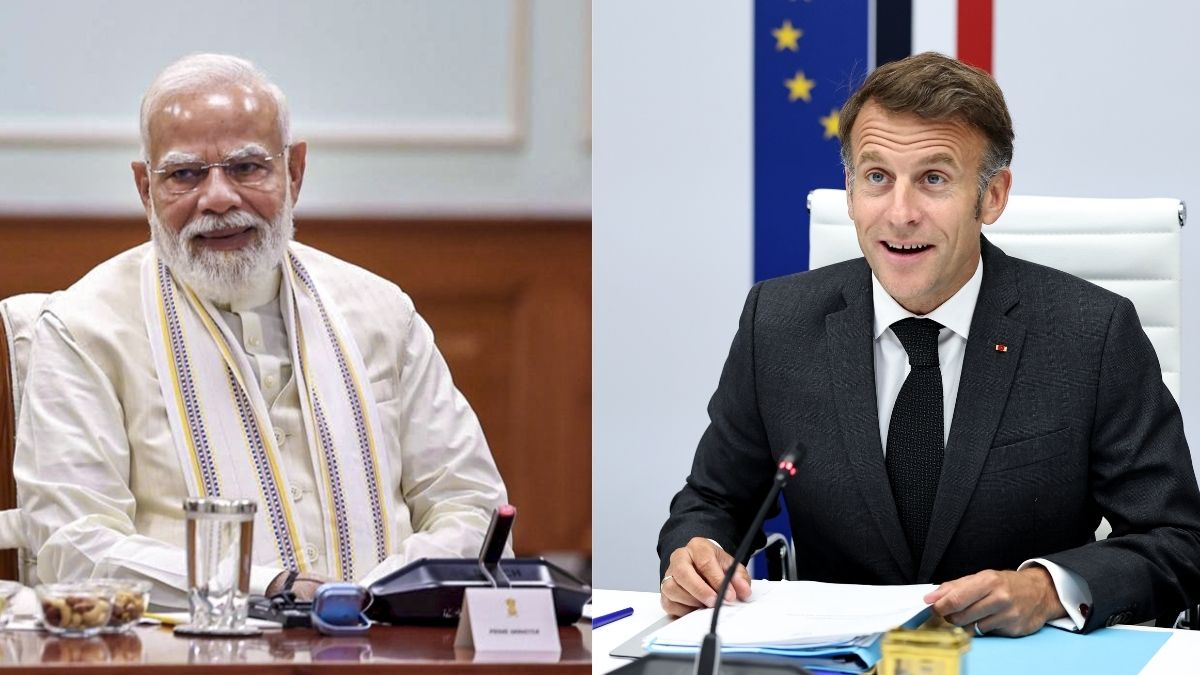
Western commentators love to describe the relationship between Indian Prime Minister Narendra Modi and French President Emmanuel Macron through the lens of transactional defense deals. It is an easy narrative to sell. When you look at billions of dollars in military hardware changing hands, it seems obvious. But focusing solely on fighter jets and naval engines completely misses the core foundation of their alignment. The true driving force behind this partnership is a shared, calculated quest for technological and strategic autonomy in a fractured global order.
Both leaders want to avoid becoming dependent on either Washington or Beijing. By upgrading their relationship to a Special Global Strategic Partnership, New Delhi and Paris are attempting to build an independent third pillar of global influence, anchored heavily in advanced technology, computing power, and sovereign intelligence. You might also find this related article interesting: Why Early Weather Anomalies are the Worst Predictors of Annual Climate Trends.
Moving Beyond the Defense Deal Narrative
The conventional view of India-France relations treats Paris as a reliable, non-judgmental arms dealer. While Washington imposes complex political conditions on technology transfers and Moscow struggles with supply chains, France has historically offered advanced hardware with fewer strings attached.
The numbers are undeniable. India has integrated French fighter platforms into its air force, and active negotiations continue for more aircraft under local manufacturing initiatives. Yet, viewing this dynamic as a simple buyer-seller arrangement underestimates the long-term vision of both capitals. As reported in recent coverage by The Washington Post, the effects are worth noting.
+------------------------------------------------------------+
|             THE EVOLUTION OF INDIA-FRANCE TIES             |
+--------------------------+---------------------------------+
| Traditional Blueprint    | The 2026 Shift                  |
+--------------------------+---------------------------------+
| Transactional buyers     | Joint engineering and design    |
| Off-the-shelf defense    | Sovereign computing ecosystems  |
| Simple trade agreements  | Co-developed platform standards |
+--------------------------+---------------------------------+
The real focus has shifted from buying completed military platforms to deep, joint engineering. The goal is no longer just importing hardware, but co-designing core technologies that allow both nations to maintain operational independence. This shift is evident in how both countries handle sensitive data, supply chains, and telecommunications infrastructure.
The Sovereign Tech Accord
Control over computational infrastructure has become the modern equivalent of geographical territory. Neither New Delhi nor Paris wants to rely entirely on foreign technology giants for their critical infrastructure.
The Computing Independence Strategy
The active collaboration between the two nations on digital infrastructure is a direct attempt to challenge existing tech monopolies. During recent bilateral meetings, including high-level gatherings in Mumbai and Nice, the emphasis shifted toward building sovereign alternatives for data processing and infrastructure.
- Infrastructure Ownership: Developing independent data centers that operate outside the legal reach of foreign cloud acts.
- Industrial Engineering: Establishing shared frameworks for open-source engineering to prevent reliance on single-source foreign software.
- Supply Security: Jointly securing supply chains for critical components required to run large-scale digital operations.
Joint Initiatives in Action
This approach is visible in practical initiatives like the Bharat Innovates platform and the expanded cooperation at European tech forums like VivaTech. These are not merely public relations exercises. They function as clearinghouses for venture capital and engineering talent, specifically designed to fund tech startups that focus on localized data processing and industrial automation.
The Maritime Realities of the Indo-Pacific
Beyond the digital space, the physical anchor of this alliance remains the Indian Ocean. France is not just a European power looking inward; it is a resident nation in the Indo-Pacific, with territories like Réunion and Mayotte housing over a million French citizens.
This geographical reality aligns perfectly with India's maritime security strategy. The two nations routinely grant each other access to military facilities, allowing the Indian Navy and French forces to operate smoothly from the Persian Gulf to the shores of East Africa.
This cooperation is distinct because it operates independently of traditional Western-led maritime alliances. New Delhi views Paris as a partner that understands local sensitivities and respects strategic autonomy, avoiding the heavy-handed geopolitical demands that often accompany alliances with other Western nations.
Assessing the Structural Vulnerabilities
While the alignment appears strong on paper, a professional analysis requires examining its inherent weaknesses. The partnership faces real economic and bureaucratic friction.
       [ Bureaucratic Delays ] -------> Slower Project Execution
                  │
                  ▼
       [ Asymmetric Trade ] ---------> Economic Imbalance
                  │
                  ▼
       [ Regulatory Friction ] -------> Divergent Policy Paths
The most significant risk is the imbalance in bilateral trade outside the defense and aerospace sectors. While political agreements are signed quickly, commercial implementation frequently bogs down in bureaucratic red tape. India’s complex regulatory environment often clashes with France’s rigid adherence to European Union standards, creating a persistent bottleneck for small and medium enterprises trying to operate in both markets.
Furthermore, changing political leadership in either capital could test the continuity of these policies. The personal rapport between the current leaders has accelerated agreements, but institutionalizing these ties so they survive future political shifts remains an unfinished task.
Building an Autonomy-First Blueprint
To ensure this partnership achieves its potential, both governments must look beyond high-profile summits and focus on practical integration.
First, they need to establish direct pathways for private capital to flow into deep-tech manufacturing without navigating overly complex regulatory systems. Second, they must unify their regulatory positions on data privacy and industrial standards to create a smoother operating environment for joint ventures.
The future of the relationship depends on moving past the legacy of defense procurement. By prioritizing sovereign digital systems, collaborative industrial design, and independent maritime security, India and France are quietly demonstrating how mid-sized and emerging powers can cooperate without joining rigid geopolitical blocs.