More than four out of every ten people in their mid-fifties who receive an NHS bowel cancer screening kit choose to ignore it, leave it on a shelf, or drop it directly into the rubbish bin. Recent data from NHS England reveals a stark demographic chasm: while 73.5% of people aged 70 to 74 return their faecal immunochemical test (FIT) kits, that figure plummets to just 56.2% among 54-year-olds. This is not a minor statistical variance. It is a major public health failure that occurs at the precise moment when early intervention is most effective.
The state spends millions printing, packing, and posting these plastic sticks to homes across the country. Yet, the mechanism is failing the exact generation it was newly expanded to protect. Understanding why this happens requires looking past the surface-level excuses of busy lifestyles and confronting a combination of systemic design flaws, deep-seated psychological avoidance, and a hidden diagnostic bottleneck that threatens the entire infrastructure of the health service.
The illusion of the simple mailbox solution
Public health campaigns often treat the FIT kit as a miracle of modern convenience. You receive a letter, unscrew a plastic bottle, scrape a tiny sample of stool, and pop it back in the post. It requires no clinic visit, no bowel preparation, and no invasive procedures at the point of origin. This simplicity is supposed to guarantee high compliance.
The reality inside British households is entirely different. For a 72-year-old retiree, the arrival of a medical screening kit is a scheduled, expected part of health maintenance. For a 52-year-old juggler of full-time work, elderly parents, and teenage children, the kit arrives as an uninvited, highly unwelcome reminder of mortality. It demands that an individual interact with their own waste in a way that triggers an immediate, visceral avoidance response.
Bowel Cancer Screening Uptake by Age Group (NHS England)
+-------------------+-------------------+
| Age Group         | Participation Rate|
+-------------------+-------------------+
| 54-year-olds      | 56.2%             |
| 60 to 74-year-olds| 72.9%             |
| 70 to 74-year-olds| 73.5%             |
+-------------------+-------------------+
This resistance goes deeper than simple squeamishness. The expansion of the screening age down to 50 was designed to catch adenomas and early-stage carcinomas before they manifest any physical symptoms. This creates a paradox. Because the target demographic feels entirely healthy, they perceive the test as unnecessary. They evaluate the immediate discomfort of performing the test against the abstract, invisible threat of a silent disease and choose to delay. The envelope sits on the microwave, then moves to a drawer, and eventually vanishes during a spring clean.
The hidden diagnostic bottleneck
Focusing entirely on patient compliance ignores a more cynical truth about the healthcare system. The NHS wants you to return the kit, but the system is terrified of what happens if everyone actually does.
[FIT Kit Returned] ---> [Lab Processing] ---> [Positive Result] ---> [Required Colonoscopy]
                                                                              |
                                                                   (The System Bottleneck)
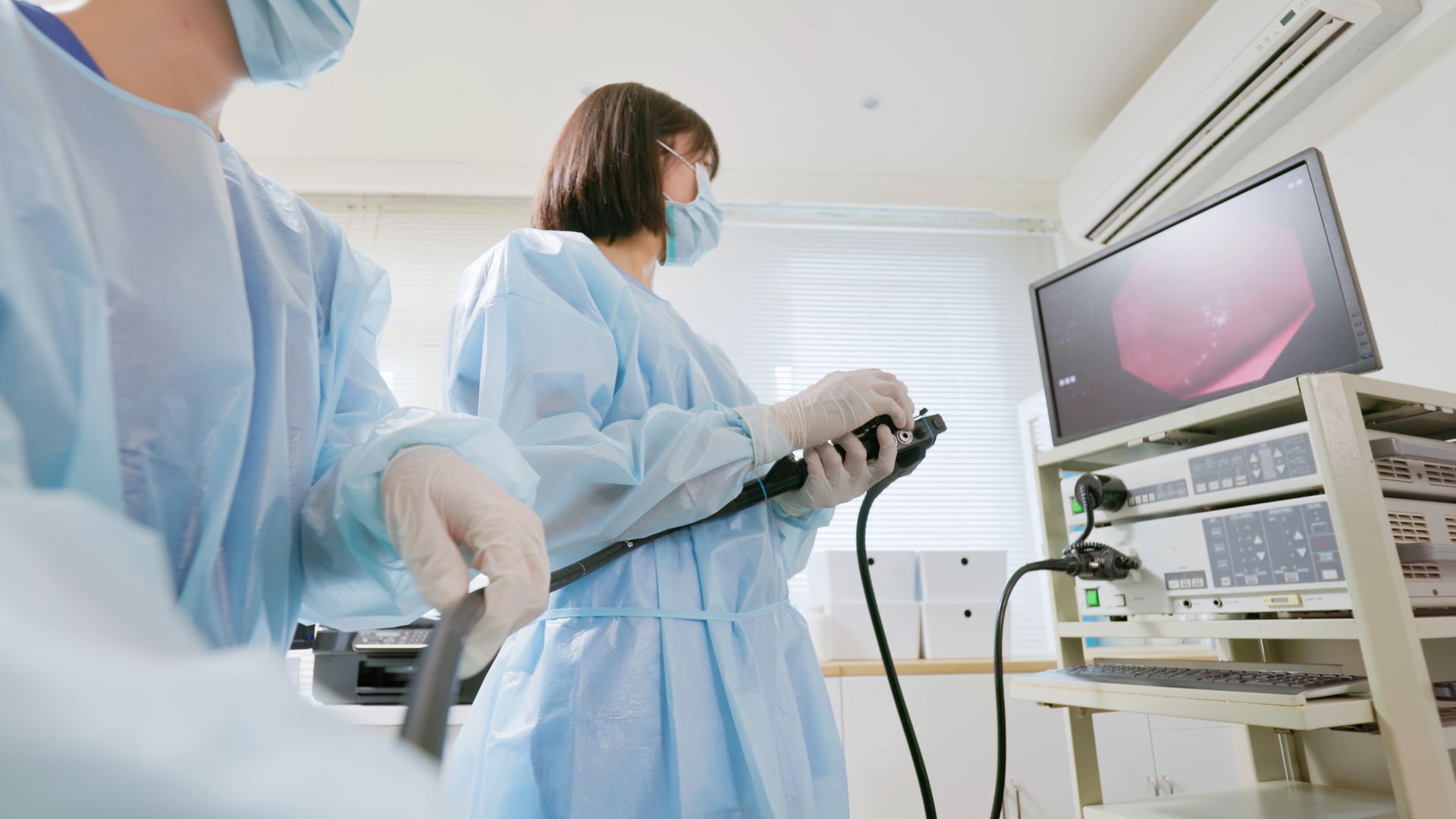
When a FIT sample returns positive, the patient requires a colonoscopy within two weeks to locate and remove pre-cancerous polyps or diagnose a tumor. This is where the strategy hits a wall of physical reality. The UK faces a chronic shortage of endoscopy suites and qualified clinical endoscopists. Hospitals are already struggling to meet the existing two-week wait targets for suspected cancer referrals.
If the participation rate for 50-to-59-year-olds suddenly surged to match the 73% seen in older cohorts, the influx of positive results would overwhelm diagnostic departments. A positive test does not mean a patient has cancer; it merely means blood was detected. But every positive result demands an investigative slot. Public health officials balance their messaging carefully. They push for higher uptake in press releases, but the underlying system lacks the structural capacity to absorb a total, nationwide compliance wave without blowing up waiting lists for other urgent gastrointestinal conditions.
The policy friction of lowering the threshold
The pressure on the system is set to worsen due to a recent policy shift. NHS England has begun lowering the sensitivity threshold for the FIT kit from 120 micrograms of hemoglobin per gram of feces down to 80 micrograms. This alignment matches the stricter standards already utilized in Scotland and Wales.
"Lowering the threshold means the test will trigger a positive result at much lower concentrations of blood."
This change will inevitably catch hundreds of early-stage cancers that would have previously slipped through the net. It will also identify thousands of additional patients with high-risk polyps. However, increasing test sensitivity causes an exponential rise in the number of false positives and minor findings that require a colonoscopy to rule out serious disease.
The government estimates that full implementation of this lower threshold will necessitate a 35% increase in screening colonoscopies annually by 2028. This target must be achieved while hospitals are still clearing historic backlogs. Without an aggressive, heavily funded expansion of training slots for endoscopists and physical hospital infrastructure, the lower threshold risk model will create an agonizing delay between a worrying positive postal result and the actual camera inspection that provides a definitive answer.
Regional divides and socioeconomic dropouts
The headline figure of 56.2% hides deep regional and economic inequality. In affluent suburban areas, compliance rates crawl significantly closer to acceptable levels. In deprived urban communities, participation drops well below the half-way mark.
This disparity stems from a mix of literacy barriers, GP registration gaps, and employment precarity. Taking time off work for a follow-up medical appointment is vastly more difficult for a zero-hours contract worker in a logistics hub than it is for a salaried professional working from home. If the initial postal kit implies a potential chain of medical appointments, the economic incentive for a low-income worker is to avoid looking for a problem they cannot afford to manage.
Furthermore, the materials sent out by the screening program rely heavily on written English literacy and a stable postal address. Transience in urban rental markets means thousands of kits are delivered to properties long after the intended recipient has moved away. The NHS registers a non-responder, when in reality, the kit was thrown away by a new tenant who did not recognize the name on the envelope.
Fixing the delivery framework
To change these numbers, the health service must move away from its passive reliance on the Royal Mail. Sending a piece of plastic once every two years to an unprimed household is an outdated communication model.
Text message alerts and integration with the NHS App are finally being introduced, but these measures only scratch the surface of the problem. True systemic change requires shifting the point of engagement from a cold letter to an active conversation. General practitioners need to be incentivized to track non-responders within their clinics. A brief conversation during a routine appointment for a blood pressure check or an asthma review is infinitely more effective at breaking down the psychological barrier of the test than an institutional leaflet.
Pharmacies represent another missed opportunity. Allowing people in their fifties to pick up and drop off kits at their local high-street chemist would normalize the process. It would strip away the clinical coldness of the current mail-order setup.
The strategy must also acknowledge the generational shift. The cohort currently entering their fifties grew up in a culture that expects interactive, rapid communication. They do not respond to static bureaucracy. If the NHS cannot adapt its outreach to match the communication habits of the modern fifty-something, the expensive expansion of the screening age will remain a theoretical triumph rather than a practical success. The kits will continue to pile up in landfills while late-stage diagnoses continue to fill oncology wards.