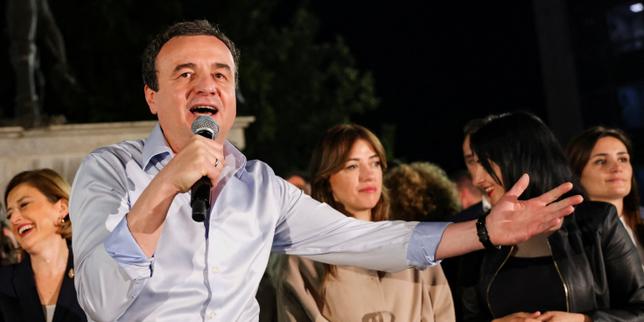
Kosovo has just concluded its third parliamentary election in less than 18 months, and the results have solved absolutely nothing. Prime Minister Albin Kurti and his left-wing nationalist Vetëvendosje (Self-Determination) party took a commanding lead with roughly 44% of the vote. Yet, by dropping from the 51% majority they secured in December 2025, Kurti is fundamentally stuck. He cannot form a government alone, nor can he muster the 80-vote supermajority required to elect a new president. The Balkan nation is paralyzed by a constitutional chokehold, meaning the institutional gridlock that has frozen international aid and stalled economic reforms will continue indefinitely.
This is not a story about normal democratic turnover. It is a structural crisis.
The Tyranny of the Quorum
To understand why Europe's youngest democracy keeps dragging its citizens to the ballot box, one must look past the campaign rhetoric and study the blueprint of its institutional design. Kosovo operates under a rigid legislative framework where the parliament must elect the head of state.
This process requires a strict quorum of 80 lawmakers present in the 120-seat assembly just to cast a valid ballot.
The Arithmetic of Gridlock
When former President Vjosa Osmani’s term expired in April, the opposition realized they held a structural weapon. By simply refusing to show up to the parliamentary chamber, the Democratic Party of Kosovo (PDK) and the Democratic League of Kosovo (LDK) completely neutralized Kurti’s mandate. They denied the assembly its necessary quorum, rendering the election of a new president impossible and forcing the dissolution of parliament.
| Party | Estimated June 2026 Vote Share | Strategic Position |
|---|---|---|
| Vetëvendosje (LVV) | ~44% | Dominant but isolated; unable to pass systemic thresholds alone. |
| Democratic Party of Kosovo (PDK) | ~22% | Hardline opposition; using boycotts to drain Kurti's political capital. |
| Democratic League of Kosovo (LDK) | ~18% | Aligned with former President Osmani; rejecting any compromise. |
The baseline reality is that the opposition has zero incentive to cooperate. For them, a dysfunctional parliament is a successful strategy. By forcing repeated snap elections, they aim to exhaust Kurti’s base, depress voter turnout, and slowly chip away at Vetëvendosje’s dominance.
The June 2026 numbers suggest this strategy is working. Voter turnout cratered to historic lows, reflecting a profound exhaustion among ordinary citizens who are tired of watching a political class fight over institutional spoils while grocery prices climb.
The Collapse of the Diaspora Lifeline
Kurti’s political project has historically relied on two pillars: a fierce, unyielding stance toward Serbia and the uncritical financial and electoral backing of the Kosovar diaspora. In the December 2025 elections, tens of thousands of expatriates living in Germany, Switzerland, and Austria flew home or sent in postal ballots during the winter holiday season, pushing Kurti over the 51% threshold.
Holding an election in June completely upends this dynamic.
The diaspora does not travel home en masse in early June. By scheduling the snap election now, the opposition successfully neutralized a vital voting bloc that Vetëvendosje relies on to offset its losses domestically. Without the massive influx of external votes, Kurti’s margins compressed, forcing him back into the reality of coalition mathematics.
http://googleusercontent.com/image_content/249
Western Isolation and Economic Stagnation
While Pristina remains locked in an internal power struggle, the real-world consequences are piling up. The European Union has frozen millions of euros in vital development funding, linking financial assistance directly to political stability and progress in normalization talks with Belgrade.
Kurti has spent years cultivating an image as a non-negotiable defender of Kosovar sovereignty, targeting Serbian-backed institutions in the north and refusing to budge on Western demands for a functional Association of Serb Municipalities. This hardline stance wins votes at home, but it has completely alienated Washington and Brussels.
By remaining trapped in a cycle of governance by caretaker administration, Kosovo cannot execute long-term economic planning. The 2026 budget was passed by the skin of its teeth before the last parliament dissolved, preventing an immediate public sector salary collapse, but major infrastructure projects, energy grid upgrades, and foreign direct investment are completely offline. Investors do not put capital into a state that changes its parliament every six months.
No Way Out Without Compromise
The path forward requires an uncomfortable truth that neither side wants to admit. Kurti cannot govern a divided Kosovo by decree, and the opposition cannot boycott the state into prosperity.
If Kurti wishes to break this cycle, he must abandon his purist rhetoric and offer genuine cabinet concessions to either the PDK or the LDK to build a stable governing coalition. Alternatively, the opposition must put forward an independent, consensus candidate for the presidency who can command the necessary 80 votes in the assembly.
If both sides maintain their current trajectory, the country will inevitably head toward a fourth election by early 2027. Kosovo's democracy is not failing because people refuse to vote; it is failing because its leaders refuse to govern.