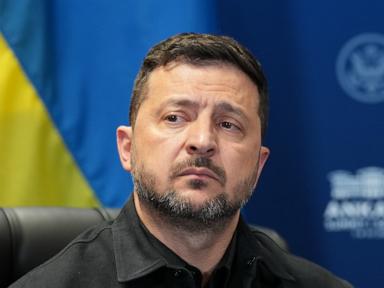
Ukrainian President Volodymyr Zelenskyy arrives in Belgrade to meet Serbian President Aleksandar Vučić, marking a profound shift in regional diplomacy that challenges Moscow's traditional grip on the Balkans. For years, Serbia stood as the premier outlier in Europe, refusing to join Western sanctions against Russia while maintaining deep cultural and energy ties with the Kremlin. Yet diplomacy rarely adheres to simple binaries. Beneath the surface of public handshakes lies an intricate web of economic pragmatism, European Union integration pressures, and a quiet, highly lucrative munitions pipeline that has supplied Ukrainian forces with hundreds of thousands of Serbian-manufactured artillery shells through Western intermediaries.
The timing of this diplomatic breakthrough is calculated. International observers have long watched Belgrade walk a tightrope between Brussels and Moscow, attempting to appease both sides while safeguarding its own strategic interests. President Vučić has routinely navigated this dual path, balancing domestic pro-Russian public sentiment against the absolute necessity of maintaining economic access to European markets. When Ukrainian and Serbian officials began quietly smoothing over historical grievances, the groundwork was laid for a high-stakes presidential summit. This meeting is not merely symbolic; it represents a hard-nosed calculation by both capitals that their immediate political and economic futures intersect.
The Munitions Pipeline Nobody Wanted to Discuss
Publicly, Belgrade maintained a strict policy of neutrality, insisting that it had never sold a single bullet directly to Kyiv. Formally, that statement remains true. In practice, however, a multi-layered commercial apparatus channeled substantial quantities of Serbian ammunition and ordnance through third-party nations like Poland and the Czech Republic.
Diplomatic cables and investigative reports from multiple outlets have detailed how Western intelligence agencies coordinated these indirect shipments. Former United States diplomats stationed in Belgrade openly acknowledged that American teams actively worked to align Serbian manufacturing capabilities with urgent Ukrainian military needs. Serbian defense factories hummed with activity, churning out artillery rounds that eventually found their way to the front lines in the Donbas and southern Ukraine.
Moscow was never fooled. Russian intelligence services issued repeated warnings to Belgrade regarding the destination of these exports. On at least one occasion, direct warnings were delivered during international summits. Despite the pressure, Serbian leadership permitted the trade to continue, driven by the stark economic reality of keeping its vital defense sector operational. For Belgrade, cash from ammunition sales outweighed diplomatic reprimands from the Kremlin. For Kyiv, the influx of reliable ordnance filled critical supply gaps during periods of acute ammunition scarcity.
The Brussels Factor and European Integration
The convergence of Ukraine and Serbia is also rooted in a shared administrative destination: the European Union. Both nations hold official candidate status, though their paths have faced vastly different obstacles. Ukraine's candidacy was fast-tracked under the immense pressure of wartime survival, while Serbia's accession process has dragged on for over a decade, bogged down by rule-of-law benchmarks, regional disputes, and frustration from Brussels over Belgrade's refusal to align with common foreign and security policies.
President Vučić has frequently pointed to the bureaucratic fatigue surrounding EU enlargement as a justification for maintaining independent ties with non-Western powers. Yet, as economic realities shift, the financial gravity of the European single market remains impossible for Serbia to ignore. Two-way trade, foreign direct investment, and infrastructure funding are overwhelmingly anchored to the West.
By welcoming Zelenskyy to Belgrade, Vučić signals to European capitals that Serbia is willing to engage constructively on matters of continental security and economic cooperation. It is a calculated signal designed to earn political capital in Brussels. At the same time, Ukraine views engagement with Belgrade as a strategic necessity to isolate Moscow further within regional forums, chipping away at traditional alliances that once seemed impenetrable.
Economic Pragmatism and Free Trade Realities
Beyond the geopolitical theater, the agenda in Belgrade centers heavily on commerce. Economic ties between Ukraine and Serbia predate the current conflict, anchored by a bilateral free trade agreement signed over a decade and a half ago. Trade volumes, which historically hovered in the hundreds of millions of dollars, took a severe hit following the escalation of hostilities, but both governments see clear avenues for revival.
Discussions during high-level preparatory visits by Ukrainian economic delegations have focused on reviving stalled trade negotiations, modernizing supply chains, and exploring joint ventures in agricultural machinery and infrastructure development. Serbia's construction and manufacturing sectors, seeking to expand their footprint across Eastern Europe, view post-war reconstruction in Ukraine as a massive commercial opportunity.
Conversely, Ukraine requires specialized industrial components and raw materials that Serbian enterprises can supply efficiently without relying on complex maritime shipping routes. This convergence of economic self-interest creates a buffer against political volatility. When trade is mutually beneficial, political friction becomes manageable.
Navigating Domestic Sentiment and Regional Fallout
The domestic political landscape in Serbia remains heavily tilted toward historical sympathies with Russia. Polling data consistently demonstrates that a significant majority of the Serbian public views Moscow favorably, influenced by shared Slavic heritage, religious ties, and lingering resentment over the 1999 NATO intervention. For Vučić, hosting the Ukrainian leader requires careful domestic framing. State-controlled and pro-government media outlets often temper the coverage, emphasizing economic pragmatism, humanitarian assistance, and respect for territorial integrity rather than direct alignment with anti-Russian coalition politics.
Yet political winds in the Balkans shift quickly. Regional neighbors are watching closely as Belgrade recalculates its strategic posture. For years, nationalist politicians across the region utilized the war in Ukraine to score cheap domestic points, but the sheer duration of the conflict has forced a transition toward hard-nosed realism. Leaders in Belgrade understand that standing entirely isolated from the emerging European security architecture carries a heavier price tag than enduring temporary displeasure from Moscow.
Diplomatic breakthroughs of this magnitude rarely happen overnight. They are forged in back channels, through quietly delivered artillery shells, administrative trade negotiations, and mutual recognition of shifting power dynamics. As presidential motorcades navigate the streets of Belgrade, the optics represent far more than a simple bilateral meeting. They signal the slow, grinding erosion of old alliances and the emergence of transactional foreign policies driven by survival and economic necessity. The Kremlin's grip on its historical partner has not vanished entirely, but the cracks are now wide enough to let daylight through.