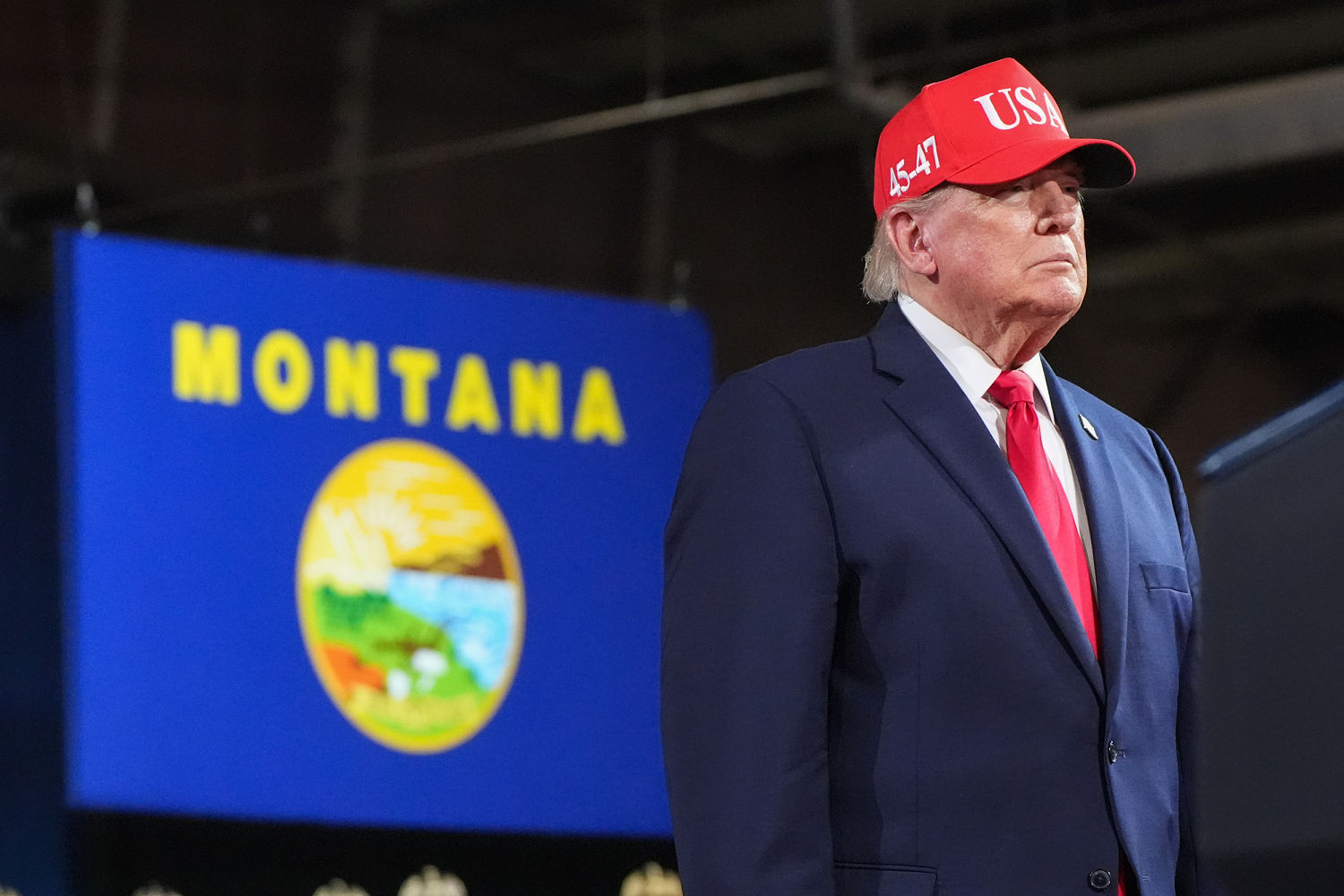
Two hundred bucks to fill a truck. Three point seven percent annual inflation. A president standing on a Montana stage telling the crowd that inflation is basically gone.
Classic political theater. Easy to mock.
Standard coverage of the Kalispell rally writes the exact same story every time. President boasts about a booming economy. Supporters complain about high diesel, groceries, and housing costs. Reporter highlights the "disconnect" between speeches and receipts.
That framing is lazy. Worse, it gets the economics backward.
Supporters in Montana are not imagining their pain. Neither are they simply confused by macro numbers. Both the White House boast and the standard "wallet pinch" story miss the deeper structural collision happening right now: price-level inertia colliding with a supply-shock economy trapped in low-hire, low-fire stasis.
Dismantling the Lazy Consensus
Conventional reporting treats inflation like a light switch. Either inflation is high, or it is low. Either the economy is booming, or people are broke.
Reality is messier.
When someone says "we don't have inflation" while annual Consumer Price Index (CPI) inflation sits around 3.7%, they are usually playing word games with the rate of change versus the cumulative price level. Even if the rate of price increases cools down from past peaks, prices do not automatically rewind to pre-shock levels. A 3.7% annual climb on top of years of elevated prices still hurts a household budget.
On the flip side, reporters who treat every high fuel or grocery bill as proof of a total economic collapse miss what is actually driving those costs.
Oil markets do not care about campaign slogans. When conflict disrupts key shipping lanes like the Strait of Hormuz, global crude and refined fuel prices jump fast. Even a major producer like the United States sits inside a global oil market. Refiners price against global benchmarks, and freight costs ripple into farm inputs, trucking, and store shelves.
To see the trap clearly, separate three distinct concepts that pundits mash together:
- Inflation (flow): The percentage rate at which a basket of goods and services rises over time.
- Price level (stock): The cumulative height of prices today compared to several years ago. Even slower inflation leaves the price shelf high.
- Real purchasing power: How much goods and services an hour of work actually buys after accounting for taxes, borrowing costs, and price changes.
When prices rise faster than take-home pay, real purchasing power drops—even if headline unemployment stays near 4%.
Battle Scars From Reading Economic Sentiment Wrong
I have watched businesses, campaigns, and investors blow serious money misreading consumer sentiment because they treated "voters feel squeezed" as a single monolithic signal.
A few years back, an analytics team I worked with assumed rising retail prices meant an immediate, across-the-board collapse in discretionary spending. We modeled a sharp drop in rural and mid-tier consumer outlays. It never happened evenly. Households did not stop spending overnight. Instead, they re-allocated violently. They traded down on brands, delayed big-ticket replacements, stretched maintenance intervals on equipment, and put more pressure on credit cards.
Watch what happens in rural economies like Montana when diesel, fertilizer, and freight costs spike at the same time. A dairy or grain operation cannot simply "skip" fuel during harvest or haulage season. Fixed and semi-variable operating costs eat cash flow first. A family might still show up to a rally, still back the candidate out of loyalty or fear of the alternative, and still feel genuinely squeezed every single week.
Political loyalty and financial strain coexist all the time. Treating loyalty as proof of economic comfort—or treating wallet pain as proof of instant partisan defection—is amateur analysis.
The Real Trap: Low-Hire, Low-Fire Stasis Plus Supply Friction
If you want to understand why this moment feels so sticky, look at the labor and cost mechanics rather than rally soundbites.
Economists and market observers have increasingly pointed to a "low-hire, low-fire" labor dynamic: employers are hesitant to lay off workers aggressively, yet cautious about expanding payrolls. Add tariff uncertainty, higher input costs, tighter immigration rules affecting labor supply in certain sectors, and elevated borrowing rates, and you get an economy that feels numb rather than explosive.
Imagine a scenario where a small regional contractor or farm operator faces 15% higher fuel and equipment-part costs alongside sticky interest rates on working capital. Firing two veteran crew members might save wages today, but replacing them later is slow and expensive. So the owner freezes hiring, holds off on expansion, passes along whatever price increases the market will bear, and absorbs the rest out of thin margins.
Now multiply that micro-decision across thousands of businesses.
- Workers do not get mass pink slips, so unemployment stays relatively contained.
- Yet wage growth feels underwhelming against elevated living costs.
- Capital investment slows because hurdle rates are higher and policy/trade/geopolitical shocks keep changing the math.
Heavyweights in macroeconomics and monetary policy—from Federal Reserve officials debating rate paths to trade and energy economists tracking supply chains—have spent years wrestling with this exact tension: supply shocks and cost friction do not neatly respond to single-lever policy fixes. You cannot decree cheap fuel at a podium while global chokepoints are strained, and you cannot solve structural affordability purely with talking points when real wages are fighting headwinds.
Answering the Wrong Questions People Also Ask
Is the U.S. economy actually booming or failing?
Wrong binary. Parts of the economy—certain high-productivity sectors, asset holders, or specific regions—show resilience, while average households dealing with elevated baseline prices, high borrowing costs, and energy shocks feel real pressure. Calling it a pure boom ignores everyday cost friction; calling it a total meltdown ignores ongoing output and low unemployment.
Why do supporters still back Trump if prices at the pump and grocery store hurt?
Because voters weigh relative blame, risk aversion, and non-price priorities alongside prices. Some blame prior administrations or external conflicts; others prioritize border security, judicial appointments, trade protectionism, or foreign policy over short-term grocery bills. Pain at the register does not automatically override identity or perceived lesser-of-two-evils math.
Will inflation coming down a bit fix affordability?
Not on its own. Disinflation—a slower rate of price growth—is not deflation, meaning lower overall prices. Affordability improves sustainably only when real incomes (wages adjusted for actual household costs, including housing, insurance, energy, and debt service) grow faster than expenses over time.
Where My Contrarian Take Can Burn You
Let me be blunt about the blind spot in pushing back against "wallet pinch" headlines: ignoring ground-level cash flow stress is a fast way to miss political and market turning points.
When households face higher fuel, food, rent, and loan costs, marginal voters—even loyal ones—can hit a breaking point on turnout, donations, or down-ballot support. And for businesses, dismissing consumer pushback as "just media noise" leads to bad pricing power assumptions. Shoppers eventually push back when shrinkflation, fees, and higher list prices stack up too high. Nuance is not an excuse to wave away real pocketbook strain.
Unconventional Moves That Actually Work Right Now
If you run a business, manage capital, or try to make smart household decisions in a choppy, high-friction cost environment, stop waiting for a magic macro reset. Take these steps instead:
- Audit your unit economics at "high-friction" energy and rate assumptions. Stress-test margins assuming fuel, freight, and borrowing costs stay elevated longer than comforting forecasts suggest. If a model only works when energy drops or rates plunge, fix the model.
- Compete on total cost of ownership, not sticker price. Buyers squeezed by high interest rates and running costs care about durability, operating fuel/power draw, maintenance intervals, and financing terms—not flashy list prices.
- Lock in variable-cost hedges and supplier flexibility early. Diversify vendors, lock favorable terms where possible, and keep cash buffers tight enough to survive supply hiccups without forced distress sales.
- Stop confusing headline macro averages with your customer or household segment. Track the exact basket of goods, interest rates, and local wage trends that hit your specific zip code or customer base.
Stop arguing over who gave the punchier rally line in Montana and start tracking where cash flow actually breaks.
Trump touts economy, slams Biden's speech habits during Montana rally
This clip shows the contrast between rally rhetoric on the economy and the broader political environment surrounding the Montana speech.


