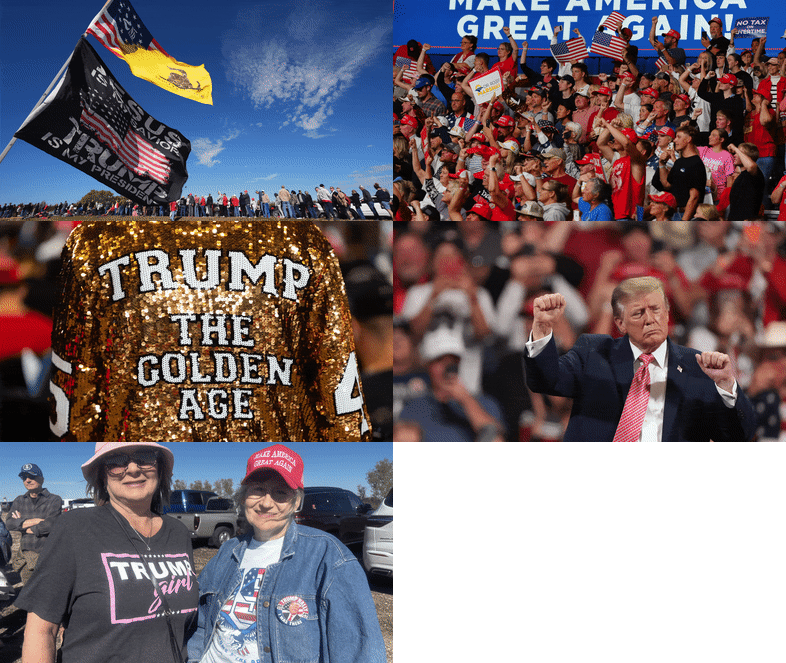
Stand in line for six hours in the freezing wind. Wait past midnight for a speech that runs twice as long as scheduled. Watch thousands of red hats roar like they just won the Super Bowl.
Then look at the ballot box the next Tuesday.
The lazy consensus in campaign journalism goes something like this: massive crowds, late nights, and deafening adulation equal political muscle. Reporters show up at airport hangars and fairgrounds during midterm season, describe the electricity in the room, and quietly imply that all that passion translates into safe seats and surging turnout.
It is lazy because it mistakes sensory drama for electoral math.
I have spent years inside war rooms watching campaigns burn seven-figure budgets chasing applause lines that felt electric in an arena and registered as flatline noise in precinct data. When you look closely at what happened across the 2026 midterms, the gap between the rally floor and the voting booth stops looking like a minor quirk. It looks like a structural trap built right into how modern political spectacles operate.
The Wrong Question Everyone Keeps Asking
Most coverage of Donald Trump’s midterm rallies asks a comforting, surface-level question: How fired up is the base?
That is the wrong question. Base fervor was never the bottleneck in a rally hall. The real question is much colder and far more unforgiving: What does an ultra-visible rally do to everyone who is NOT in the room?
In midterm elections, the electorate behaves differently than it does in presidential years. Turnout is lower overall, negative partisanship carries heavier weight, and voters who do not live and breathe political theater often decide close House and Senate contests. When a sitting president turns a midterm cycle into a nonstop referendum on himself—urging voters to act as if he is on the ballot—he does not just energize loyalists. He hands his opponents a flashing neon target.
Consider the mechanics of negative mobilization. Political scientists like Alan Abramowitz and Gary Jacobson have spent decades documenting how nationalized elections and out-party anger drive midterm swings. When a high-salience leader dominates every headline from October through Election Day, opposition voters do not need to love their own party's platform to show up. They show up to answer the spectacle.
Look at the numbers from Virginia’s 2026 midterm results analyzed by Cardinal News. Republican candidates did not suffer from a collapse of their own baseline voters; they largely turned out at normal midterm levels and retained solid shares of their 2024 presidential vote. Democrats, meanwhile, turned out at near-presidential levels, posting retention rates above 87% in multiple districts and clearing 90% in places like Northern Virginia.
You do not get near-presidential turnout in a midterm by accident. You get it when the dominant figure on the other side makes every rally feel like an existential clash.
What "Adulation" Actually Measures
Adulation inside a venue is a lagging indicator of loyalty, not a leading indicator of persuasion.
When someone waits hours in line for a late-night rally, they are already deep inside the tent. Polling data consistently shows that midterm swing voters and cross-pressured groups—such as suburban moderates or shifting Hispanic voters—care far more about kitchen-table friction like fuel prices, groceries, and cost of living than they do about who commands the loudest chant at a fairground.
Imagine a scenario where a campaign holds three packed rallies in safe or leaning-red states during the final week before Election Day. Every camera crew in the country airs the same clips of cheers, grievances, and big promises. Inside the hall, the energy looks unstoppable. Outside the hall, an undecided or low-propensity voter worried about high gas prices or household bills sees a show that feels detached from their weekly paycheck—while an angry opposition voter sees a reason to march straight to early voting.
That is the irony of the rally model. The very intensity that makes the room feel invincible can harden resistance everywhere else.
People Also Ask: Dismantling the Rally Myths
Do big rallies boost voter turnout where it matters most?
Not automatically, and often not efficiently. A massive crowd in a state or district that already leans heavily Republican can pad raw cheer volume without moving marginal precincts. Even worse, late-night marathon schedules can drain local ground game bandwidth if campaign staff spend their oxygen staging a mega-event instead of knocking doors, curing ballots, and chasing low-turnout targets in competitive zip codes.
Turnout is a logistics problem disguised as an emotion problem. Cheers do not fill out mail-in envelopes or get reluctant voters to a polling place on a rainy Tuesday.
Why do candidates keep holding late-night rallies anyway?
Because for a dominant political personality, rallies solve a personal supply-and-demand problem. They provide immediate affirmation, total control of the stage, and guaranteed cable and social media clips. When national polls tighten or pocketbook issues create headwinds—like high fuel costs or voter frustration over affordability—an arena full of cheering supporters feels like an antidote to bad numbers.
There is also a donor and media illusion at play. Big crowds make fundraisers feel confident and give reporters easy color copy: long lines, late nights, roaring chants. What feels like momentum in the press pen can easily be a closed loop of preaching to the converted.
Are rallies ever worth the time and money in a midterm?
Yes, under strict conditions—and almost never as a substitute for targeted persuasion or disciplined down-ballot messaging.
A rally works best when it is short, geographically surgical, and laser-focused on a specific down-ballot candidate's local message rather than turning into an endless solo grievance tour. If a headline draw shows up to drive early-vote banking in a knife-edge district weeks before Election Day, and pairs that appearance with hard precinct targeting, it can help. If it runs past midnight in a place where margins are already lopsided, the return on time is brutal.
The Battle Scars Behind the Spectacle
I have watched smart operatives defend stadium and hangar events right up until the precinct returns came in twenty points shy of the vibe in the room. The excuse is always the same: You should have seen the line outside.
Lines do not vote. Checklists do.
Across multiple cycles, I have seen campaigns pour millions into production, security, travel, and staging while underinvesting in mundane unglamorous work: identifying persuadable voters, testing messages on cost-of-living anxieties, and building durable local turnout operations. When an election turns on affordability, skepticism, or frustration with incumbents, a spectacle that only speaks to die-hard fans leaves swing and cross-pressured voters cold.
To be fair, my contrarian view carries real trade-offs. If a party or movement starves its core base of visible leadership and high-energy moments, enthusiasm among loyalists can sag. In an era where base turnout still sets the floor in low-interest elections, telling a charismatic figure to dial back the showmanship is politically risky. Base voters want to feel seen, and rallies deliver that feeling in high definition.
The mistake is treating base validation as a complete strategy. Feeding the fire in the front row does not automatically win the house next door.
| Rally Metric | What Observers Assume It Means | What Actually Happens in Midterms |
|---|---|---|
| Hours-long lines | Guaranteed surge in Election Day turnout | Often reflects high-dedication loyalists who already vote reliably |
| Late-night marathon speeches | Proof of unmatched stamina and command | Can exhaust audiences and crowd out sharper down-ballot focus |
| Deafening arena adulation | Broad popular appeal and momentum | Can trigger sharp backlash and higher turnout among opposing voters |
| Heavy national media coverage | Persuasion of undecided voters | Frequently nationalizes a local race around the top of the ticket |
What Actually Works Instead of Chasing Applause
If you want to win tough midterms rather than win the applause meter inside a convention hall, stop optimizing for spectacle and start optimizing for marginal votes.
- Audit every appearance against precinct math, not crowd size. Ask one ruthless question before booking a stop: Does this event move votes in a district that decides control of the chamber, or does it just make the highlight reel?
- Keep the spotlight on the local race and daily costs. Voters heading into a midterm want concrete answers on prices, jobs, and stability—not a three-hour replay of past grievances. Disciplined, concise messaging beats rambling theater every single time.
- Treat early and mail voting as a logistics grind, not an afterthought. Turning out voters ahead of Election Day banks votes before late news cycles or bad weather can get in the way.
- Measure persuasion, not just passion. Track how cross-pressured and independent voters react to your message, not how loud the front rows scream when the music hits.
Crowds are easy to stage and thrilling to watch. Ballots are harder to earn. Stop confusing the roar in the room with the quiet mark on the page.