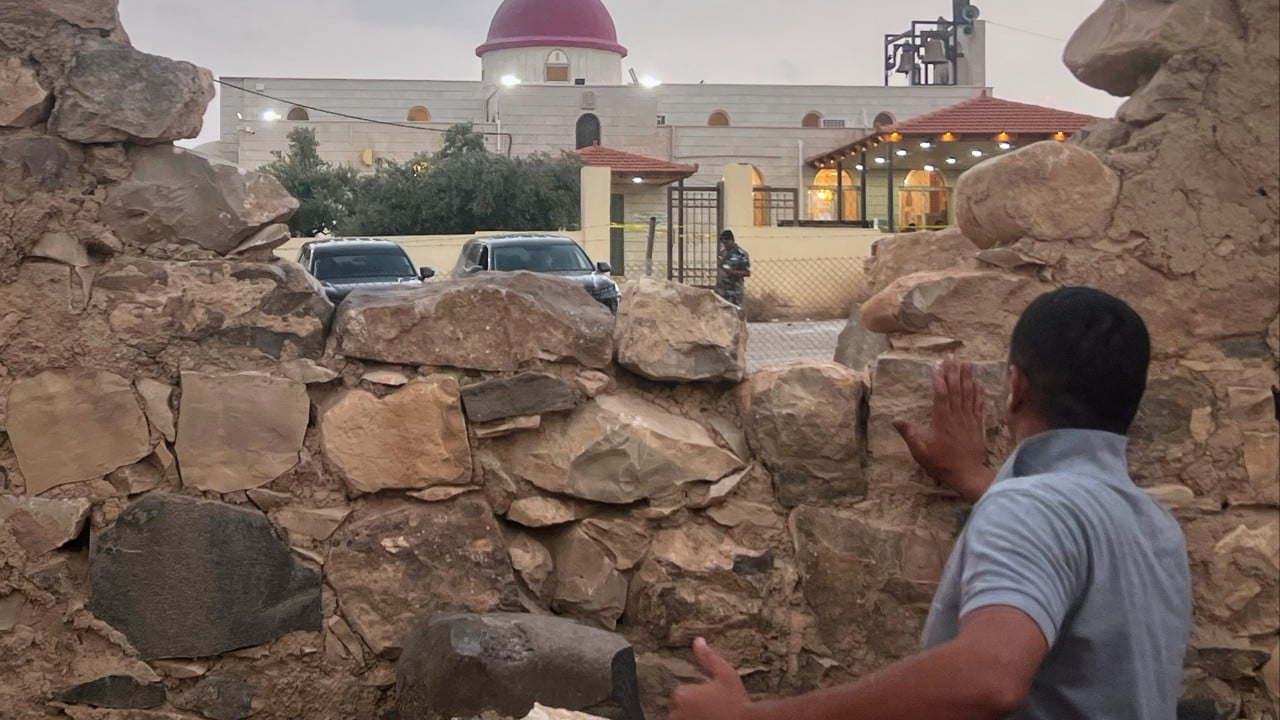
Gunfire.
A single word can tear apart a Sunday afternoon that smelled of cardamom coffee, dry limestone dust, and the slow, unhurried rhythm of a hillside town. In southern Jordan, where ancient stone fortresses look down over steep wadis and olive groves, a church is supposed to be a place where voices drop to a murmur and time loosens its grip. When armed assailants strike a church and leave seven people dead, the shock does not stay inside the courtyard. It ripples outward through families waiting for a phone call that never comes, through neighbors who share the same baker and the same school bus route, and through a monarch stepping to the microphone to promise that the state will answer with force.
I have stood in places like this after the sirens fade and the yellow tape begins to flap in a warm breeze. You notice small things first. A pair of scuffed shoes left near a doorway. A cup of tea gone cold on a low table. The way people look at one another's faces, searching for reassurance in eyes that are just as hollowed out as their own. Violence against a house of worship hits a nerve that ordinary street crime never touches, because it attacks the shared agreement that some spaces are set apart for mercy, grief, and quiet faith.
What Cold Headlines Miss About a Church Attack
Standard dispatches reduce a tragedy like this to a tally: seven killed, gunmen at large, a royal vow of retaliation. That shorthand serves speed, not truth. Behind the number seven are seven distinct routines that ended mid-sentence—a father who meant to pick up groceries on the drive home, a young person planning next week's exam schedule, an older parishioner who knew every crack in the plaster.
To understand why an attack on a church in Jordan carries such heavy weight, it helps to look at how Christian and Muslim communities live side by side in the kingdom. Jordan's Christian population is a small minority—roughly two to three percent of citizens—yet its presence is woven deep into the social fabric of towns and cities across the country. In places like Karak, Madaba, Salt, and Amman, families often know one another across generations and across confessions. Neighbors attend one another's weddings and funerals. Children grow up hearing the call to prayer from a nearby mosque alongside church bells ringing out over stone rooftops.
A vow of retaliation from the crown is meant to project strength and calm panic, yet every promise of a harsh crackdown carries a delicate balance between security and restraint.
When gunmen target a church, they are not merely attacking individuals; they are trying to drive a wedge into that everyday coexistence. Extremist groups frequently pick soft, symbolic targets in an effort to provoke fear, fracture trust between neighbors, and make a stable country feel fragile. If citizens start viewing fellow countrymen with suspicion, the attackers win a victory that bullets alone could never achieve.
The Anatomy of Fear and Resolve
Let us use a brief hypothetical scenario to trace how a single afternoon of violence echoes through a community. Suppose a shopkeeper named Tariq—a fictional name created here to illustrate a common human dilemma—closes his shutters early because rumors of checkpoints and roadblocks are spreading faster than verified news. Across the street, a Christian neighbor named Samir checks on his elderly parents, locking the iron gate a little tighter than usual while his phone buzzes with messages from relatives asking if everyone is safe. Neither man caused the violence. Both are caught in the same storm. Yet without clear information and steady leadership, even lifelong neighbors can feel a sudden, unfamiliar distance between them.
That distance is what security forces and local leaders race to close. In Jordan, stability has long been treated as a hard-won lifeline in a turbulent neighborhood. Surrounded by regional conflicts and shifting borders, the country has built an identity around order, hospitality, and internal calm. When gunmen strike inside Jordan's borders, the breach feels personal to the palace and to the public alike.
A king vowing retaliation speaks to that wounded pride and that demand for protection. In political terms, a strong public response signals that the state will not cower or cede ground to militants. Police and intelligence units move quickly to secure perimeters, pursue suspects, and prevent follow-on strikes. Still, seasoned observers know that retaliation is a blunt instrument if it is not paired with precision, rule of law, and community trust. Sweeping raids or heavy-handed measures can sometimes create new grievances if innocent residents feel targeted or humiliated. Real security depends on finding the actual perpetrators while keeping ordinary townspeople on the side of the law.
Consider what happens next: grief begins to harden into questions. Families ask how armed men moved and struck before responders could stop them. Citizens ask whether checkpoints and surveillance are enough when small cells adapt their tactics. Local officials try to project calm while mourning the dead alongside grieving relatives.
Why Coexistence Is Harder Than It Looks
Peace in a mixed community is rarely an accident. It is a daily practice, closer to tending a terraced garden on a steep slope than pouring concrete. A metaphor helps clarify why: terraces hold back erosion only when people keep repairing the low stone walls after heavy rain. If everyone ignores a loose stone because the wall still looks standing from a distance, the next downpour can bring soil and roots tumbling down together.
In Jordan, those low walls are made of tribal ties, shared civic pride, royal patronage, and decades of living next door to one another. Even when tensions rise in the wider region—over economic strain, unemployment, or geopolitical shocks—most Jordanians have resisted turning on their neighbors over faith. Yet resilience should never be mistaken for immunity. Extremist ideology feeds on anger, alienation, and desperation, searching for cracks in any society where young people see few prospects or where fear clouds judgment.
People often ask a few straightforward questions whenever a headline like this breaks:
- Why target a church specifically? Houses of worship draw attention immediately, carry deep emotional and symbolic meaning, and often have fewer hardened defenses than military bases or government compounds.
- What does a royal vow of retaliation mean in practice? It signals political resolve and authorizes decisive security operations to track down attackers and dismantle networks, though how that resolve is carried out shapes long-term calm.
- How do local communities cope afterward? Usually through a mix of shared mourning, heightened caution, tight-knit family support, and a quiet determination to keep daily life moving despite the shock.
I have seen how fragile normal life can feel on the morning after an attack. Traffic moves slower. People speak in lower tones. Shopkeepers keep one eye on the street while pouring coffee with the other. At the same time, there is a stubbornness in ordinary people—a refusal to let strangers with rifles dictate who they are allowed to trust.
Beyond the Noise of Breaking News
Within days, the television cameras move on to the next crisis somewhere else on the map. The breaking-news banners vanish. Yet for the families of the seven people killed, the story does not end when the broadcast shifts. Grief lives on a slower clock. It shows up in an empty chair at dinner, in an unanswered text message, in the quiet realization that a normal Sunday was stolen for no reason at all.
The test of any society after such a blow is not just how swiftly it hunts down the guilty, though justice matters deeply. The deeper test is whether the bonds between neighbors hold firm when grief is raw and anger is loud. A king can promise retaliation, and security forces can stand guard at every intersection, but the real defense of a community lives in how ordinary people treat one another when the lights go out.
Tomorrow morning, somewhere in southern Jordan, a shutter will roll up on a shopfront, a bell or a call to prayer will drift across the stone hills, and people who have buried their dead will still have to walk past one another in the sunlight.


