The room smells faintly of cardamom, ozone from air purifiers running at full tilt, and the quiet, exhausting dread that comes when a single sentence on a screen can change the price of bread three continents away.
Doha.
Here, everything happens behind heavy glass and polite voices. Outside, the Persian Gulf shimmers under a pale sun that feels both ancient and entirely too close to smoke. Inside, diplomats measure silence the way jewelers measure gold. A pause of four seconds when a demand is read aloud means something. A shifted glance toward an aide means something else.
When people read a headline about a clash between Iran and the United States, or a meeting between Qatar's prime minister and Donald Trump over where a truce is getting stuck, they usually picture war rooms, maps covered in red pins, and men with tight jaws standing before microphones. That is real enough. Yet the real friction rarely lives in the loudest speeches. It lives in the narrow space between what a leader can afford to concede in private and what he cannot survive conceding in public.
I have spent years watching crises in the Middle East unfold from close enough to feel the tremor in ordinary routines—the sudden quiet in a market when fuel trucks are delayed, the way families refresh flight trackers at two in the morning, the strange numbness that sets in when sirens or rumor mill alerts become part of the background hum of a Tuesday. You do not need to stand on a front line to feel the weight of a standoff. You only need to watch how quickly certainty evaporates when two sides believe survival itself is on the table.
And honestly, if the whole tangle of red lines, sanctions relief, proxy networks, regional security guarantees, and bargaining leverage sometimes feels dizzying—even to people who follow foreign policy for a living—you are not alone. Confusing is an understatement. Scary is closer to the truth. When two powerful capitals lock horns and a small peninsular state steps into the middle to carry messages back and forth, every word carries double weight. What sounds like a technical sticking point on paper can be a political trapdoor in real life.
Where Peace Gets Tangled Before a Word Is Spoken
To understand why a deal between Washington and Tehran hits a wall—and why Qatar's prime minister finds himself walking a tightrope straight toward Donald Trump—start with a simple truth about human pride.
Most people think negotiations fail because nobody wants peace. That is rarely true. Negotiations fail because neither side wants to look like the one that blinked first.
Let me offer a metaphor here, just to make the mechanics plain. Think of two drivers barreling down a narrow mountain road toward each other, each convinced the other is crazy enough not to swerve. Neither wants a crash. A crash wrecks both cars. Yet swerving means losing face, losing footing, and handing the other driver control of the lane. A mediator—like Qatar's prime minister stepping into talks with the U.S. president—is not a referee blowing a whistle from a safe booth. He is the person standing on the shoulder waving flags, trying to convince both drivers that moving an inch to the right is not surrender, just physics.
In diplomatic terms, the sticking points around an Iran-U.S. understanding almost always cluster around three interlocking knots: trust, verification, and leverage.
First is trust, which is in short supply whenever history feels like a ledger of broken promises and sudden reversals. One side looks at years of pressure, isolation, and strikes; the other looks at regional escalation, nuclear anxieties, and deep suspicion of every concession. When you do not trust the person across from you, a promise sounds like a trap.
Second is verification—the unglamorous, relentless question of who checks what, how fast, and with what consequences if someone cheats. Big agreements die in small print. A phrase about monitoring access or lifting restrictions can mean two completely different things to two different legal teams.
Third is leverage. Nobody gives up their sharpest card for free. If one side holds back pressure to test goodwill, the other may read restraint as weakness. If one side demands sweeping guarantees up front, the other worries it is giving away its only bargaining chip before getting anything solid in return.
Now, to see how these abstract sticking points press down on actual lives, let's step into a hypothetical scenario—clearly labeled as one, built from the very real pressures that ripple out whenever talks stall.
A Hypothetical Evening in Three Living Rooms
Imagine—strictly as a hypothetical illustration—three rooms lighting up at the exact same hour.
In a modest apartment in Tehran, Layla (a hypothetical character) sits beside her father as he listens to a broadcast with the volume turned low. He repairs small appliances for a living. When sanctions tighten or conflict flares, his workbench slows down first; copper wire costs more, spare parts vanish or double in price, and neighbors hold onto broken radios and kettles rather than spend cash they might need for groceries next month. He doesn't care about diplomatic jargon. He cares whether the price of cooking oil will jump again by Friday.
Thousands of miles west, in a quiet suburb outside Columbus, Ohio, Sam (also a hypothetical character) scrolls through news alerts while his coffee goes cold. He drives long-haul freight. When tension rises around the Gulf and shipping lanes grow nervous, diesel prices and broader market jitters don't stay on Wall Street; they show up in rate talk, fuel surcharges, and the uneasy feeling that the ground beneath the economy is shifting again.
And in Doha, a senior Qatari aide—again, hypothetical—reviews a stack of talking points before a high-stakes meeting with Donald Trump. Qatar has built a distinct role in regional diplomacy: talking to almost everyone when almost nobody else will. Being the go-between is powerful. It is also maddening. You carry messages you didn't write, absorb frustration from capitals that blame the messenger for the message, and try to keep a fragile channel open when every headline pushes toward harder lines.
That is the human geometry of a stalled deal. High diplomacy looks remote on a screen, yet its aftershocks land on kitchen tables, highway stops, and quiet living rooms thousands of miles apart.
Why the Middleman Matters When Doors Slam Shut
When direct talks between Washington and Tehran hit friction, why does a figure like Qatar's prime minister end up sitting down with Donald Trump?
Because channels matter when pride blocks direct eye contact.
History shows us a recognizable behavioral pattern in high-stakes standoffs: when adversaries are locked in mutual suspicion, direct communication often becomes theatrical. Every public statement is aimed at a domestic audience, a rival faction, or an ally watching closely. Nuance gets flattened into slogans.
A trusted intermediary changes the room's temperature—at least slightly. Quiet backchannels let negotiators test ideas without immediately owning them if they fail. A question can be asked as a "what if" rather than a demand. A face-saving off-ramp can be sketched out on paper before anyone has to stand in front of cameras and defend it.
Yet mediation has limits that no amount of charm or diplomatic skill can wish away. A middleman can carry a torch through a dark hallway, but he cannot force the people at either end to open the doors. If the core sticking points—whether over security boundaries, economic relief, or enforcement—remain unresolved, even the sharpest meeting in the world can end with polite smiles and very little movement.
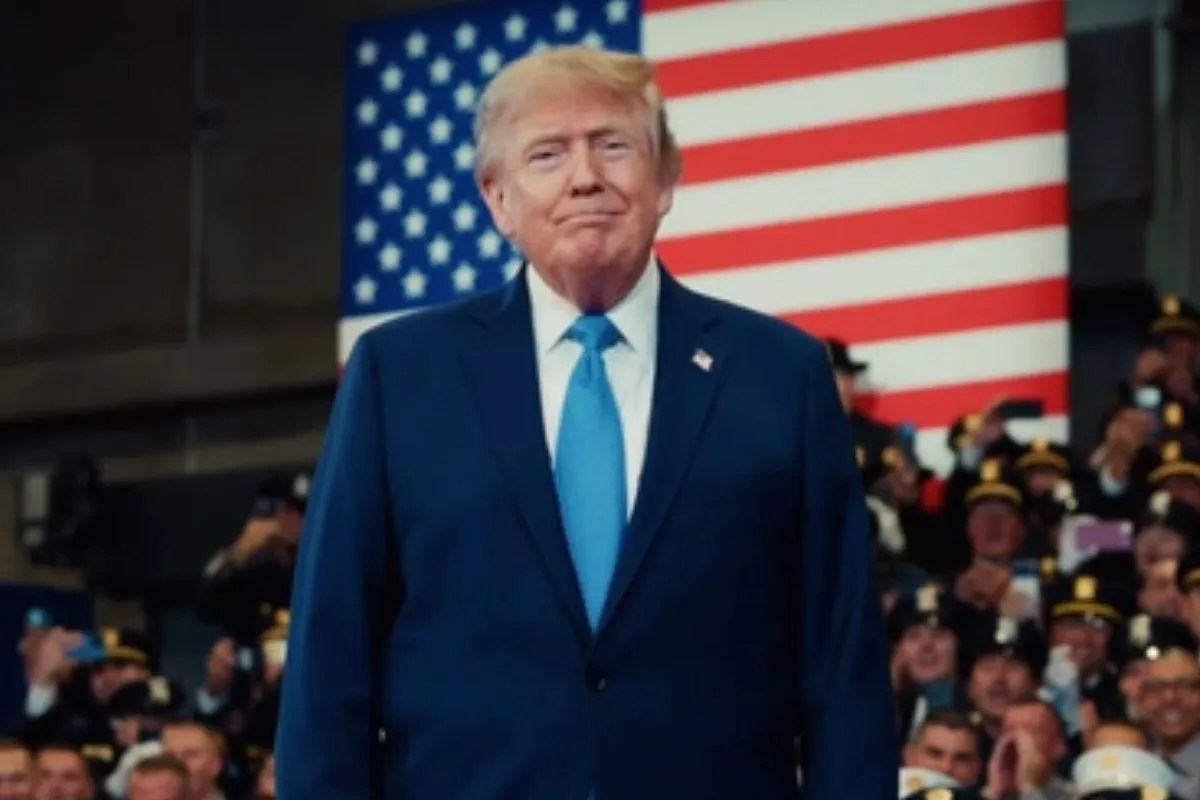
Trump's approach to negotiations has consistently centered on hard leverage, direct dealmaking, and high-stakes pressure, which makes meetings with a key regional broker like Qatar's prime minister especially charged. For Qatar, keeping Washington engaged while maintaining lines of communication with Tehran is an exercise in constant balance. Push too hard on one side, and you lose credibility as a bridge. Move too slowly, and events on the ground overtake the table.
Waiting.
That is what so much of diplomacy actually feels like from the inside: hours of waiting for a phone call, a revised draft, or a signal that the other side is ready to move even half an inch.
The Invisible Stakes Behind Every Sticking Point
It is easy to treat geopolitical deadlocks like chess matches where pieces simply slide across a board. Real life is messier. Every delayed breakthrough carries invisible costs that rarely make the headline summary.
There is the cost to ordinary people caught between policies they never voted on. Families saving for a wedding, a medical bill, or a child's schooling suddenly have to calculate inflation, currency swings, or travel disruptions.
There is the cost to regional stability. When talks stall and war or escalation hovers in the background, miscalculation becomes the biggest danger in the room. A misunderstanding at sea, a sudden strike, a sharp retaliatory move—history is full of conflicts that widened not because anyone planned a grand catastrophe, but because tension left zero margin for error.
And there is the quiet exhaustion of hope itself. People watch rounds of diplomacy begin with cautious optimism, hit familiar roadblocks over trust and terms, and stall again. After enough cycles, cynicism sets in. Cynicism feels smart in the moment—like armor against disappointment—but it also makes breakthroughs harder to imagine when a real opening finally appears.
Still, I cannot bring myself to write off diplomacy as theater. I have seen what happens when quiet talks hold even by a thread: families reunite, tensions cool for a stretch, shipping lanes breathe a little easier, and a crisis that looked inevitable steps back from the edge. Imperfect compromises are frustrating. Fragile truces are stressful. Yet compared to the alternative—an open-ended clash where everyone pays and nobody truly wins—the grind of negotiation remains the only adult exit ramp in the room.
When the prime minister of Qatar meets with Donald Trump over where an agreement with Iran is snagging, the real drama isn't just who holds the stronger hand today. It is whether anyone can find a way out of the corner without burning the house down on the way out.
Night falls over the Gulf, quiet and heavy, while somewhere behind closed doors two words—what if—are weighed one more time against the cost of letting go.


