Silence.
That is what hits you first when a voice that has lived inside your television room or cinema seat for forty years suddenly goes quiet, leaving behind only the hum of a refrigerator, the glow of a screen, and the strange realization that even the steadiest anchors on our cultural map eventually slip their moorings.
Tom Skerritt is dead at ninety-three.
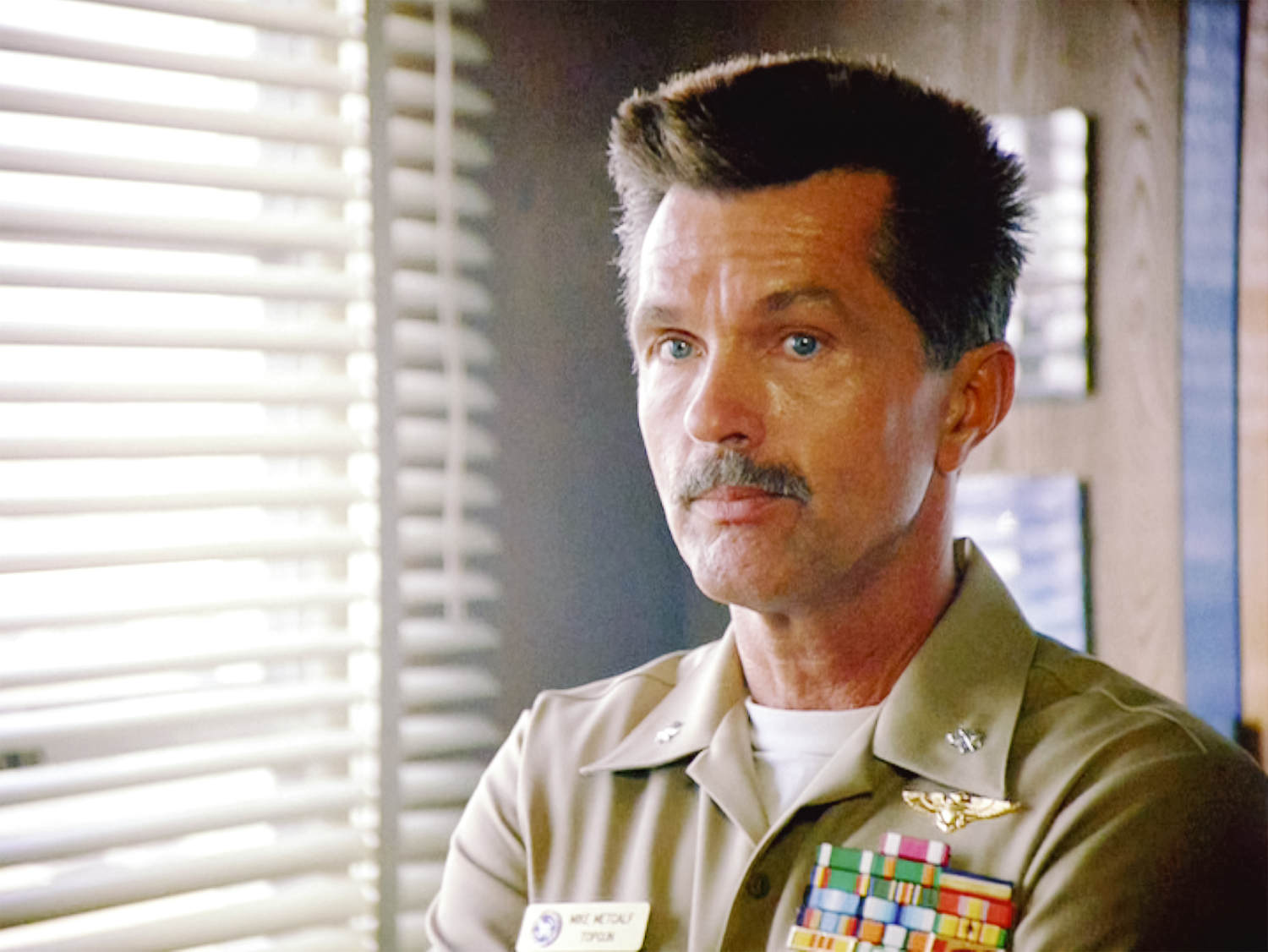
If you read the standard wire reports, you get the clean ledger of a long life in American screen acting: an Emmy Award for his work on Picket Fences, a turn as the steady-eyed squadron leader Viper in Top Gun, decades of stage work, television dramas, and rugged leading or supporting roles that never chased the loudest neon on the boulevard. Those facts matter. They give shape to a career that began in the early 1960s and stretched across generations of viewers who barely knew each other's names, yet shared the same living-room rituals.
Still, a ledger rarely explains why a death feels personal.
I remember sitting on a worn wool sofa during a rain-slicked autumn in the Pacific Northwest, watching reruns on a cathode-ray box whose glass smelled faintly of warm dust whenever it kicked on. Outside, fir needles tapped against the windowpane like impatient fingers. Inside, characters argued around kitchen tables, weighed moral compromises in small-town courtrooms, or spoke with calm, gravelly authority before a mission went sideways. You do not need to be an actor to recognize the weight of someone who knows how to hold a room without shouting. You only need to have grown up watching people try—and sometimes fail—to keep their word.
To understand why Tom Skerritt's passing at ninety-three carries more than obituary trivia, we have to look past the headlines and examine the invisible architecture of his craft. Hollywood worships fireworks. It sells origin stories, overnight breakthroughs, and gilded trophies polished under harsh studio lights. Yet most real lives—and most lasting performances—are built on something quieter: endurance, restraint, and the willingness to play human beings who are neither saints nor cartoons.
Why Quiet Authority Outlasts the Spotlight
Consider what happens when a story leans on volume instead of truth.
In modern entertainment, urgency is manufactured at every turn. Camera cuts snap every two seconds. Scores swell before a character even takes a breath. Villains twirl metaphorical mustaches, and heroes deliver speeches engineered for viral clips. It is exhausting, loud, and remarkably easy to forget by Tuesday morning.
Now picture a hypothetical viewer—let's call her Maya, a high school history teacher in Ohio grading essays at midnight with cold coffee beside her elbow. (Maya is a composite figure invented here to illustrate a familiar viewing habit, not a real person.) Maya isn't looking for spectacle at eleven-thirty at night. After spending seven hours mediating hallway disputes and explaining civic institutions to teenagers who would rather be on their phones, she wants stories that treat grown-up dilemmas with respect. When she flips on an older drama featuring Skerritt—whether a tense courtroom moment in Picket Fences or a quiet conversation about risk and command in Top Gun—what holds her attention isn't pyrotechnics. It is the stillness before the line is spoken.
That stillness is a technical skill, even if it looks effortless from the couch.
In screen acting, less movement often forces the audience to lean in closer. A slight tilt of the jaw, a pause while eyes scan a room, a voice dropped half an octave instead of raised to the rafters—these choices tell the viewer that the character has already thought through the consequences. When a performer avoids melodrama, the stakes feel closer to real life, where nobody gets a dramatic musical cue when a marriage strains, a career stalls, or a loved one's health begins to turn.
There is a catch, though, and honesty requires admitting it. Quiet strength can easily be misread as passivity. In an era that rewards self-promotion and constant noise, a career built on craft rather than constant self-mythologizing can look understated from the outside. Sometimes I wonder whether audiences today even notice how rare that restraint has become, or whether we have grown so accustomed to shouting that calm competence registers almost like a foreign language.
The Small Town and the Open Sky
To see how Skerritt's presence bridged very different corners of American pop culture, look at two poles of his public memory: the sun-drenched, high-G swagger of Top Gun and the quirky, moral-maze intimacy of Picket Fences.
On paper, a fighter pilot instructor and a small-town figure navigating messy community dynamics belong to different universes. One evokes roaring jet engines, leather flight jackets, and split-second tactical decisions above the ocean. The other evokes front porches, civic pride, local friction, and the everyday compromises of neighbors living shoulder to shoulder.
Think of it like two rooms in the same house. One room has tall windows opening onto wide weather and big horizons; the other has low beams, creaky floorboards, and lamps turned low against the evening chill. You walk between them without changing your own pulse, because the person standing in the doorway feels consistent.
That consistency is why viewers so often conflate long-serving actors with the steady figures they portray. When an actor appears across decades—shifting from younger rugged roles in the sixties and seventies to seasoned authority in the eighties and nineties—the audience's own aging gets braided into the timeline. A teenager watching a film in a sticky-floored theater in 1986 experiences a very different emotional register when rewatching the same scene thirty or forty years later, after mortgages, grief, promotions, and quiet losses have added weight to their own shoulders.
Ninety-three years is a long stretch by any measure. Born in 1933, Skerritt lived through a world transformed several times over: from radio serials and black-and-white television sets to cable dramas, home video, streaming catalogs, and smartphones that fit an entire archive of cinema inside a pocket. Most people who reach ninety-three do so far from cameras, surrounded by family photos and grandchildren who only know them as "Grandpa" or "Uncle," completely detached from whatever public resume they once carried.
That contrast—between the public face frozen in celluloid or broadcast tape and the private human being aging in real time—is one of the strangest parts of growing up alongside entertainers.
What Age Ninety-Three Actually Means
Numbers in headlines go by fast. Dies at 93. Five words, easy to scan while waiting for a train or standing in line for groceries.
Yet ninety-three years holds roughly thirty-three thousand days. Even if we strip away childhood and focus only on an adult working life in entertainment spanning several decades, that represents years of early call times in damp trailers, memorizing pages of dialogue after long drives, waiting quietly on set while lighting technicians adjust stands, and finding ways to stay relevant as tastes shift beneath your feet.
I have never stood on a Hollywood soundstage, so I will not pretend to know the exact pressure of network executives or box-office expectations. What I do know—from watching enough people try to build lasting work in creative fields—is how brutal attrition can be. For every name that stays recognizable for half a century, dozens of talented performers vanish after a season or two, not necessarily for lack of skill, but because timing, luck, and industry trends are unforgiving.
When someone reaches ninety-three and leaves behind Emmy recognition alongside roles remembered by millions, it invites a quieter reflection than a standard career recap. It asks what survives when the applause stops.
Not the gossip. Not the trade-magazine numbers. Usually, it comes down to two things: a handful of moments that made strangers feel something real, and the way the work held up when watched again years later.
A Hypothetical Conversation at the Kitchen Table
To make this less abstract, imagine a hypothetical evening two weeks after the news breaks—say, in a small apartment in Chicago where two siblings, David and Claire, are clearing out boxes after a family move. (Again, David and Claire are fictional stand-ins created to ground how grief and memory ripple through ordinary conversations.)
David holds up an old DVD or points to a show on a laptop and says, "I still remember how steady he sounded in that scene. Like nothing could rattle him."
Claire pauses with a roll of packing tape in her hand. "Yeah, until you watch it again older and realize he was terrified underneath, he just didn't make it about himself."
That distinction—between looking unshakeable and refusing to turn personal fear into a spectacle—captures why certain performers linger in memory. Real courage rarely looks like a movie poster. Often it looks like showing up on time, doing the work honestly, letting other people have the spotlight when the scene calls for it, and carrying whatever weight belongs to the moment without demanding a medal.
But the real problem lies elsewhere in how we process losses like this.
We tend to rush past them. A quick scroll, a brief sad reaction, a post quoting a famous line, and within an hour the feed has moved on to election polls, sports scores, or a new release. Speed is the default setting of modern attention. We treat remembrance like a notification to clear rather than a room to sit inside for a minute.
Maybe slowing down for just a few paragraphs isn't a waste of time. Maybe noticing when a long, consequential life ends is a way of checking our own compass—asking what kind of steadiness we value when everything around us feels provisional.
The Weight of a Long Arc
There is a reason milestones like ninety-three feel heavier than tragic early losses, even though both hurt in their own way. A sudden loss feels like a sentence cut off mid-clause; a long life reaching ninety-three feels like a novel whose final pages have turned gently, leaving the reader holding the cover long after the story is done.
In both cases, what remains is memory, filtered through whoever is doing the remembering. For some, Tom Skerritt will always be the calm authority figure in a flight suit or a dramatic ensemble. For others, he will be an Emmy winner whose name surfaced during family TV nights, or a familiar face glimpsed in a movie they stumbled across late at night and couldn't turn off.
None of those memories require perfection to matter. Art isn't a taxidermy museum where every detail must stay frozen and spotless. It is closer to a river that keeps moving, carrying leaves, silt, and reflections of whatever passes overhead until the water reaches the sea.
When someone who helped shape decades of screen storytelling passes at ninety-three, the story doesn't end with a birth year and a death year separated by a hyphen. It lives on in every viewer who ever felt seen by a quiet performance, every younger artist who learned that restraint has power, and every ordinary evening made a little more memorable by a voice that knew how to fill the room without raising its voice.
Late at night, long after the credits roll and the screen goes black, the quiet that follows isn't empty at all—it is full of everything a long life left behind.