The fluorescent bulb in the ceiling above Maya’s desk has hummed at the exact same F-sharp since Tuesday.
Maya is a hypothetical composite, though if you have ever spent an autumn afternoon inside a mid-sized nonprofit office in Oakland or Chicago, you already know her. She drinks lukewarm coffee out of a chipped mug from a 2019 symposium. Her fingers are hovering over a spreadsheet cell that refuses to add up, no matter how many times she refreshes the formula. On one screen, she has a budget shortfall of four hundred thousand dollars—enough to shut down three mobile vaccination clinics by spring. On the other screen, she has a browser tab open to financial news from New York.
Numbers. Massive, blinding, incomprehensible numbers.
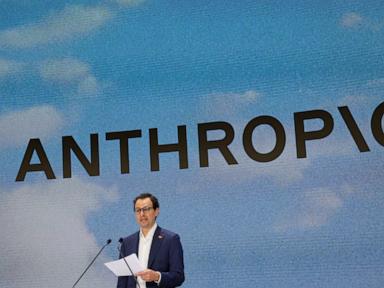
When Anthropic, the artificial intelligence safety and research company founded by former OpenAI executives, marched toward a historic public offering, Wall Street saw a ticker symbol and an arms race. Traders on the floor looked at valuation multiples, compute clusters, and enterprise revenue curves. They saw liquidity.
Maya saw a lifeline.
For years, a peculiar covenant has existed inside the culture of Silicon Valley’s artificial intelligence pioneers, particularly within the circle of effective altruism and long-term safety advocates who built Anthropic. Unlike traditional tech startups where equity is purely a ticket to a yacht in the Mediterranean or a compound in Kauai, a massive percentage of Anthropic’s early equity was pledged—legally, structurally, and culturally—to charitable causes. Founders and early employees made public commitments to donate up to eighty percent of their wealth.
For half a decade, those pledges were nothing more than glorious, theoretical IOUs. You cannot pay a nurse's salary with unvested private shares. You cannot buy malaria nets with a 409A valuation.
Until the bell rings.
The Anatomy of a Liquidity Event
To understand why the nonprofit sector is holding its collective breath right now, you have to understand the strange alchemy of an initial public offering. Before an IPO, startup wealth is like water trapped inside a glacier. You can measure the glacier. You can write admiring articles about how many cubic miles of fresh water it contains. You can even stand on top of it and feel rich.
But nobody can drink it.
An IPO is the spring thaw. Suddenly, locked shares convert into tradeable currency. Lock-up periods expire—usually ninety to one hundred and eighty days after the first trade—and the floodgates open. In Anthropic’s case, the sheer scale of the company’s valuation means we are not talking about a trickle of year-end tax write-offs. We are talking about tens of billions of dollars in philanthropic capital potentially moving from theoretical pledges into donor-advised funds, private foundations, and direct grants.
I remember the first time I sat in a boardroom during a major tech liquidity wave back in 2014. The air smelled like expensive cedar and nervous sweat. Program officers who had spent ten years begging for fifty-thousand-dollar matching grants were suddenly being asked what they would do with fifty million. You would think the room would erupt in champagne toasts. Instead, people went dead silent. One director actually stared at her hands and whispered, "If I break this, I don't get a second chance."
Money of that magnitude does not just solve problems. It mutates organizations.
Why Nonprofits Are Quietly Panicking
From the outside, the narrative seems simple: rich tech engineers make good on their promises, charities get flush with cash, and the world gets marginally better. End of story.
Wait. Look closer at the machinery.
Most charitable organizations are built like finely tuned bicycles, not freight trains. They are engineered to squeeze maximum mileage out of every donated dollar, operating on razor-thin administrative overhead because donors historically punish charities that spend too much on staff, software, or infrastructure. Ask a nonprofit director to absorb a tenfold budget increase overnight, and you are essentially asking a bicycle frame to carry a shipping container.
Consider what happens next when a sudden philanthropic windfall hits a lean organization:
- The Talent Bottleneck: You can wire ten million dollars to a clean-water initiative on a Tuesday morning, but you cannot conjure fifty experienced civil engineers out of thin air by Wednesday afternoon. Hiring takes months. Training takes years.
- The Mission Drift Trap: When massive grants arrive with specific expectations—especially from tech founders obsessed with metrics, scalability, and quantifiable impact—charities often contort their proven local programs into flashier, data-heavy experiments just to keep the funding flowing.
- The Cliff Effect: What happens in year four? If a nonprofit hires eighty new caseworkers using windfall money from an IPO, and the donor moves on to a shiny new cause three years later, those eighty people lose their jobs and the community loses its safety net.
Behind closed doors across Washington, D.C., London, and San Francisco, executive directors are not popping corks. They are frantically drafting three-year scaling blueprints, interviewing chief operating officers they couldn't afford six months ago, and trying to figure out how to absorb a tidal wave without drowning.
The Ghosts of Effective Altruism
There is another layer to this story, and pretending it isn't there would be dishonest.
The philosophical bedrock beneath Anthropic’s charitable pledges is deeply intertwined with effective altruism—a movement that insists charity shouldn't be guided by warm feelings, local loyalty, or tear-jerking commercials, but by cold, hard math. Where does one dollar save the most lives? Where does one dollar prevent the most catastrophic risk?
For years, that philosophy produced remarkable triumphs in global health, funding deworming treatments, vitamin A supplements, and bed nets at unprecedented scale. Then came the collapse of FTX.
When Sam Bankman-Fried’s crypto empire imploded in fraud, it didn't just bankrupt investors. It vaporized hundreds of millions of dollars in promised grants, leaving researchers, pandemic-prevention labs, and grassroots charities stranded mid-project. The reputational fallout was radioactive. The phrase "effective altruism" went from a badge of intellectual honor in Silicon Valley to a punchline on late-night television.
Anthropic’s rise—and its subsequent public market triumph—represents something far heavier than a financial milestone. It is a redemption arc for an entire philanthropic ethos.
Unlike the reckless leverage and opaque accounting that defined the crypto collapse, Anthropic built an enterprise powerhouse generating real revenue from Fortune 500 companies, developers, and governments. Its safety-first architecture—anchored by techniques like Constitutional AI, where models are trained against explicit ethical principles rather than pure engagement—made it the darling of institutional investors who wanted exposure to artificial intelligence without the erratic governance drama that plagued its rivals.
Now, the pledges attached to that success are real. No smoke. No mirrors. Just cold, liquid equity sitting on a public exchange.
Inside the Waiting Room
Let’s go back to Maya in Oakland, staring at her spreadsheet.
Why does a wall of money sitting in San Francisco brokerage accounts feel so agonizingly far away from a clinic in Alameda County? Because between a founder’s pledge and a nurse’s paycheck lies a labyrinth of legal, tax, and psychological friction.
First, there is the clock. Post-IPO lock-up agreements strictly forbid insiders from dumping shares immediately, lest they crash the stock price and trigger shareholder lawsuits. Even after the lock-up expires, selling billions of dollars in stock must be done through carefully scheduled trading plans—known as 10b5-1 plans—that dribble shares onto the open market over quarters and years so the price doesn't crater.
Second, there is the human hesitation.
It is remarkably easy to sign a pledge promising eighty percent of your wealth when your equity is worth two million dollars on paper and you are eating ramen in a shared apartment. It is an entirely different psychological exercise when your brokerage screen shows four hundred million dollars, your parents need a house, your kids need tuition, and your financial advisor is whispering in your ear about generational security and tax optimization.
History shows us that follow-through on billionaire pledges is messy. Some founders establish sprawling family offices that hire dozens of analysts to study problems for five years before writing a single check. Others park the money in donor-advised funds, taking the immediate tax deduction while the capital sits invested in index funds, compounding quietly while immediate crises burn hotter.
Nonprofit leaders know this. They have seen the press releases before. They have read the triumphant headlines about historic wealth transfers, only to watch the actual disbursements trickle out at five percent a year—the bare legal minimum required for private foundations.
The Architecture of a Different Kind of Giving
Yet, talking to insiders close to Anthropic’s early team and the philanthropic advisors working alongside them, something feels different this time.
Part of it is structural. Anthropic was deliberately incorporated as a Public Benefit Corporation, legally binding its board of directors to balance shareholder returns against the public good—specifically, the safe development of artificial intelligence for humanity. Alongside that corporate structure sits a Long-Term Benefit Trust, an independent body of governance experts empowered to select board members based on mission alignment rather than pure profit maximization.
That institutional DNA bleeds into how the company's early alumni and executives approach their personal wealth. Many of them aren't interested in putting their names on museum wings or university stadium gates. Their focus leans heavily toward neglected, unglamorous, high-leverage problems:
- Biosecurity and Pandemic Preparedness: Building early-warning pathogen detection networks and universal vaccine platforms before the next airborne threat jumps species.
- Global Health Delivery: Funding last-mile distribution of basic medicines in sub-Saharan Africa and South Asia, where pennies per person still save lives.
- AI Alignment and Governance: Bankrolling independent academic researchers, policy think tanks, and red-teaming institutes to ensure that as models grow exponentially smarter, human oversight doesn't fall behind.
- Direct Cash Transfers: Putting unrestricted money directly into the hands of families living in extreme poverty, trusting people to know what their own children need most.
If even a fraction of the projected windfall flows into these sectors over the next twenty-four months, it will dwarf the annual budgets of several United Nations agencies combined.
How a Charity Learns to Breathe Underwater
So how are the smart organizations preparing?
Not by ordering new office furniture.
Over the past six months, a quiet revolution has been unfolding in the back offices of mid-sized nonprofits. Savvy executive directors are treating this moment like an athlete preparing for high-altitude competition. They are building "absorptive capacity"—a dry corporate phrase for a deeply human necessity: making sure your team doesn't shatter under pressure.
In practice, that means hiring operations directors before the grant agreements are signed. It means upgrading archaic donor databases from the early 2000s into modern financial tracking systems capable of auditing eight-figure inflows without triggering compliance nightmares. It means sitting down with local community leaders right now and asking an uncomfortable question: If we had five times our current budget tomorrow, where would the money actually get stuck?
Often, the answer has nothing to do with money. It is a permitting delay at city hall. It is a shortage of cold-storage refrigeration in rural clinics. It is a lack of bilingual social workers. By identifying those physical bottlenecks before the windfall arrives, nonprofits can use the first wave of funding to clear the pipes rather than flooding the basement.
They are also rewriting the rules of donor relationships. Experienced nonprofit leaders are increasingly pushing back against restricted project grants—the kind where a donor says, "You can spend this million dollars on laptops for students, but not a single penny on the electricity bill to charge them." Instead, they are demanding multi-year, unrestricted general operating support, arguing that if tech founders trust their own engineers to pivot when data changes, they must extend that same trust to the people working on the ground in communities they have never visited.
The Weight of the Screen
We live in a strange, fractured era where a handful of twenty- and thirty-somethings writing code in San Francisco can generate more economic value in forty-eight months than entire industrial cities produced in a century.
There is something deeply unsettling about that concentration of power. It feels arbitrary. It feels fragile. When the fate of mobile vaccination clinics, malaria eradication campaigns, and climate resilience projects hinges on the stock ticker of a single artificial intelligence company, we are forced to confront an uncomfortable truth about modern society: philanthropy has become a shadow government, funded by the volatility of the tech market.
You can hate that system. You can argue—rightly—that public health and human survival should never depend on the generosity of tech billionaires or the whims of Wall Street trading floors.
Both things can be true at the same time. The system can be fundamentally flawed, and the money arriving through it can still save hundreds of thousands of real, breathing human beings.
Back in Oakland, the fluorescent light above Maya’s desk finally flickers and dies, plunging her corner of the office into the soft gray glow of a rainy afternoon. She doesn't call maintenance. She doesn't even look up.
She has opened a fresh tab on her monitor—not a stock ticker this time, and not a deficit sheet. It is a blank document titled 2027 Expansion Plan, and for the first time in three years, her cursor is blinking at the top of the page.