Systemic Drivers of Population Decline
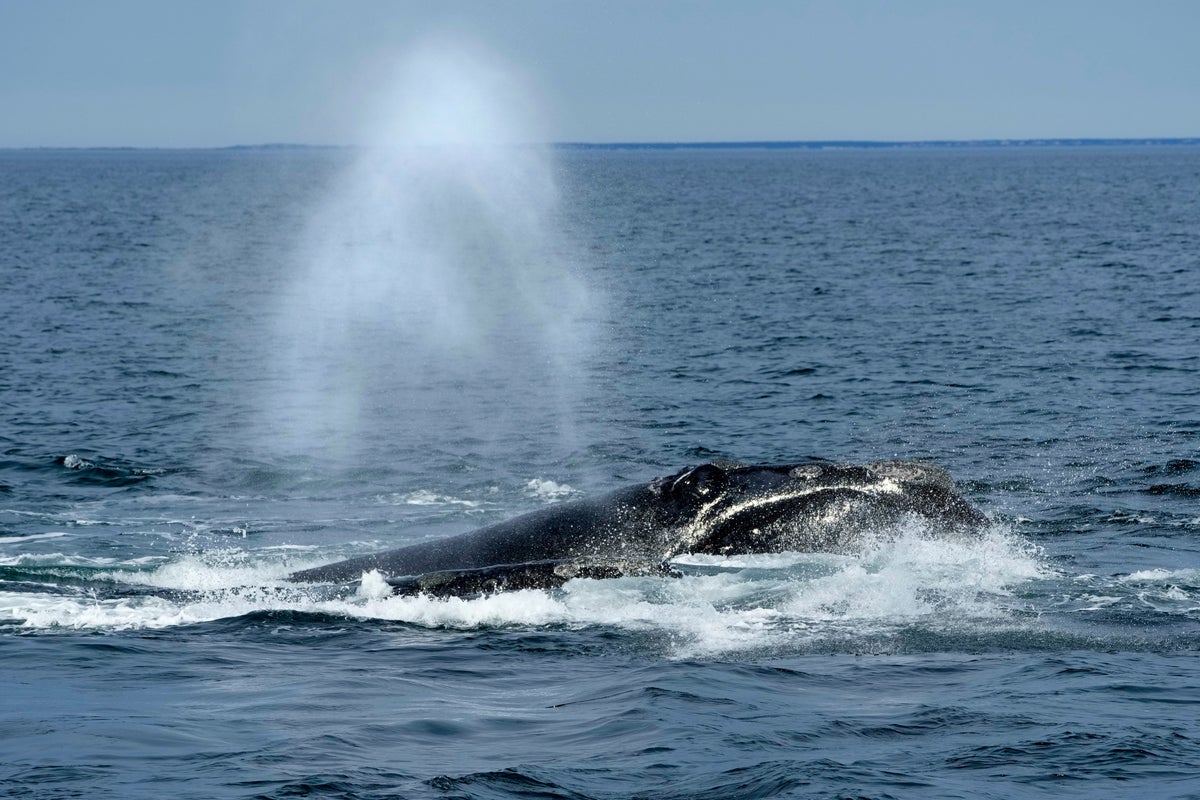
The North Atlantic right whale (Eubalaena glacialis) trajectory is a case study in how regulatory lag amplifies anthropogenic mortality risk. With a global population hovering under 360 individuals and fewer than 70 breeding females remaining, the species sits at a critical demographic tipping point. Biological recovery is mathematically constrained by two primary anthropogenic vectors: vertical line entanglement from commercial fisheries and lethal kinetic trauma from vessel strikes.
To evaluate the probability of species collapse, conservation policy must be deconstructed into a quantifiable framework of spatial overlap, energy transfer, and reproductive capital loss.
Total Anthropogenic Mortality = (Fishing Entanglement Risk) + (Vessel Strike Probability)
The population cannot absorb more than 0.7 human-caused deaths per year—the calculated Potential Biological Removal (PBR) threshold under the United States Marine Mammal Protection Act—without sustaining permanent trajectory decay. Present observed mortality and serious injury rates exceed this threshold by a factor of eight.
Vector Analysis: Marine Entanglement Dynamics
Commercial fixed-gear fisheries—primarily targeted at American lobster (Homarus americanus) and Jonah crab (Metacarcinus novaeangliae)—deploy millions of vertical buoy lines through right whale migratory corridors and foraging grounds. The physics of entanglement involve high-tensile synthetic lines (typically polyolefin or nylon) interacting with whale feeding behavior.
Mechanical Stress and Metabolic Exhaustion
Right whales filter feed at speeds of 1 to 3 knots with open mouths, sweeping through dense patches of Calanus finmarchicus copepods. Vertical lines caught in the baleen or wrapped around pectoral flippers create drag profiles that alter swim mechanics.
- Hydrodynamic Drag Coefficients: Attached gear increases the energy expenditure required for routine propulsion by 13% to 22%.
- Caloric Deficits: A lactating female requires approximately 1.5 million kilocalories per day. Entanglement drag elevates basal metabolic rate, inducing chronic emaciation.
- Calving Interval Deceleration: Historically, right whale calving intervals averaged 3 to 4 years. Chronic non-lethal entanglement stress has extended this interval to 6 to 10 years, cutting lifetime reproductive output by more mearly half.
Tissue Necrosis and Severe Trauma
Lethal entanglements rarely cause immediate asphyxiation. Instead, line tension induces progressive tissue necrosis, bone erosion, and systemic infection over months. The energetic cost of dragging thousands of feet of gear causes metabolic failure long before systemic infection completes the lethal sequence.
Entanglement Severity = Line Breaking Strength x Exposure Duration x Hydrodynamic Drag Coefficient
Vector Analysis: Kinetic Impact and Hydrodynamic Draw
Vessel strikes represent the second major vector of acute mortality. The interaction between commercial vessel traffic and right whale surface behavior is governed by hydrodynamic forces and hull mechanics.
The Physics of Hull Strike Impact
Impact force scales quadratically with vessel velocity. At speeds exceeding 10 knots, the probability of a vessel strike resulting in lethal blunt force trauma or deep laceration from propeller blades increases sharply.
- Speeds Under 10 Knots: Lethality rate sits below 20%. The impact force typically yields non-lethal bruising or minor tissue displacement.
- Speeds Exceeding 15 Knots: Lethality rate approaches 100%. The mechanical force fractures the axial skeleton, shatters ribs, and ruptures internal viscera.
Hydrodynamic Suction Effects
Large vessels moving through shallow coastal shelf waters generate a negative pressure zone along the hull—known as the Bernoulli effect. Right whales resting or swimming near the surface within two hull-lengths of a transiting vessel are drawn toward the propulsion system by hydrodynamic suction, rendering evasive action physically impossible regardless of whale reaction time.
The Spatial Management Failure
The fundamental flaw in historical management protocols lies in static spatial-temporal closures. Marine ecosystems are dynamic systems governed by sea surface temperature shifts, thermal fronts, and zooplankton density currents.
Zooplankton Displacement Dynamics
Climate-driven ocean warming has altered the distribution of Calanus finmarchicus. Historical critical habitat designations in the Gulf of Maine and Great South Channel experienced significant drops in copepod density as waters warmed. The right whale population migrated northward into the Gulf of Saint Lawrence to target cold-water copepod aggregations.
Because regulatory frameworks failed to anticipate this environmental shift, vessel traffic management and fishery gear rules in northern waters lagged behind the physical displacement of the species. The result was a catastrophic spike in mortalities between 2017 and 2019 in jurisdictions unequipped with real-time dynamic mitigation protocols.
Regulatory Moratoriums and Ocean Spatial Conflict
The debate surrounding offshore wind development and moratorium proposals highlights the complexity of ocean spatial planning. Evaluating the risk profile requires separating empirical oceanographic impacts from unsubstantiated claims.
Acoustic Pollution and Displacement
Offshore wind infrastructure deployment introduces low-frequency sound during pile-driving construction phases. Sound propagation in marine environments travels four times faster than in air, overlapping directly with right whale vocalization frequencies (50 Hz to 500 Hz).
- Communication Masking: High ambient noise levels reduce the active acoustic space of right whale upcalls, hindering social contact and mother-calf communication.
- Behavioral Displacement: Sub-bottom profiling and acoustic harassment force whales out of high-density foraging habitat into unmanaged shipping corridors or high-density fishing zones.
Benthic Alterations and Oceanographic Fluid Mechanics
Fixed-bottom and floating wind turbine arrays alter localized hydrodynamic flow. The introduction of large physical structures throughout the water column modifies wind-driven mixing and turbulence, which can alter local zooplankton patch retention. If atmospheric or oceanic forces disperse dense copepod patches, the energetic cost of foraging for right whales increases exponentially.
Strategic Play: Dynamic Spatial Management Infrastructure
Relying on static seasonal closures or broad economic moratoriums is an outdated conservation approach that creates regulatory deadlocks without guaranteeing species safety. Reversing the extinction curve requires an integrated, real-time spatial management framework.
Phase 1: Real-Time Passive Acoustic Monitoring Integration
Deploy autonomous ocean gliders equipped with real-time passive acoustic monitoring systems across high-risk marine corridors. These units listen continuously for right whale contact calls, processing audio onboard via edge-computing machine learning algorithms, and transmit verified detections via satellite within 15 minutes.
Phase 2: Dynamic Speed Restrictions and Flexible Closures
Replace static seasonal speed zones with trigger-based dynamic management areas. When an acoustic glider or aerial survey detects a right whale:
- Mandate a strict 10-knot speed limit for all vessels over 35 feet within a 10-nautical-mile radius.
- Enforce the dynamic zone for a sliding 15-day window, automatically extending if subsequent detections occur.
Phase 3: Transition to On-Demand Ropeless Fishing Technology
Eliminate traditional vertical lines by transitioning fixed-gear fisheries to pop-up or ropeless fishing systems. These systems store buoy lines on the seafloor within a cage or spool, deploying to the surface via acoustic transponder signals triggered by harvesting vessels.
- Capital Subsidies: Execute targeted equipment conversion programs to offset initial vessel retrofitting costs for commercial fishermen.
- Acoustic Coexistence: Implement standardized gear location mapping software that allows enforcement agencies and overlapping fisheries to visualize seafloor traps without physical surface buoys.
By replacing static boundaries with dynamic monitoring and converting vertical line infrastructure to on-demand technology, regulatory bodies can reduce anthropogenic mortality below the Potential Biological Removal threshold while maintaining commercial maritime operations.