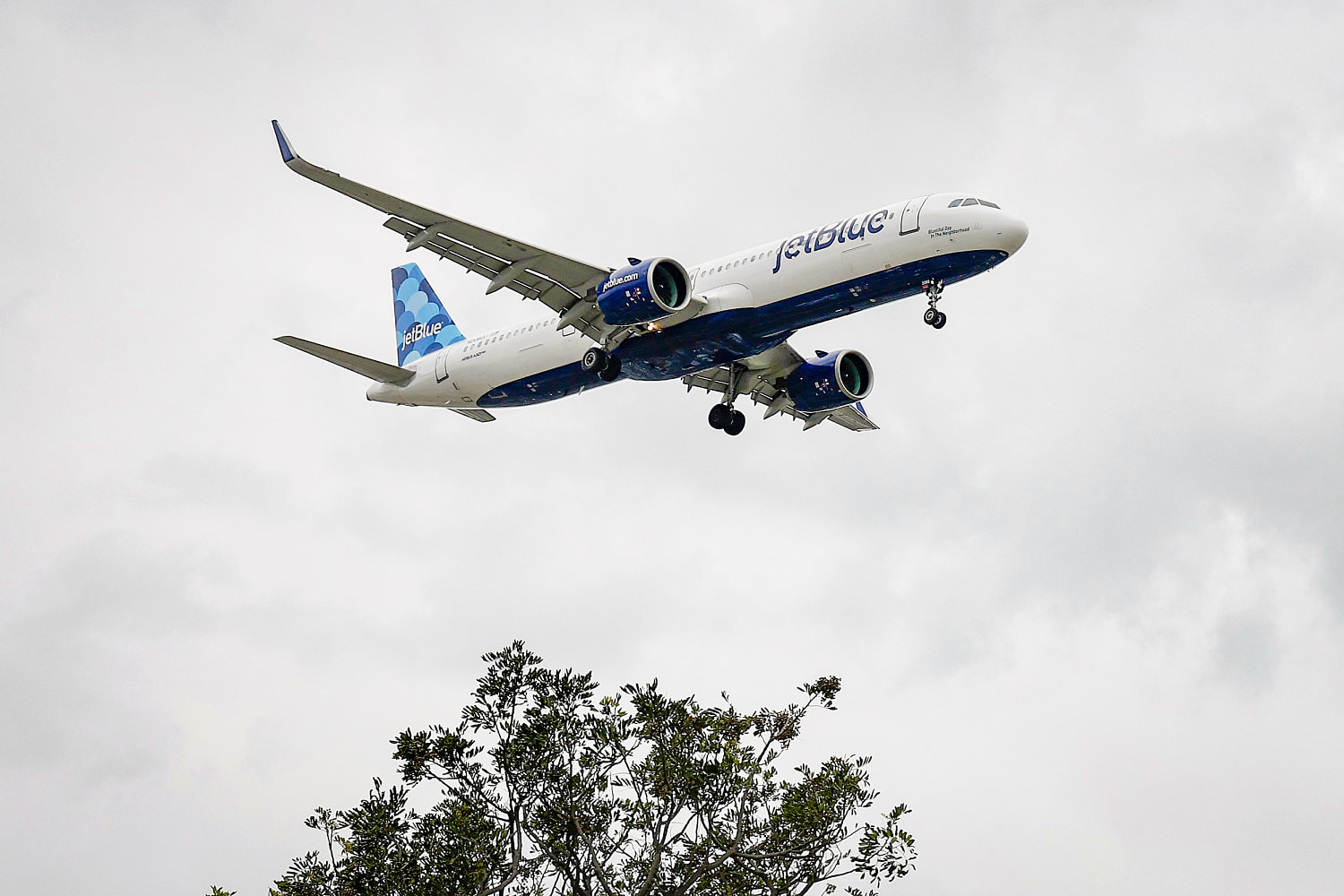
The outrage machine is currently dialed to eleven because JetBlue allegedly peaked at your browser history to price your flight to Fort Lauderdale. The lawsuit claims "unauthorized use" of private data. The headlines scream "surveillance capitalism." The public is clutching its collective pearls over the idea that an airline might actually know who is sitting in seat 12A.
Stop. You are being lied to by a narrative that prioritizes a vague sense of "privacy" over the cold, hard reality of market efficiency. In similar developments, we also covered: Inside the Zero-Sum Crisis Nobody is Talking About.
This isn't a scandal. It’s a glimpse into the only way the airline industry survives without constant government bailouts. If you want cheap seats, you have to trade the myth of anonymity. You can’t have $99 cross-country fares and total data opacity. The math doesn’t work, and it never has.
The Myth of the Flat Fare
People have this romanticized, 1970s notion that a seat on a plane has an intrinsic value. It doesn't. An airline seat is the most perishable commodity on earth. Once that cabin door closes, the value of an empty seat drops to zero. The Wall Street Journal has also covered this important topic in great detail.
To manage this, airlines use yield management. This isn't new. American Airlines started doing this with the SABRE system in the early 60s. The goal is simple: Charge the highest possible price to the person most willing to pay it, and the lowest possible price to the person who wouldn't fly otherwise.
The "lazy consensus" says this should be based solely on how far in advance you book. That is a dinosaur's way of thinking. Booking windows are a proxy for intent, but they are a blunt instrument. Data—the kind JetBlue is being sued for using—is a scalpel.
If the airline knows you’ve been browsing luxury hotels in Aruba for three weeks, they know you are a high-intent traveler. If they know you’re a budget-conscious student looking at hostels, they can offer you a fare that ensures the plane departs full. Without that data, they have to guess. When airlines guess, they hedge. When they hedge, everyone pays more to cover the risk of an empty cabin.
Privacy is a Luxury You Can't Afford
Let’s dismantle the premise of the lawsuit. The claim is that using external data for pricing is "unfair."
What is actually unfair is a system where a billionaire CEO pays the same $400 for a last-minute flight as a family traveling for a funeral. Data allows for price discrimination, and in economics, price discrimination is often a net positive for the lower-income consumer.
By identifying "price-inelastic" customers—people who will pay whatever it takes—airlines can subsidize "price-elastic" customers. If JetBlue uses your browsing history to realize you’re a corporate traveler with a wide-open expense account, and charges you $50 more, that $50 is what keeps the "Blue Basic" fare accessible for everyone else.
Privacy advocates are essentially arguing for a flat tax on travel. They want everyone to be treated as a nameless, faceless data point. That sounds noble until you realize it means the end of the "budget" airline era. Without the ability to segment the market with surgical precision, the "average" price has to rise to meet the operating costs.
The Browser History Bogeyman
The lawsuit focuses on "internet history." The implication is that a JetBlue executive is sitting in a dark room reading your private emails or looking at your medical searches.
Get real.
No one cares about your weird hobbies. They care about patterns. They care about the "Digital Footprint of Intent."
- Frequency of search: How often have you looked at this specific route?
- Device type: Are you booking from the latest iPhone or a five-year-old Android? (A classic proxy for disposable income).
- Referral path: Did you come from a luxury travel blog or a coupon site?
This isn't a violation of your soul. It’s a sophisticated version of a car salesman looking at the watch you’re wearing before he gives you a quote. It’s been happening in every industry for centuries. The only difference is that now it’s automated and efficient.
I’ve seen companies spend millions trying to build "clean" systems that ignore these signals. You know what happens? Their conversion rates crater. They lose their best customers to competitors who actually understand what the customer wants. Then, they raise prices across the board to stay solvent.
The "privacy" you are fighting for is a tax on your own wallet.
You Are Already Selling Your Data (For Cheap)
The hypocrisy of the "privacy" movement is staggering. You give your location data to Google for "free" maps. You give your shopping habits to Amazon for "free" shipping. You give your entire social graph to Meta for "free" memes.
But the moment an airline uses data to try and optimize the most expensive, logistically complex service in your daily life, it’s a federal case?
If you truly valued your privacy, you’d be flying private or using a burner laptop and a VPN for every transaction. But you don't. You want the convenience of the modern web and the prices of a cut-throat competitive market, but you want to pretend the mechanics of that market don't apply to you.
The Real Danger: Stagnation, Not Surveillance
The real risk isn't that JetBlue knows you like to vacation in Cancun. The risk is that these lawsuits will stifle the only innovation left in the airline industry: software.
The hardware is tapped out. We aren't getting supersonic jets anytime soon. Fuel costs are volatile. Labor is unionized and expensive. The only way to make flying better or cheaper is through data.
If we legally mandate that airlines must remain "ignorant" of their customers, we are mandating stagnation. We are telling them they cannot innovate on the customer experience. We are forcing them back into the dark ages of static pricing and "Saturday night stay" requirements.
The Actionable Truth
If you are actually worried about "dynamic pricing" based on your data, the solution isn't a lawsuit. It’s to be a smarter consumer.
- Use a clean profile: If you want the "clueless wanderer" price, use a guest browser window.
- Understand the trade-off: Accept that when you log into a loyalty program, you are trading your data for points and personalized offers. That is a contract. Don't complain when the airline actually uses the data you gave them.
- Stop being a victim: The idea that you are "manipulated" by a price change is an insult to your own agency. If the price is too high, don't buy the ticket.
The market is a conversation. Data is just the language we use to speak it.
You can demand "privacy" and watch as airlines go bankrupt or merge into a giant, expensive monopoly. Or, you can accept that in the 21st century, the "price" of a ticket includes a bit of information about who is buying it.
The lawsuit against JetBlue isn't a win for the consumer. It’s a win for people who want to feel morally superior while they pay 20% more for their flight.
Keep your browser history private if it makes you feel safe. Just don't cry when the "anonymous" fare is a price you can't afford.