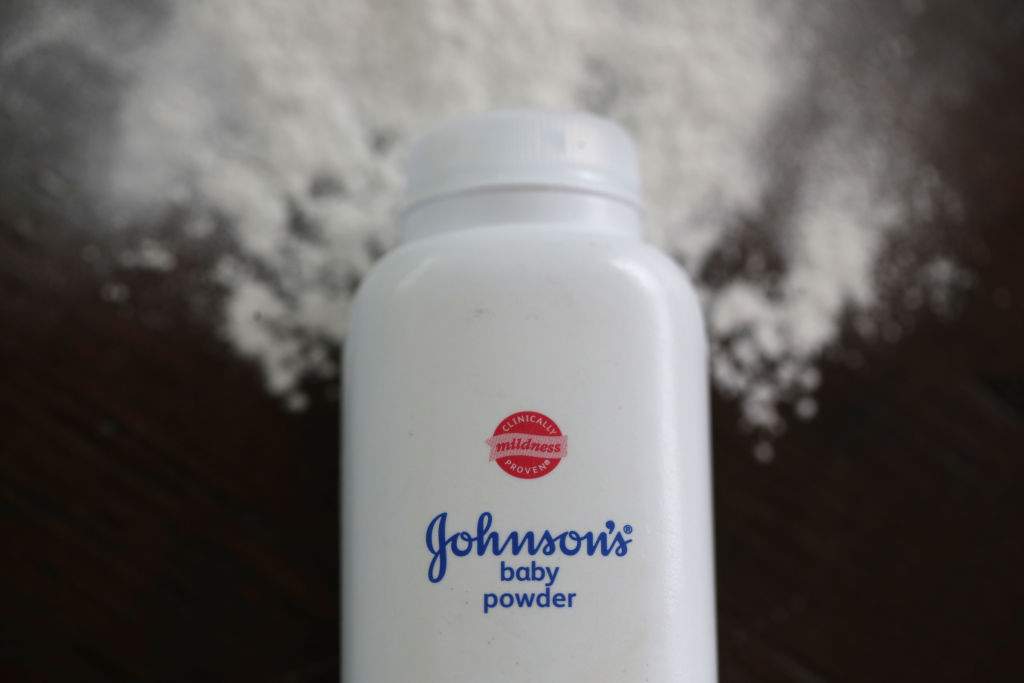
The white plastic bottle has lived on the edge of countless bathroom sinks for generations. It is unassuming. It smells clean, chalky, comforting. Generations of mothers have dusted it onto the soft skin of infants after a warm bath, trusting the familiar red logo to mean safety. Trust is quiet. It does not announce itself with sirens or fine print. It sits silently in the medicine cabinet, waiting to be used.
Then came the subpoena. Then came the whispers in doctors' offices, the late-night legal commercials, and the slow, agonizing unspooling of a corporate behemoth's most guarded secrets. If you liked this piece, you should check out: this related article.
Johnson and Johnson, the undisputed titan of everyday healthcare, proposed a five-and-a-half billion dollar settlement to close a chapter that has spanned decades. Five and a half billion dollars. It is a number so large it ceases to be money and becomes abstraction. Yet behind that abstract sum lies a very human reality: thousands of women sitting in chemotherapy wards, holding paperwork, wondering how a bottle of baby powder became a weapon of slow destruction.
To understand this crisis, we have to look past the courtroom dramatics and into the molecular reality of talc. Talc is a mineral. It is mined from the earth, often right alongside asbestos, a known carcinogen. They are geological neighbors, intertwined in the same rock formations. Refining talc means separating the mineral from its toxic sibling. For another look on this development, check out the latest update from Healthline.
For years, critics and plaintiffs' attorneys argued that the separation wasn't always absolute. Traces of asbestos, microscopic and invisible to the naked eye, allegedly lingered in the consumer-grade powder.
Imagine breathing in particles so small they slip past the body's natural defenses, settling deep into lung tissue or migrating through the lymphatic system. This is not a sudden explosion. It is a slow accumulation. Over decades, the body reacts to these foreign invaders with inflammation, cellular damage, and eventually, the catastrophic miscoding of DNA that triggers ovarian cancer and mesothelioma.
The company has maintained its innocence throughout the legal marathon. Their scientists have stood behind corporate podiums, pointing to internal testing and independent studies, insisting that their cosmetic talc was entirely safe and asbestos-free. They argue that the science is ambiguous, that correlation does not equal causation, and that the legal system has been weaponized by aggressive class-action firms.
Corporations do not panic easily. They calculate. They hire the best statisticians money can buy. They weigh the cost of a ruined reputation against the cost of a prolonged defense. For a long time, fighting was the strategy. Billions were spent on appeals, expert witnesses, and corporate PR campaigns designed to stem the bleeding of public trust.
Bit by bit, the walls eroded. Juries heard internal memos read aloud in courtrooms. Documents surfaced suggesting that executives knew about trace contamination concerns long before public alarm bells started ringing.
Trust, once broken, is nearly impossible to reassemble with a check.
The $5.5 billion proposal is not just a financial transaction. It is an exit strategy. It is an attempt to draw a hard line under a public relations nightmare and move forward, transitioning the global brand entirely to cornstarch-based alternatives. The white plastic bottles on bathroom sinks have already changed their formulas, shifting quietly away from talc without a dramatic announcement.
Consider what happens to the plaintiffs in this story. Many of them are no longer here to see the settlement proposed. Their families carry the burden of the final chapters, sorting through medical bills and grieving losses that no corporate payout can reverse. For the survivors, the money represents validation. It is an acknowledgment, however reluctant, that their pain was real and that their voices mattered against a multi-national giant.
There is a lesson here about the things we invite into our homes. We place an immense amount of faith in regulatory bodies and corporate stewardship. We assume that if something is sold at a local pharmacy, millions of people must have vetted it. We assume that safety is the baseline, not a negotiable variable.
The Johnson and Johnson talc litigation forces us to confront the invisible vulnerabilities of modern consumerism. It reminds us that behind every household staple is a supply chain, a mining operation, a corporate boardroom, and a human cost.
The white bottle fades into memory now, replaced by greener, cleaner packaging, or discarded altogether for safer alternatives. But the empty space it leaves on the shelf serves as a quiet reminder of the day the magic wore off, and the real cost of our daily comforts finally came due.