The rain in Westminster does not fall; it drifts horizontally, a cold mist that blurs the edges of the stone buildings and clings to the wool coats of hurried people. Inside the wood-paneled rooms where laws are debated, a different kind of chill has taken hold. It is the quiet, creeping realization that the boundary between public service and personal survival has dissolved entirely.
When a prominent public figure is taken from the world by violence, the immediate reaction is noise. The television screens fill with breaking news banners. Politicians offer rehearsed statements of shock. Pundits dissect the ideological motives of the perpetrator. But away from the cameras, in the small constituency offices where the actual work of democracy happens, the reaction is silence.
It is the silence of a staff member locking a heavy wooden door. It is the silence of an elected official looking out a window at a crowded street, wondering which face in the gathering crowd represents a threat.
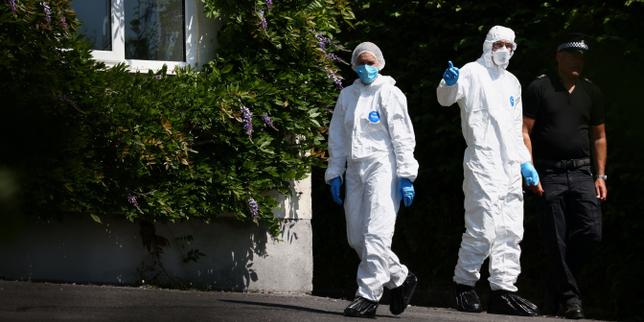
The recent tragedy involving Ann Widdecombe has sent a shockwave through the British political structure, specifically targeting the fragile framework surrounding the security of Reform UK representatives. The authorities immediately pointed toward a terrorist connection. Yet, the conversation rapidly shifted from the specifics of the investigation to a broader, more terrifying question. How did serving the public become one of the most dangerous occupations in the country?
Consider the traditional British political surgery. For generations, it has been a cornerstone of local democracy. A citizen walks into a church hall, a library, or a community center on a Friday afternoon. No armed guards stand at the entrance. No metal detectors scan their bags. They sit across a cheap plastic table from their representative to complain about housing benefits, potholed roads, or immigration policies. It is a system built entirely on accessibility and trust.
That trust is gone.
Now, those same rooms feel like traps. Think of a hypothetical newly elected representative. Let us call him David. David spent years campaigning, driven by a genuine desire to alter the trajectory of his community. He won his seat under the Reform UK banner, riding a wave of intense, passionate public sentiment.
But passion is a volatile fuel. It burns hot, and it ignites easily.
David now sits in his office, looking at his schedule. A local resident wants to discuss a planning dispute. Another wants to talk about pensions. A third has left an anonymous, rambling message on the answering machine that mentions "traitors" and "reckoning." Ten years ago, such a message would have been dismissed as the work of a harmless eccentric. Today, David has to call the local police. He has to decide whether to cancel the surgery entirely, knowing that doing so will draw accusations of cowardice from his political opponents.
This is the invisible tax levied on modern governance. The cost is not measured merely in the budgets allocated for close-protection officers or panic buttons. It is measured in the slow, agonizing erosion of the human connection between the governing and the governed.
The debate currently raging across the United Kingdom centers on whether certain political parties are being left exposed due to systemic bias or bureaucratic inertia. Representatives from Reform UK argue that their events and officials are targeted with a specific intensity, fueled by a toxic public discourse that dehumanizes anyone standing outside the traditional political consensus. They argue that security measures have failed to keep pace with the evolving threat environment.
The official response follows a familiar pattern. There are promises of reviews. There are assurances that all threats are treated with equal seriousness.
But the reality on the ground feels vastly different. Security is not an abstract concept; it is a physical barrier. To make a politician perfectly safe is to make them entirely inaccessible. If you surround an elected official with bulletproof glass, armored vehicles, and a phalanx of security personnel, you protect their life, but you destroy their utility. They become isolated elites, physically separated from the very people they are meant to understand and represent.
This dilemma creates a profound sense of isolation. The political arena has become a place where words are treated as weapons, and weapons are increasingly used to silence words. The line between vigorous democratic debate and targeted hostility has not just been crossed; it has been obliterated.
Look at the numbers, and the trend becomes undeniable. Threats against Members of Parliament have risen exponentially over the past decade. The nature of these threats has shifted from angry letters to explicit promises of physical harm, often tracked through the dark, unmonitored corridors of the internet. The digital world acts as an accelerant, taking a spark of local resentment and blowing it into a firestorm of hatred before anyone even notices the smoke.
The investigation into the Widdecombe tragedy will eventually yield answers about timelines, motives, and missed warnings. The legal system will process those responsible. But the deeper scar left on the body politic will remain unhealed.
Every time an act of political violence occurs, the pool of people willing to enter public life shrinks. The idealists step back. The parents look at their children and decide that the sacrifice is too great. The individuals who remain are often those thick-skinned enough to tolerate the hostility, or those whose own views are hardened by the conflict. The middle ground empties out.
We are left with a system that is increasingly polarized, protected by armed guards, and defined by fear.
The rain continues to fall outside the windows of Westminster. Inside, the arguments about funding and threat levels will continue long into the night. But for David, sitting in his small constituency office with the door locked from the inside, the calculations are much simpler. He looks at the door. He listens for footsteps in the corridor. He wonders if the next person who wants to speak to him is looking for help, or looking for a target.