The check clears. It is a quiet movement of numbers on a screen, invisible to the barista steaming milk down the street, silent to the commuter checking their watch on a delayed train. Yet that digital keystroke carries a gravity that will soon bend the shape of an entire nation's future.
We are told that politics is about grand speeches, red dispatch boxes, and the theatrical roar of the House of Commons. But power, real power, often enters through the back door with a ledger in hand.
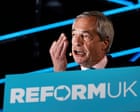
Consider the mathematics of influence. A million pounds here, seventy-two million pounds there. To the average ear, these figures sound like astronomical abstractions, numbers belonging to the realm of sovereign wealth funds or lottery winners. But when sums of that magnitude pool around a single political entity—in this case, Reform UK, fueled by substantial donations from heavyweight backers like financier Christopher Harborne—the rules of the political game warp.
Ministers in Westminster are now scrambling. They are drafting potential law changes aimed squarely at making donations of this scale illegal or subject to radically tighter restrictions. Why? Because when a political insurgent movement is suddenly supercharged by private fortunes dwarfing traditional war chests, the alarm bells in Whitehall ring loud and long.
To understand why this matters, you have to step away from the polished mahogany of parliamentary committees and look at how trust actually dies.
Imagine walking into a local community center on a freezing Tuesday night. Twenty people sit on folding chairs, debating whether their local library will survive budget cuts. They hold bake sales. They pass around a battered plastic bucket collecting loose pound coins. They believe, earnestly, that their voices count because they care.
Now, imagine a check large enough to buy prime-time media saturation, an army of digital consultants, and a nationwide logistics network delivered by a single individual before the morning coffee has cooled.
That is the chasm at the heart of modern representative democracy. It is the clash between the collective weight of citizens and the concentrated gravity of capital.
When political parties can absorb tens of millions of pounds from single donors, the center of gravity shifts. Politicians stop looking toward the porch lights of their constituents and start gazing upward toward the boardrooms and offshore accounts that keep the lights of the campaign machine blazing.
This is not a partisan story. Whether millions flow into populist insurgencies on the right or established machines on the left, the underlying anxiety remains identical: Who actually owns the political conversation?
The proposed legal interventions by government ministers are framed as safeguards for electoral integrity. They argue that foreign-registered funds, complex corporate structures, and massive individual windfalls threaten to distort the democratic marketplace. Critics, of course, fire back immediately. They point out that establishment parties have historically relied on deep-pocketed unions or billionaire donors of their own, viewing sudden legislative crackdowns as an incumbent's cynical attempt to pull up the drawbridge against a surging rival.
Both things can be true at the same time.
The system has always relied on wealth. But the scale of modern populist funding, particularly within movements challenging the political consensus, has exposed structural fractures that duct tape can no longer fix. When seventy-two million pounds—or sums approaching it—can pivot into a party's coffers, the speed of political disruption outpaces the ability of traditional oversight to keep up.
Think about how information travels now. A generation ago, political influence was measured in hand-delivered leaflets and local branch meetings. Today, it is algorithmic. It is targeted micro-messaging, rapid-fire video production, and real-time sentiment manipulation. That infrastructure is breathtakingly expensive. It requires fuel, and lots of it.
When a single financial backer can supply that fuel for an entire political engine, the donor becomes an invisible co-author of the party's platform. They do not need to sit in the room when policies are drafted. Their preferences are already baked into the survival strategy of the organization.
This brings us to an uncomfortable truth about the machinery we live under. We love to pretend that democracy is a pure idea, unsullied by commerce. We teach our children that every vote weighs the same, that the ballot box is a great equalizer. And on election day, in that curtained booth, it is.
Yet the path leading to that booth is paved by money. Long before a voter marks an X, campaigns have already defined the boundaries of what is thinkable, what is urgent, and who is an enemy.
If ministers succeed in rewriting the laws to choke off mega-donations, they will change the tactical landscape overnight. Movements will have to adapt. They will have to build grassroots models, crowd-source smaller contributions, or find alternative ways to finance their ambitions. Some will argue this stifles free speech and political expression. Others will argue it is the only way to prevent our elections from becoming a high-stakes auction where only the ultra-wealthy can afford to place a bid.
The debate over these millions is ultimately a debate about what kind of country we want to inhabit. Do we want a system where political power belongs to whoever can write the largest check? Or can we forge a framework where the weight of a citizen's voice cannot be drowned out by the thunder of rolling capital?
The check has cleared for now. But the pen that will write the next chapter of electoral law is hovering over the paper, and the ink is still wet.