The fluorescent lights of the county clerk’s office hum with a low, irritating vibration. It is 4:45 PM on a rainy Tuesday. Across the counter stands Sarah, a local school board candidate who has spent her weekends knocking on doors, her boots still damp from the afternoon drizzle. She is holding a manila folder containing sixty-four individual donation checks, mostly for twenty-five or fifty dollars, meticulously logged on a spreadsheet.
For Sarah, this folder represents sixty-four distinct conversations on front porches. It represents the retired history teacher who wants better textbooks, and the mechanic worried about the high school vocational program. This is what we are taught democracy looks like. It is local, exhausting, and deeply personal. If you enjoyed this piece, you should read: this related article.
But while Sarah counts her wrinkled twenty-dollar bills, a server farms thousands of miles away whirs into motion. With a single digital keystroke, an out-of-state political action committee deposits three million dollars into a media buy targeting her district. No porches. No wet boots. No conversations.
Money in politics has always felt abstract to the average voter—a distant storm system swirling over Washington, DC, involving names we only see on cable news. We talk about it in clinical terms like "campaign finance," "expenditures," and "regulatory frameworks." For another perspective on this development, refer to the recent coverage from TIME.
We have it backward.
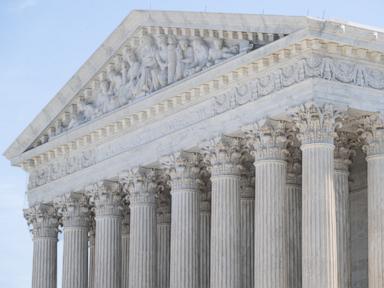
This is not a bureaucratic debate about paperwork. It is an existential struggle over the volume of the human voice. When the highest court in the land systematically dismantles the walls separating massive financial concentrations from the ballot box, it alters the laws of acoustics. The quiet conversations on the porch do not disappear. They are simply drowned out.
The Architecture of the Megaphone
To understand how we arrived at this moment, we have to look past the dense, multi-page judicial opinions and focus on the core assumption that underpins them. For decades, the legal framework governing American elections rested on a relatively straightforward premise: to prevent corruption, or even the appearance of corruption, the government has a vested interest in limiting how much money individuals and corporations can pour into political races.
Then came a fundamental shift in definitions.
The court decided that money is not merely a tool to facilitate speech. Money is speech.
Think of a crowded town square where everyone is given a small, unamplified megaphone of equal size. You can speak louder if you have a strong voice, or you can band together with your neighbors to chant in unison. The playing field is relatively level. Now, imagine a new rule states that anyone can purchase an industrial-grade stadium sound system, set it up in the center of the square, and blast their message at ten thousand decibels, twenty-four hours a day.
Technically, your right to speak has not been infringed. Your small megaphone still works perfectly. You can yell until your throat is raw. But practically speaking? You are mute.
When the Supreme Court rolls back long-standing restrictions on campaign finance, they are not expanding free speech for everyone. They are deregulating the wattage of the stadium sound system.
The justification often used by defenders of these rollbacks is rooted in a strict interpretation of the First Amendment. The argument goes that the government should never be in the business of rationing political expression. If a wealthy donor or a corporation wants to spend millions informing the public about a candidate’s record, that is their constitutional right.
But this argument ignores the finite nature of human attention. A television commercial break only has so many slots. A voter's mailbox only holds so many flyers. A human mind can only process so much information before tuning out entirely. When one voice buys up eighty percent of the available space, the remaining voices are not just outnumbered; they are rendered invisible.
The Ghost in the Machine
Let us look at how this plays out in a hypothetical, yet entirely realistic, congressional race. We will call the district the Ohio 12th, though it could be anywhere from Central Valley California to the suburbs of Atlanta.
Meet Arthur. He is a retired factory foreman who has lived in the district for forty-two years. He knows the names of the local potholes, the history of the high school football rivalry, and exactly how much the local economy suffered when the assembly plant downsized. Arthur decides to support a candidate who promises to fund local infrastructure and protect manufacturing jobs. He writes a check for two hundred and fifty dollars—a serious sacrifice on his fixed income.
Now meet the ghost.
The ghost is a newly formed entity called "Americans for a Brighter Tomorrow." It has no office building, no employees, and no geographic connection to the Ohio 12th. Its funding comes from a single billionaire living in a penthouse in Manhattan, supplemented by a handful of shell corporations whose ultimate owners cannot be traced through public records.
Under the old rules, this entity faced strict boundaries regarding how much it could coordinate or spend directly on the race. Under the current trajectory of campaign finance law, those boundaries are largely gone.
The ghost entity drops two million dollars into Arthur’s district over the course of three weeks. The airwaves are flooded with attack ads. The images are grainy, the music is ominous, and the message is relentless. The ads do not talk about the assembly plant or the potholes. They focus on highly polarizing, nationalized culture-war issues designed to trigger fear and anger.
Arthur turns on his television to watch the local evening news. He wants to know if the storm damage from last night has been cleared. Instead, he is hit with four consecutive attack ads funded by the ghost.
He feels a subtle, creeping exhaustion. The candidate Arthur supported tries to respond, but their campaign treasury is empty. They cannot afford the twenty-five thousand dollars required for a prime-time television spot in the local market.
Arthur’s two hundred and fifty dollars was a drop of water in an ocean of dark money.
What happens to Arthur’s relationship with his government in that moment? He stops believing that his participation matters. The system feels rigged, not because votes are being miscounted, but because the conversation has been hijacked by forces he cannot see, influence, or hold accountable.
This is the true, hidden cost of campaign finance deregulation. It is a tax on civic faith.
The Evolutionary Leap of Dark Money
The legal erosion did not happen overnight. It was a slow, methodical chipping away of post-Watergate protections, culminating in landmark decisions that opened the floodgates. But the latest shifts represent an entirely new chapter.
Historically, campaign finance laws distinguished between "hard money"—contributions given directly to a candidate’s campaign, which are tightly limited—and "independent expenditures," which are spent by outside groups like Super PACs. The fiction was that as long as the outside groups did not explicitly coordinate with the candidate, their spending could not corrupt the process.
Anyone who has ever worked on a modern political campaign knows this distinction is a joke.
It is an elaborate dance where campaigns drop high-resolution B-roll footage onto public YouTube channels, and outside groups magically find that footage and use it in their television ads. It is a system where former staffers leave a candidate's campaign to run the Super PAC supporting that exact same candidate the very next day.
The recent rollbacks by the Supreme Court have essentially formalized this wink-and-nod arrangement. By striking down limits on how political parties can spend money in direct coordination with candidates, and by easing restrictions on how elected officials can raise money for outside groups, the court has effectively dismantled the remaining firewalls.
The result is a highly centralized, incredibly efficient wealth-delivery system for political influence.
Consider the sheer scale of the shift. In the 1990s, a congressional race costing a million dollars was considered a major national story. Today, that is the entry fee for a competitive state senate seat. We have normalized the idea that running for public office requires access to a network of multi-millionaires.
This reality creates an ideological filter long before a single vote is cast. If you are a young lawyer, a public school teacher, or a small business owner who wants to run for office, your first task is not to articulate a vision for your community. Your first task is to open your phone’s contact list and calculate how many people you know who can write a maximum-allowed check. If that number is low, your campaign ends before it begins.
The pool of viable candidates is instantly narrowed to those who are either independently wealthy or willing to spend hours every day in a small room, dialing wealthy strangers for dollars.
The Illusion of Access
There is a defense mechanism that often arises when these issues are discussed. People say, "Money can't buy votes. Look at all the wealthy candidates who spent millions of their own money and still lost."
This is a clever diversion.
Money rarely buys an election outright. Voters are not automatons; they cannot be completely brainwashed by television commercials. The real danger is much more insidious. Money does not buy the vote.
It buys the agenda.
Imagine a newly elected representative arriving in Washington. They have just survived a brutal, thirty-million-dollar campaign. Sixty percent of that money came from outside groups funded by three specific industries: private prison operators, fossil fuel conglomerates, and pharmaceutical executives.
When that representative sits down in their office, they face an overwhelming mountain of work. There are committee assignments to manage, constituent complaints to resolve, and hundreds of pages of legislation to read.
One afternoon, two people request a fifteen-minute meeting.
The first is a local pediatrician from the district who wants to talk about rising childhood asthma rates linked to a nearby chemical plant. The second is a lobbyist representing the energy conglomerate that poured five million dollars into the Super PAC that saved the representative's campaign from disaster three weeks ago.
Who gets the meeting?
Even if the representative is a person of high integrity who genuinely wants to do the right thing, the structural incentives are overwhelming. The pediatrician has no leverage. The lobbyist holds the keys to the representative’s political survival.
This is not the crude, cinematic version of corruption where briefcases full of cash are exchanged in smoky rooms. It is something far more elegant and far more damaging. It is the systemic alignment of public policy with private capital. The pediatrician is polite, leaves a brochure, and is politely shown the door. The lobbyist stays for an hour, helps draft the language for an amendment to an environmental bill, and leaves with a promise of continued support.
The law has not been broken. No one is going to jail. But the democratic process has been fundamentally subverted.
The Long Fade
We are left living in a country where the volume of your citizenship is tied directly to the size of your bank account.
It is easy to become cynical. It is easy to look at the relentless march of judicial decisions, the partisan gridlock, and the staggering billions spent every election cycle and conclude that the experiment is over. We are tempted to retreat into our private lives, turn off the news, and let the billionaires fight it out over the airwaves.
But that retreat is exactly what the system expects.
When citizens stop paying attention, the cost of buying an election goes down. The fewer people who vote, the easier it is for a targeted, multi-million-dollar ad campaign to swing the outcome. Apathy is the ultimate return on investment for dark money.
The solution will not come from a sudden wave of altruism among the political class. It will not come from a court suddenly reversing its own precedents out of a sense of civic duty. It will only come when the sheer absurdity of the system becomes too heavy for the culture to bear.
Back in the county clerk's office, Sarah finishes logging her sixty-four checks. She bands them together with a rubber bill, hands them to the clerk, and gets a stamped receipt. She steps outside into the cool evening air. The rain has stopped, and the streetlights are reflecting off the wet asphalt.
She pulls out her phone, looks at her calendar for tomorrow, and sees a list of names. More doors to knock on. More porches to climb.
She knows the odds are stacked against her. She knows that somewhere in a high-rise downtown, a group of consultants is already designing a mailer meant to tear her character apart using money from people who have never set foot in her town.
But she puts the phone away, pulls her coat tight against the wind, and walks toward her car.
The microphone in this country may be owned by the highest bidder, but the ground we stand on still belongs to the people who walk it. The struggle is not about matching the billionaires dollar for dollar. That is a game we will lose every single time. The struggle is about proving that there are some things so deeply rooted in the human experience that no amount of money can ever quite buy them out.