The fluorescent lights of a courtroom do a strange thing to human history. They bleach it. They turn the terror of a cold January morning into a stack of manila folders, and they reduce the shattering sound of a gunshot into a series of polite legal motions.
When a former school administrator walks back into a courtroom to face criminal charges, the news tickers report it with standard, clinical precision. They give you the dates. They give you the legal definitions. They tell you that a former assistant principal is facing felony charges for child neglect because a six-year-old boy brought a gun to school and shot his first-grade teacher.
But a courtroom can never quite hold the weight of what actually happened in that classroom. It cannot replicate the smell of burnt gunpowder mixing with the scent of washable markers. It cannot capture the absolute, unnatural stillness that falls over a room of six-year-olds when they realize their teacher is bleeding on the linoleum.
To understand why a bureaucrat is standing before a judge, we have to stop looking at the legal filings and start looking at the quiet, institutional failures that happen long before a trigger is pulled.
The Warnings on the Wind
Systemic failure rarely arrives like a thunderclap. It arrives like a slow leak.
Imagine a school hallway. It is loud, chaotic, filled with the bright energy of childhood. But beneath that noise, a specific type of anxiety has been building for months. Teachers know their students. They know the difference between a child having a bad day and a situation that is spiraling out of control. They feel the shifts in the room like a sailor feels a change in the weather.
In the case of this specific school in Virginia, the warnings were not subtle hints. They were desperate, repeated alarms.
On the morning of the shooting, multiple people raised their hands. Teachers spoke up. They reported that a young boy, barely old enough to tie his shoes, had a weapon. They reported that he was behaving erratically. They begged for a search. They begged for intervention.
But institutions possess a strange, stubborn momentum. When a bureaucracy is faced with a terrifying reality, its first instinct is often to protect the routine. Are we sure? Is it worth the disruption? What if we are wrong?
Every time an administrator chooses to defer a crisis to the next hour, or the next person, a heavy silence settles over the building. It is the silence of authority choosing convenience over survival. The assistant principal, whose job was ostensibly to maintain order and safety, reportedly downplayed the danger. The boy's backpack was searched, but no weapon was found. The warnings kept coming anyway. Other staff members warned that the gun might be in the child's pocket. Still, the school day pressed on. The bells rang. The lesson plans continued.
Then, the world broke.
The Illusion of the Fluke
It is easy to look at a six-year-old shooting a teacher as an anomaly. A bizarre, tragic freak accident that could never be predicted or repeated. We want to believe that because the alternative is too horrifying to contemplate. If it is a fluke, we can sigh, offer our thoughts and prayers, and go back to our lives.
But calling it an anomaly is a lie we tell ourselves to sleep at night.
When a first-grade teacher is shot at her blackboard, it is the predictable destination of a road paved with microscopic compromises. It is the result of a culture that asks educators to be heroes, therapists, security guards, and targets, while stripping them of the authority to protect themselves or their rooms.
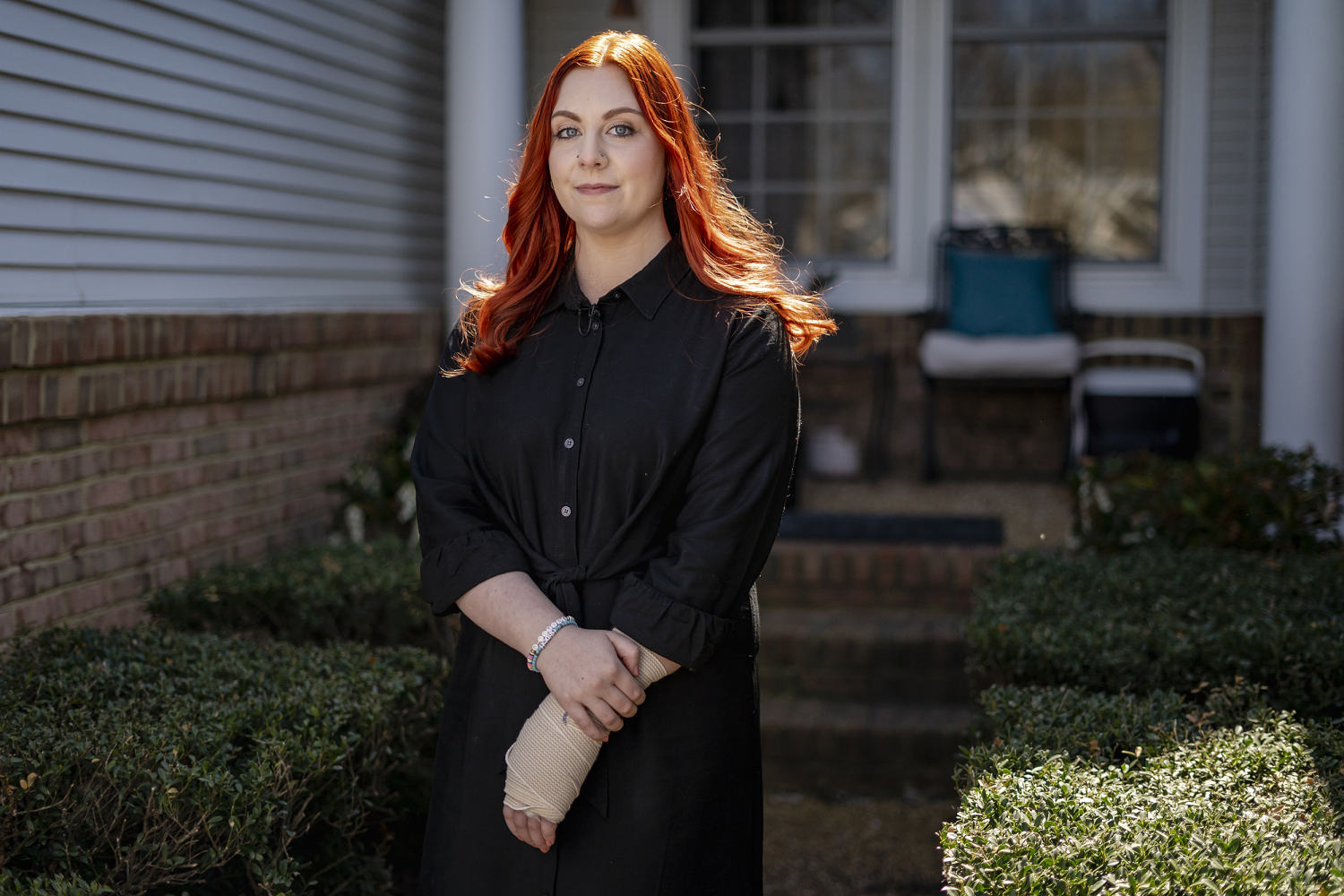
Consider the burden placed on Abigail Zwerner, the teacher who took a bullet through her hand and into her chest. She survived by a miracle, but survival is not the same as being whole. Her career was shattered. Her sense of safety was erased. She did everything right. She flagged the behavior. She sought help. She trusted the system to shield her.
Instead, the system left her at the front of a classroom with nothing but a box of crayons between her and a loaded firearm.
The criminal justice system is now trying to answer a question that usually gets buried in the aftermath of American gun violence: Who is responsible when the adults in charge simply refuse to see what is right in front of them?
The Defense of the Clipboard
The legal battle moving through the courts is not just about one former administrator. It is a trial of a specific kind of professional apathy.
The defense will inevitably rely on protocols and paperwork. They will argue about scope of employment, about whether the administrator followed the precise wording of the school handbook, and about whether anyone could legally prove the child possessed a weapon at that exact second. They will hide behind the clipboard.
But the prosecution is attempting something much more difficult, and much more necessary. They are trying to codify common sense into criminal law. They are arguing that when you are given the custody of hundreds of children, your duty of care does not end when a situation becomes uncomfortable or legally ambiguous. Your duty is to act.
We have reached a point where the traditional excuses are hollow. We can no longer pretend that school violence is something that only happens in high schools, or only happens in specific neighborhoods, or only happens because of a single broken home. The rot is deeper. It is found in the administrative offices where liability is feared more than tragedy.
The courtroom proceedings are slow, tedious, and frustrating. There are delays, arguments over admissibility, and dry recitations of educational code. But every person sitting in that gallery knows the unspoken truth of the room.
If an administrator had simply stopped the day, cleared the room, and taken the warning seriously, a young woman would not have a scar on her chest, and a six-year-old boy would not have the weight of an attempted homicide attached to his soul before he has even learned fractions.
The Empty Desk
There is a profound loneliness in the middle of this story.
Think of the child. A six-year-old boy does not wake up in a vacuum and decide to become a shooter. He lived in a home where a firearm was accessible. He lived in a world that failed to notice his unraveling, or noticed it and decided it was someone else's problem. Now, he is a case study. He is a data point in a national debate.
And what of the classroom itself? Long after the police tape is taken down and the drywall is patched, the room changes. The children who sat in those small plastic chairs that morning are older now. They are moving through elementary school, carrying a piece of knowledge that no child should ever possess: that the walls of a school are porous, and the adults cannot always save you.
This is the invisible cost of looking away. It isn't just the physical injury; it is the wholesale destruction of trust. When a school district fails so spectacularly, it breaks the sacred, unspoken contract between a community and its schools. Parents drop their children off at the bus stop with the understanding that there is a perimeter of protection around them. That morning in Virginia, that perimeter was revealed to be an illusion made of paper.
The trial will eventually reach a verdict. A former school official will either walk free or face a cell. The news vans will pack up their satellite dishes, and the world will move on to the next breaking headline.
But the real verdict has already been delivered by the people who were left inside that building. It is written in the permanent anxiety of a community that realized, too late, that the people hired to watch the door were looking at their watches instead.