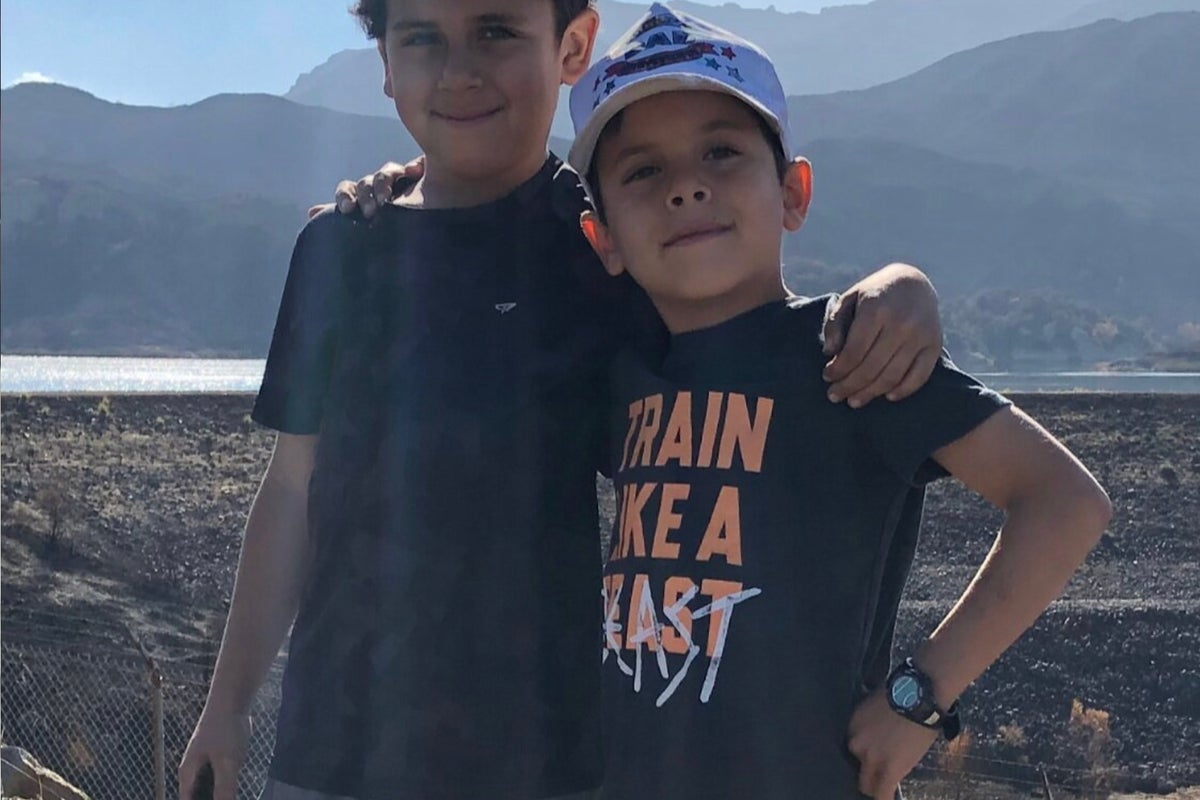
A Los Angeles County jury ordered California socialite Rebecca Grossman to pay $176 million to the family of Mark and Jacob Iskander, the young brothers she struck and killed in a 2020 hit-and-run. This massive civil award follows her criminal conviction for second-degree murder, driving a stark wedge between elite privilege and legal accountability. While headlines focus on the staggering dollar amount and the high-profile backdrop of a street-racing scandal involving a former professional athlete, the reality of the case exposes a deeper, systemic failure. It lays bare the lethal consequences of municipal inaction on pedestrian safety and the limits of civil liability in preventing predictable tragedies.
The civil court split the financial liability, assigning $123.2 million to Grossman and $52.8 million to her former boyfriend, ex-Major League Baseball pitcher Scott Erickson. On the night of September 29, 2020, Grossman drove her white Mercedes-Benz SUV at speeds reaching 81 miles per hour through a residential neighborhood in Westlake Village. She was tailing Erickson’s vehicle. Both had consumed alcohol at a nearby restaurant. When they approached a marked crosswalk where Nancy Iskander was crossing with her children, Erickson’s vehicle swerved out of the way. Grossman’s vehicle did not.
The defense fought aggressively to deflect blame, trying to shift the focus to Erickson or argue that the crosswalk itself lacked adequate visibility. The jury rejected these arguments, finding that reckless indifference, fueled by impairment and speed, caused the deaths. Yet, looking closely at the civil trial transcripts and traffic engineering data reveals that the tragedy was not merely the result of individual depravity. It was the predictable outcome of an infrastructure design that prioritizes vehicle throughput over human life.
Speed Limits and the Myth of the Safe Suburb
Suburban communities often design roads to highway standards while expecting drivers to obey residential speed limits. Triunfo Canyon Road, where the Iskander brothers died, features wide lanes and long straightaways that naturally encourage speeding. This discrepancy creates a dangerous environment where drivers feel comfortable traveling far above the posted 45 miles per hour limit.
Traffic studies show that when a vehicle strikes a pedestrian at 20 miles per hour, the survival rate is roughly 90 percent. At 40 miles per hour, that survival rate drops to less than 20 percent. When a vehicle travels at 81 miles per hour, a collision is almost universally fatal. The mass of a multi-ton SUV combined with extreme speed creates an impact force that no human body can withstand.
Vehicle Speed vs. Pedestrian Mortality Rates
+------------------+-----------------+
| Speed (MPH)      | Mortality Rate  |
+------------------+-----------------+
| 20 MPH           | 10%             |
| 40 MPH           | 80%             |
| 80+ MPH          | ~100%           |
+==================+=================+
The City of Westlake Village faced scrutiny during the broader legal fallout regarding the safety history of that specific crosswalk. Residents had previously requested flashing beacons or traffic signals at the intersection, citing frequent speeding. The city delayed taking action, relying instead on standard paint and passive signage. By treating pedestrian safety as a secondary concern, municipal planners shared silent complicity in the conditions that allowed the crash to occur.
The Illusion of Civil Deterrence
A $176 million judgment sends a powerful message, but it rarely functions as a true deterrent to reckless behavior. Wealthy defendants often possess multi-layered insurance policies, trusts, and corporate structures designed to shield assets from collection. The long legal battle to actually collect a civil award can drag on for years, frequently resulting in settlements for a fraction of the original verdict.
Insurance policies typically exclude coverage for intentional criminal acts or punitive damages. This means Grossman’s primary liability insurers will fight to avoid paying the judgment, forcing the Iskander family to pursue her personal assets directly. For ordinary citizens, a judgment of this scale means immediate bankruptcy and financial ruin. For the ultra-wealthy, it initiates a complex game of asset protection played by specialized defense attorneys.
Furthermore, civil liability operates after the fact. It compensates for loss but cannot restore life. True deterrence requires immediate, physical intervention in the driving environment. It requires infrastructure that forces compliance rather than requesting it through signage.
The Failure of Passive Traffic Enforcement
Relying on driver discretion and occasional police patrols does not work on wide suburban arteries. Automated enforcement, such as speed cameras, faces intense political opposition in California due to privacy concerns and revenue-generation arguments. Without consistent enforcement or physical barriers, drivers choose speeds based on road design rather than law.
The Role of Vehicle Size in Fatalities
The growth of light trucks and SUVs on American roads has caused a steady rise in pedestrian deaths over the past decade. High front-end grilles strike pedestrians at chest level rather than at the legs, pushing them under the vehicle rather than throwing them onto the hood. Grossman’s Mercedes SUV magnified the impact of her speed, ensuring the collision would be catastrophic.
Rebuilding the Public Right of Way
Preventing future tragedies requires changing how cities approach street design. Passive crosswalks on multi-lane roads are fundamentally unsafe. Municipalities must implement self-enforcing infrastructure that slows vehicles down through physical design.
- Continuous Sidewalks: Raising the crosswalk to the level of the sidewalk forces vehicles to slow down, acting as a large speed table.
- Pedestrian Refuge Islands: Dividing the road with a central island allows pedestrians to cross one direction of traffic at a time, shortening their exposure to danger.
- Narrower Lane Widths: Reducing lane widths from 12 feet to 10 feet naturally causes drivers to lower their speed due to increased visual friction.
- Active Signalization: Installing pedestrian-activated hybrid beacons ensures vehicles must come to a complete stop before anyone steps into the roadway.
The Iskander family has channeled their grief into advocacy, establishing a foundation to support foster children and pushing for safer street designs. Their efforts highlight the gap left by municipal governments that fail to protect their most vulnerable residents.
Relying on the judicial system to penalize drivers after a tragedy occurs is a failed strategy. Punishing the individual does not fix the broken road system that permitted the behavior in the first place. Until cities recognize that wide, high-speed suburban roads are incompatible with pedestrian traffic, multi-million dollar verdicts will remain a grim, recurring metric of public failure.


