Humidity clings to your shirt before you even step out of the MTR station in Sham Shui Po. It smells like wet concrete, roasted chestnuts, and exhaust from idling minibuses. You look up, and the sky is a thin blue ribbon wedged between serrated walls of laundry-draped apartment blocks and sleek commercial skyscrapers that gleam like quartz.
Walk two blocks east toward Nathan Road, and the air changes. Cool air conditioning spills from luxury watch boutiques. Marble floors reflect chandeliers. Balance sheets are balanced here in the time it takes to sip an espresso.
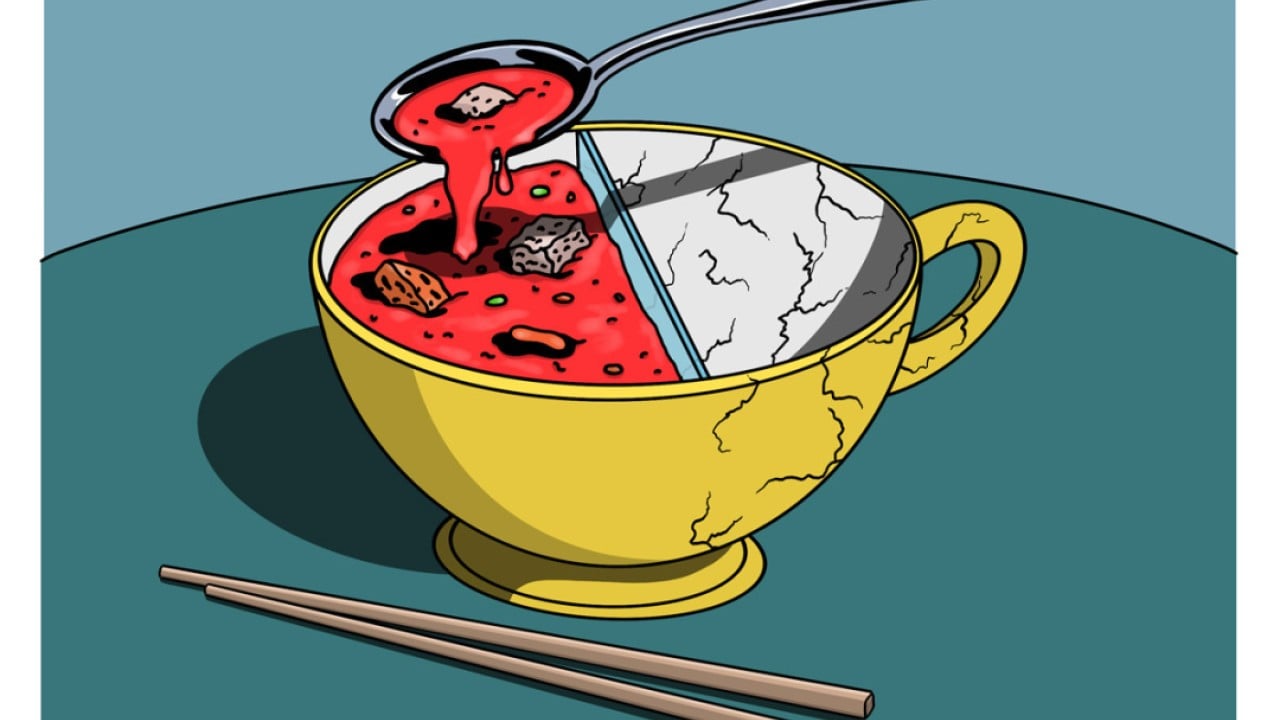
This is the central tension of Hong Kong. Not a secret, and not a paradox that economists haven't cataloged in thick quarterly reports, yet it still feels like a sleight of hand when you stand inside it. For decades, the city has been celebrated as a triumph of free-market efficiency, low taxes, and frictionless capital. Ships glide through Victoria Harbour. Clearinghouses process billions before lunch. By almost every metric that makes a finance minister smile, the machine hums.
People live inside that machine. They breathe its exhaust, ride its escalators, pay its rents, and raise children in spaces measured in square feet that a suburban dog might find cramped.
So when someone asks whether Hong Kong's economy serves the people or profit, the honest answer isn't a neat ledger entry. It is a lived feeling. It is the difference between a soaring GDP figure on a Bloomberg terminal and the quiet math a young nurse does at midnight when her lease comes up for renewal.
A City Built on Scarcity and Speed
To understand what the city rewards, start with the ground beneath your feet. Hong Kong is steep, rocky, and famously short on flat land. Over a century and a half of colonial administration and post-handover governance, that physical constraint shaped an economic model built around land value, trade intermediation, and financial services.
Low corporate and income taxes kept capital flowing in. A straightforward legal system and convertible currency gave international firms confidence. For a long stretch, those features lifted living standards dramatically. Families who arrived with almost nothing could find work in factories, trading houses, or service shops, save diligently, and watch their children move into white-collar roles.
Economic growth was real. Poverty fell from its mid-twentieth-century highs. The city became wealthy.
Yet wealth concentrated along predictable fault lines. Because land supply was tightly controlled and public finance leaned heavily on land sales and property-linked revenues, real estate became far more than shelter. It became the primary engine of wealth creation and municipal income. When property prices climb, balance sheets swell for landowners and developers. When rents outpace wages year after year, a barista, a teacher, or a delivery rider feels the squeeze every single payday.
I remember sitting in a cramped cha chaan teng in Mong Kok a few years back, listening to a middle-aged man explain why his thirty-something son still shared a bedroom with his younger brother. There was no bitterness in his voice—just a tired, practical acceptance, the way people talk about typhoon warnings. You don't argue with the wind. You board up the glass and hope the roof holds.
Meet Mei-Ling and Kenji
(Note: Mei-Ling and Kenji are hypothetical composite characters created to illustrate common economic pressures documented across Hong Kong households; they are not real individuals.)
Mei-Ling works as an occupational therapist in a public hospital. Her days are full of small victories: helping an older patient grip a spoon again after a stroke, coaching a family through home exercises, moving from ward to ward with a clipboard and a tired smile. Her salary is respectable by regional standards, steady and honorable.
Her rent takes nearly half of it.
She lives in a subdivided unit—a larger flat carved into smaller cubicles, each with its own tiny kitchenette or shared corridor. The walls are thin enough that you hear your neighbor's alarm clock before your own. Water bills and electricity charges on subdivided units often carry markups that make every shower feel like a line item.
Kenji sits across the harbor in Central, working in compliance for an asset manager. His commute is smooth, his office view takes in the peak, and his year-end bonus can swing wildly depending on market sentiment and deal flow. He makes good money. Still, when he and his partner talk about buying a flat big enough for a child, the numbers look like a riddle with no solution unless their parents chip in or they wait another decade.
Neither Mei-Ling nor Kenji is failing at life. Both show up, work hard, pay taxes, and keep the city running. Mei-Ling keeps people whole after illness; Kenji helps keep capital moving through reputable channels.
Their diverging trajectories reveal how an economy can look vibrant in the aggregate while feeling punishing at street level. Profit is nimble. It crosses borders in milliseconds, hunts yield, and rewards scale. Human lives move on a slower clock. Bodies tire. Children grow. Aging parents need care right now, not when a five-year development pipeline finally delivers new housing units.
When the Ledger Misses the Room
Economists love averages. Averages are clean. If ten people have nothing and one person has a mountain of gold, the average says everyone is doing okay.
Hong Kong has long wrestled with wide income inequality and steep housing costs. Even when headline unemployment stays low and trade numbers rebound, households feel strain when essentials—housing, childcare, eldercare, healthcare wait times—eat up most of a paycheck.
Think of an economy like a heating system in a large apartment building. (This is a metaphor comparing macroeconomic policy to building infrastructure.) If the boiler is tuned to heat the penthouse and the lobby to perfection, the pipes might read "optimal output" on a gauge in the basement. Meanwhile, the third floor stays freezing because the valves are stuck or the insulation is thin.
You can turn up the boiler all day long. The gauge goes up. The third floor still shivers.
For years, the dominant reflex was to trust that a roaring boiler would eventually warm every room. Trickle-down dynamics do work in certain phases—expanding jobs, funding public services, attracting talent. When a city's core cost of living climbs so high that young professionals pack suitcases for London, Singapore, Toronto, or Melbourne, something deeper is happening than a temporary cyclical dip. Talent drains when the math stops working.
It is scary to admit how fragile that math can feel, even in a place that looks immovable. You look at the Bank of China Tower slicing into low clouds, at ferries crossing between Tsim Sha Tsui and Wan Chai, and it feels permanent. Yet cities aren't made of steel and glass alone. They are made of people who decide whether to stay, build families, start small businesses, and care about the neighborhood next door.
The Quiet Costs Nobody Puts on a Slide
Profit has a clear scoreboard. Quarterly earnings. Share price. Net inflows. Assets under management. You can put those on a presentation slide with a crisp upward arrow and everyone in the room understands what success looks like.
Human well-being is messier to chart. What is the cost when a couple delays having children because a two-bedroom home costs more than they can imagine saving in twenty years? What is the cost when an elderly resident lives alone in a tiny room while family members work long hours just to cover basic expenses? What is the cost when small independent shops close because commercial rents rise faster than a neighborhood's spending power can follow?
None of those losses show up immediately on a trade balance sheet. In fact, high rents can inflate property valuations and keep certain financial metrics looking strong right up until the moment households hit a wall.
Sometimes people ask whether critiquing a pro-market model means rejecting commerce altogether. That feels like a false choice. Markets aren't monsters. Trade creates jobs. Investment builds transit systems, hospitals, and universities. A vibrant financial hub brings ideas, global connections, and tax revenue that can fund social support.
The real question isn't whether profit is evil. Profit is fuel.
A car needs fuel to move. Without gasoline or battery charge, it sits dead in the driveway. Yet if you pour fuel straight onto the seats and ignore the brakes, the steering, and the passengers inside, you don't have a journey. You have a hazard.
Public Housing, Welfare, and the Tug of War
To its credit, Hong Kong isn't a caricature of unbridled laissez-faire. Its public housing system—stretching back decades to massive post-fire resettlement efforts and evolving into large estates and Home Ownership Scheme flats—houses a huge share of residents. Public hospitals provide care at fees that would stun anyone used to steep private medical bills. Social safety nets exist, even if advocates regularly argue they fall short of real living costs.
Still, long waiting lists for public rental housing tell their own story. Years spent waiting while paying high private rents drains savings before a family even gets a key. Means-tested support sometimes creates awkward cliffs where earning slightly more disqualifies a household from aid while leaving them nowhere near financially independent.
Policy debates here often get tangled between two fears. One side fears that heavy intervention or wealth redistribution will spook investors, slow growth, and erode the city's competitive edge. The other side fears that clinging to old formulas will leave ordinary workers locked out of a dignified life in the city they call home.
Both fears come from somewhere real. Investors can move capital quickly if rules become unpredictable or hostile to enterprise. Residents already feel the weight of unaffordability every single month. Pretending either side's concern is imaginary doesn't solve anything; it just makes the room louder.
Who Is the Economy For, Really?
Strip away the jargon—fiscal reserves, productivity growth, capital formation, housing supply—and the question comes back to purpose.
An economy is a human arrangement. We invented markets, currencies, contracts, and property rights so people could cooperate, trade what they make or do, and live better lives than they could alone. When the arrangement works, commerce serves human flourishing. When the arrangement tilts too far toward extraction and asset inflation, people start feeling like tenants in their own lives.
You see that shift in small moments. A young chef who loves cooking decides to leave for a smaller city abroad because opening a modest spot at home feels financially impossible. A retired couple watches their neighborhood bakery replaced by another chain store because the landlord doubled the lease. A graduate takes a high-stress finance job they don't even like because entry-level pay in creative or community work barely covers commuting and lunch.
None of these stories makes front-page headlines on its own. Together, they shape the soul of a place.
Hong Kong has always reinvented itself when backed into a corner. From entrepot to manufacturing hub to global financial center, the city has shown remarkable adaptability. That history is part of why people care so fiercely—and why watching housing stress and inequality linger feels so frustrating. You know what the city is capable of when energy and opportunity align.
True resilience isn't measured only by how fast capital arrives during a boom. It is measured by whether a teacher, a nurse, a shopkeeper, and an engineer can all build a decent, hopeful life without surrendering their dignity or their time to rent alone.
Late at night, when the neon along Nathan Road dims and the harbor grows quiet except for a distant tugboat, the towers still stand tall against the dark. Down in the narrow streets below, fans hum in small rooms, alarm clocks are set for early shifts, and ordinary people keep waking up to carry a world-class city on their shoulders.