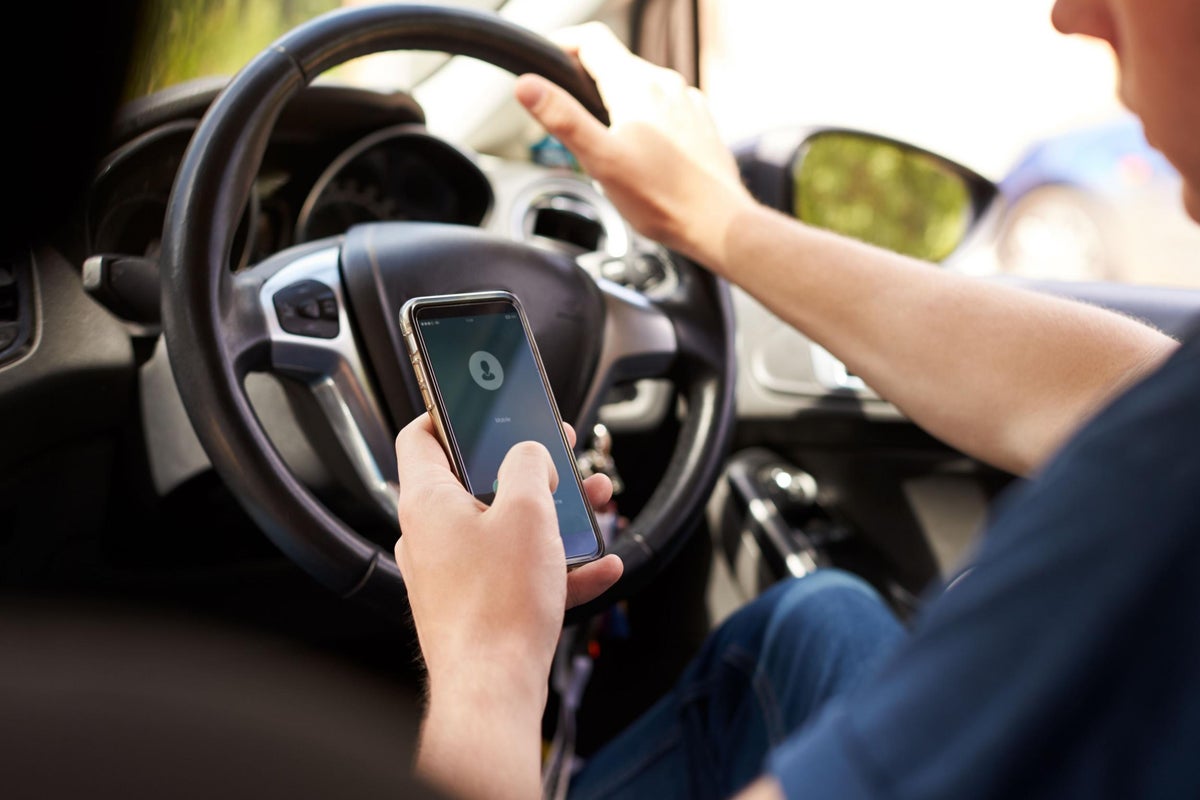
Sarah Miller adjusted her rearview mirror, the morning sun cutting sharply through her windshield as she merged onto I-76 outside Philadelphia. Her commute was a well-worn routine. She knew every pothole, every bottleneck, and exactly which radio station played the fewest commercials at 7:45 AM.
Then, her dashboard buzzed.
It was a text from her daughter about a forgotten permission slip. Without thinking, Sarah glanced down. It took exactly two seconds to read. In those two seconds, travelling at 65 miles per hour, her SUV covered nearly 200 feet blindly. She didn’t see the brake lights flashing in front of her until she hit the rumble strips. She swerved, heart pounding in her throat, narrowly avoiding a multi-car pileup.
Sarah got lucky. Thousands of Pennsylvanians do not.
For years, the Commonwealth has fought a losing battle against the glowing screens in our palms. We all see them. The driver drifting across the double yellow line on a rural road in Lancaster. The commuter at a green light in Pittsburgh, motionless, face illuminated by a blue glow. We grumble, we honk, and sometimes, we look down at our own phones to reply to a quick email, convincing ourselves that we are the exception to the rule.
The state of Pennsylvania has finally decided that our collective luck has run out. A sweeping change to the vehicle code has quietly gone into effect, and it fundamentally alters what you are allowed to do behind the wheel. It is no longer just about texting. It is about the very act of holding a device.
Understanding the shift requires looking back at how we got here. Pennsylvania’s original distracted driving law, passed over a decade ago, banned texting while driving. It seemed revolutionary at the time. But technology evolved faster than the statute. The old law was riddled with loopholes. A driver caught with a phone in their hand could simply tell an officer they were looking at a GPS map, dialing a phone number, or scrolling through a music playlist. Under the old framework, those actions were technically legal, making enforcement an uphill battle for state troopers.
The new legislation closes those loopholes with a definitive snap. The core change is simple yet profound: the Commonwealth is now a hands-free state.
This means it is now illegal to use an interactive wireless communications device while operating a vehicle. The definition of "use" has expanded dramatically. You cannot hold your phone to read a text, send an email, scroll through social media, watch a video, or browse the web. Even holding the phone to your ear during a call is now a violation. If the vehicle is in motion, and that device is in your hand, you are breaking the law.
The state is allowing a few specific exceptions, but they are narrow. Drivers can still use their phones if they are securely mounted to the dashboard, windshield, or console, utilizing voice-activated or hands-free features. You can touch the screen once to activate or deactivate a function, but that is the extent of physical interaction permitted. Emergency calls to 911, an ambulance, or the police remain legal, recognizing that sometimes a phone is a literal lifeline.
But the real teeth of this new policy lie in the financial consequences, and they accumulate quickly.
A first-time offense under the new law carries a baseline fine of $50. On the surface, that might seem like a minor slap on the wrist, a mere annoyance compared to a speeding ticket. But that $50 figure is deceptive. Anyone who has ever paid a traffic citation in Pennsylvania knows that the face value of the fine is just the beginning.
Consider what happens next: administrative fees, emergency medical services surcharges, and court costs are tacked onto every single ticket. That $50 citation quickly balloons into an expense closer to $150 or $200 out of pocket.
The financial pain does not stop at the courthouse steps. The true, hidden cost of this law will be felt in your monthly budget. While a first offense does not carry points on your driving record, insurance companies routinely monitor traffic convictions. A conviction for distracted driving signals to an actuary that you are a high-risk client. Drivers can expect their auto insurance premiums to spike significantly upon renewal, a financial penalty that keeps taking money from your pocket month after month, year after year.
For commercial drivers, the stakes are exponentially higher. Truckers and delivery drivers face steeper fines and the very real threat of suspension, a move that could instantly derail a livelihood.
The transition period for this law relies on a strategy of education over immediate punishment. For the first twelve months of enforcement, law enforcement officers will issue warnings rather than citations. If a state trooper pulls you over for holding your phone, you will likely walk away with a piece of paper explaining the new rules rather than a bill.
This one-year grace period is a deliberate psychological strategy. The state is trying to break a deeply ingrained habit before it starts breaking bank accounts. It takes time to rewrite muscle memory. We have spent fifteen years training ourselves to reach for our phones every time they chime. The warning period is designed to replace that reflex with a new one: putting the phone in the glove box, the center console, or a dashboard mount before turning the key.
Once that year concludes, however, the kid gloves come off.
Some drivers have expressed skepticism, arguing that the law is an overreach or a revenue generation scheme for local municipalities. It is easy to feel defensive when a daily habit is criminalized. But the data supporting the change is grimly unassailable.
The Pennsylvania Department of Transportation tracks these metrics meticulously. Every year, distracted driving contributes to thousands of crashes across the state, resulting in preventable injuries and fatalities. A vehicle traveling at highway speeds is a multi-ton missile. When the person guiding that missile looks away for even a few seconds, the laws of physics take over, indifferent to the driver’s intent or the importance of the text message.
States that have previously enacted similar hands-free laws have seen measurable drops in traffic fatalities within the first few years of implementation. It is a proven behavioral deterrent. When people know that merely holding a phone can result in being pulled over, they stop holding them.
The law also introduces a poignant layer of remembrance. Named in honor of victims of distracted driving accidents, the legislation serves as a permanent memorial to those who lost their lives because someone else couldn't wait to reply to a message. It shifts the conversation from legal jargon to human cost.
As Sarah Miller pulled into her office parking lot, her hands were shaking slightly from her near-miss on the highway. She sat in the quiet cabin of her car for a long moment, looking down at the phone resting on the passenger seat. The screen lit up again with another notification.
She didn't reach for it. Instead, she slipped it into her purse, zipped it shut, and stepped out into the morning air, leaving the digital world behind for the sake of the real one.


