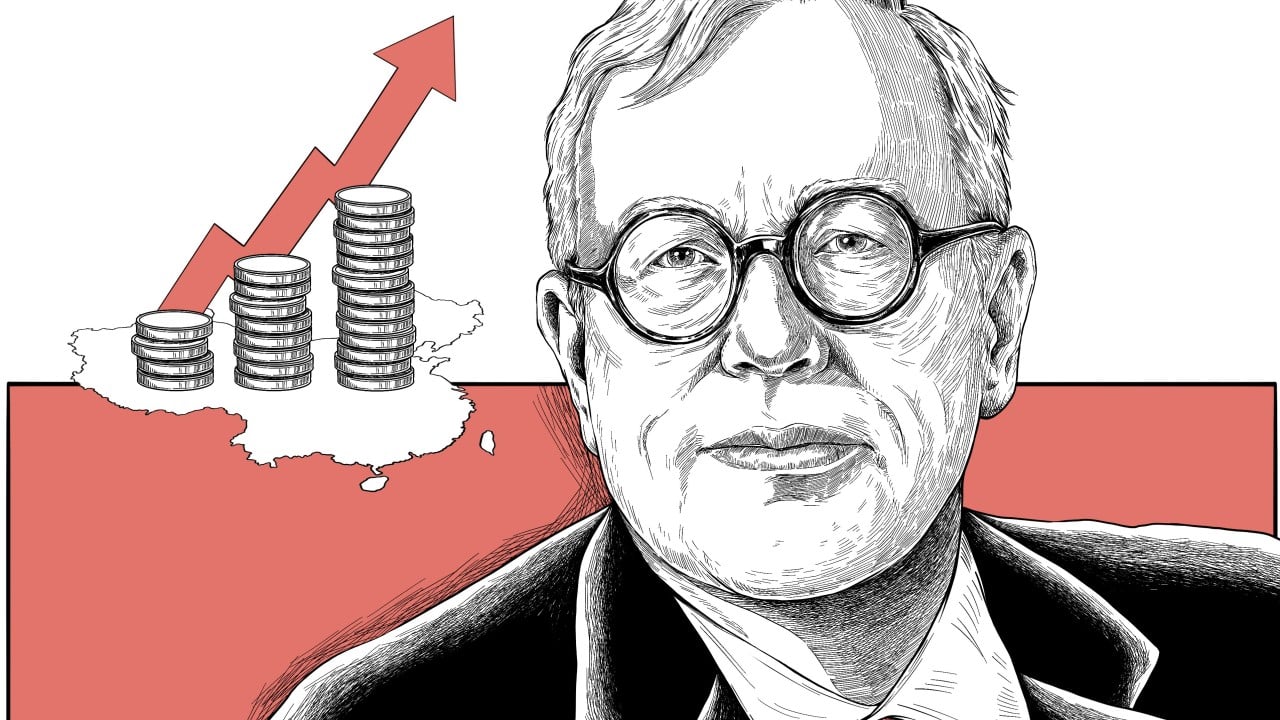
Western policymakers often misread Chinese economic strategy as a monolithic, flawless blueprint. Economists like Nobel laureate James Heckman have long pointed out that China’s emphasis on education and human capital is a powerful engine for development. Yet, a critical fracture has appeared in this engine. Beijing wants the fruits of radical innovation but refuses to tolerate the messy, disruptive human behavior that produces it. By prioritizing ideological conformity and a state-defined common goal over individual risk-taking, the Chinese Communist Party is actively stifling the exact creative destruction required to escape the middle-income trap.
To understand why this matters, one must look at the tension between state control and human capital development. For decades, China achieved historic growth by mobilizing cheap labor and building massive infrastructure. That era is over. The country must now transition to an economy driven by total factor productivity—essentially, doing more with less through technological breakthroughs. You might also find this connected article interesting: The Missile Myth Why Chasing Escalation Blinded the West to Regional Reality.
But breakthroughs are accidental. They require deviants. When a state enforces strict boundaries on what can be questioned, it creates an environment where entrepreneurs and scientists optimize for safety rather than discovery. Heckman’s foundational work proves that early childhood investments and open-ended educational environments yield the highest returns for society. China has built the schools and funded the labs, but it is rapidly draining the autonomy out of the people sitting inside them.
The Illusion of Coordinated Innovation
Top-down directives can build a high-speed rail network in record time. They cannot, however, command a scientist to have a eureka moment. As reported in latest articles by The Guardian, the effects are widespread.
The Chinese leadership operates under the assumption that innovation can be engineered like an assembly line. State funds pour into designated strategic sectors such as artificial intelligence, semiconductors, and quantum computing. This approach creates a flurry of patents and corporate filings. It looks impressive on paper.
The reality on the ground tells a different story. Bureaucrats allocate capital based on political alignment rather than market viability. When the state signals that a specific industry is a priority, local officials rush to subsidize any project that uses the correct buzzwords. The result is massive overcapacity, rampant duplication of effort, and a culture of compliance.
True risk-taking means venturing into the unknown without a safety net, and crucially, without government permission. In a system where failing at an approved government project is acceptable, but succeeding at an unapproved one is dangerous, entrepreneurs choose the path of least resistance. They build what the state asks for, not what the world needs.
Why the Common Goal Smothers the Rebel
The concept of a common goal sounds noble. It implies a society pulling together in the same direction to achieve national rejuvenation and shared prosperity.
But radical innovation is inherently anti-social. It disrupts established orders, bankrupts legacy industries, and challenges existing hierarchies. Consider how the global tech landscape changed over the last thirty years. The most transformative platforms grew out of garage operations run by eccentrics who ignored conventional wisdom.
[Traditional State Model] -------> Linear Progress -------> Predictable Gains
[Disruptive Risk Model]  -------> Chaos & Failure  -------> Exponential Breakthrough
In China, that level of independence is viewed as a systemic threat. The regulatory crackdowns on domestic tech giants over the past few years were not just about antitrust concerns. They were a explicit reminder of who holds ultimate authority. When the state humbles its most successful entrepreneurs, the message echoes through every university lab and startup incubator. The collective goal requires submission. Unfortunately, submission is the death of curiosity.
The Metrics That Lie
Chinese universities currently produce more STEM graduates than any other nation. Their research institutions publish a staggering volume of scientific papers each year.
- Quantity over utility: A massive percentage of these papers are rarely cited outside of China, serving merely to hit state-mandated publication quotas.
- Academic safety: Researchers focus on incremental improvements to existing technologies rather than pursuing high-risk, high-reward theories that might end in failure.
- Funding traps: Grants are tied to predictable outcomes, leaving no room for the serendipitous discoveries that define modern science.
This focus on metrics creates a facade of progress. You can mandate the hours spent in a laboratory. You cannot mandate the spark of genius that occurs when a researcher feels free to break the rules.
The Human Capital Paradox
James Heckman’s research emphasizes that the non-cognitive skills developed in youth—traits like grit, curiosity, and a willingness to question authority—are just as critical as raw intelligence.
China’s educational apparatus is designed to do the exact opposite. The system rewards memorization, conformity, and performance on standardized examinations like the Gaokao. From a young age, individuals learn that there is only one correct answer to any given problem, and that answer is provided by the instructor.
When these students enter the workforce, they excel at execution. If given a blueprint, they can optimize it to perfection. But when confronted with a blank sheet of paper, the system's flaws become obvious. The fear of making a mistake outweighs the desire to discover something new. This psychological barrier is harder to dismantle than any trade tariff or export control.
The Capital Flight of Minds
The smartest players always see the writing on the wall first. Over the last several years, a quiet but steady exodus of intellectual and financial capital has occurred.
Wealthy tech founders are stepping down early. Top-tier researchers are seeking appointments abroad, or simply keeping their heads down and refusing to pitch ambitious projects. When a system penalizes deviation, the brightest minds either leave or turn inward, practicing a form of professional malicious compliance. They do exactly what is required of them, and absolutely nothing more.
The Costs of Absolute Control
No country can order its way to the cutting edge of human capability. The United States maintains its competitive advantage not because its government is exceptionally efficient, but because its system tolerates chaos, failure, and dissent. It allows an individual to challenge the status quo, fail spectacularly, and try again without state sanction.
China is attempting an unprecedented experiment: achieving superpower status in the knowledge economy while maintaining an absolute monopoly on information and thought. History suggests this is an impossible balancing act. The tools used to enforce social stability—censorship, surveillance, and ideological screening—are the very tools that dismantle the trust and openness necessary for an innovative ecosystem.
The state can buy all the machinery it wants. It can build sprawling silicon fabs and university campuses that stretch for miles. But until Beijing realizes that human capital cannot be managed like an inventory of raw steel, it will continue to wonder why its massive investments yield imitation instead of invention. The true cost of top-down harmony is technological stagnation.