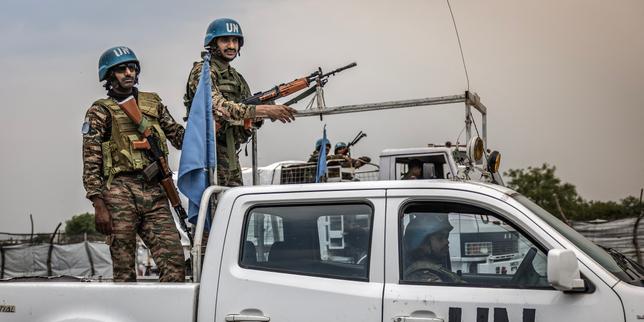
The road outside Malakal does not forgive mistakes. It is a track carved through dust and stubborn acacia trees, shifting beneath the weight of heavy trucks and swallowing the sound of anything that tries to move too fast. When the convoy rolled out that morning, the air was already thick with the dry heat of the dry season, a heavy blanket pressing down on the shoulders of men far from the highlands they called home.
They wore blue helmets. Not for combat, but as a promise.
Somewhere in the vast, unforgiving expanse of Jonglei State, that promise met an ambush.
History often remembers conflicts by their treaties, by the grand tables where maps are redrawn and hands are shaken in front of camera lenses. But history is lived in the dirt. It is lived by twenty-two-year-old recruits who learned English out of paperback dictionaries before boarding military transport planes, trading the cool mist of Addis Ababa for a land of endless flat savannah and fractured loyalties.
Consider what happens when a peacekeeping mandate collides with an environment where peace is merely an intermission between skirmishes.
The United Nations mission in South Sudan, known as UNMISS, operates in a space that defies easy categorization. It is not an active war zone governed by uniform front lines, nor is it a stable nation where police forces maintain order. It is a mosaic of displacement camps, cattle raids, shifting ethnic alliances, and an ocean of small arms left over from decades of liberation struggles.
In this environment, the Ethiopian peacekeepers are not distant observers. They are the scaffolding holding up a fragile ceiling.
To understand why two more lives were snuffed out on a dusty transit route, you have to look past the bureaucratic language of UN statements and official communiqués. You have to picture the morning routine inside a base camp: the hiss of kerosene stoves, the careful folding of uniforms, the quiet phone calls home across bad satellite connections, promising that things are stabilizing, that the mission will be over soon.
Then comes the sudden violence.
An ambush in the marshlands or along the remote arteries of South Sudan is rarely a cinematic firefight with grand tactical maneuvers. It is instantaneous and brutal. It is the crunch of gravel under tires yielding to hidden triggers, the scream of lead tearing through unarmored metal, the frantic scramble for cover where no cover exists.
Two peacekeepers did not return to the mess hall that evening. Their names, released later in sterile press briefings, became statistics in a ledger that grows heavier with every passing year. Ethiopia has long been one of the largest contributors of uniformed personnel to United Nations operations across Africa, sending its sons and daughters into the most volatile corners of the continent. They go because regional stability is an existential requirement. When your neighbor’s house is on fire, the flames lick at your own thatched roof.
Yet, the cost of that regional solidarity is paid in individual grief.
In a small village in the Amhara region or on the outskirts of Hawassa, a family receives a folded flag and a standardized letter of condolence. The abstract notion of international diplomacy collapses into the very concrete absence of a son at the dinner table, a brother who was supposed to return for the harvest, a father whose laughter exists only in old video clips on a cracked smartphone screen.
Why do they keep going?
The question hangs over every blue helmet deployment like the dust storms that roll across the Nile basin. Critics point to the inherent limitations of peacekeeping mandates—the rules of engagement that tie soldiers' hands until tragedy strikes, the political compromises made in New York and Juba that leave troops vulnerable in the field, the sheer geographic impossibility of policing a country the size of France with fewer boots on the ground than a single major metropolitan police department.
And yet, withdraw the peacekeepers, and the alternative reveals itself immediately.
Without the UN compounds, hundreds of thousands of displaced civilians sheltering in protection-of-civilians sites would be entirely exposed to the worst impulses of armed factions. Without patrols on these dangerous roads, humanitarian aid—bags of sorghum, vials of polio vaccine, emergency medical kits—cannot reach communities teetering on the edge of famine. The peacekeepers are the only thin blue line standing between an uneasy humanitarian equilibrium and total societal collapse.
They are paramedics in a war zone, tasked with performing surgery while the patient continues to thrash.
The ambush in South Sudan is not an isolated anomaly. It is part of a sobering trend where peacekeepers are increasingly targeted not merely as collateral damage, but as deliberate obstacles to those who profit from lawlessness. In a fragmented nation awash in weapons, authority is local, and anyone wearing a badge representing international law becomes a threat to local warlords and militia leaders who prefer the shadows of impunity.
We read the headline. We process the numbers. Two dead. Several wounded. Investigation underway. Condolences expressed by the Secretary-General.
Then we scroll down.
The digital age trains us for detachment. Distance is an anesthetic. A tragedy occurring four thousand miles away across a satellite feed feels like fiction until you pause to consider the weight of the boots those men wore, the letters still sitting in their barracks unmailed, the sudden, jagged silence that now fills their quarters.
The road outside Malakal is quiet again now. The dust has settled over the tracks of the armored personnel carriers. Another patrol will leave at dawn, because stopping is not an option, and abandonment is a luxury no one can afford. Out on the horizon, the sun rises over the White Nile, indifferent to the grief it illuminates, casting long, sharp shadows across a land still learning how to breathe on its own.