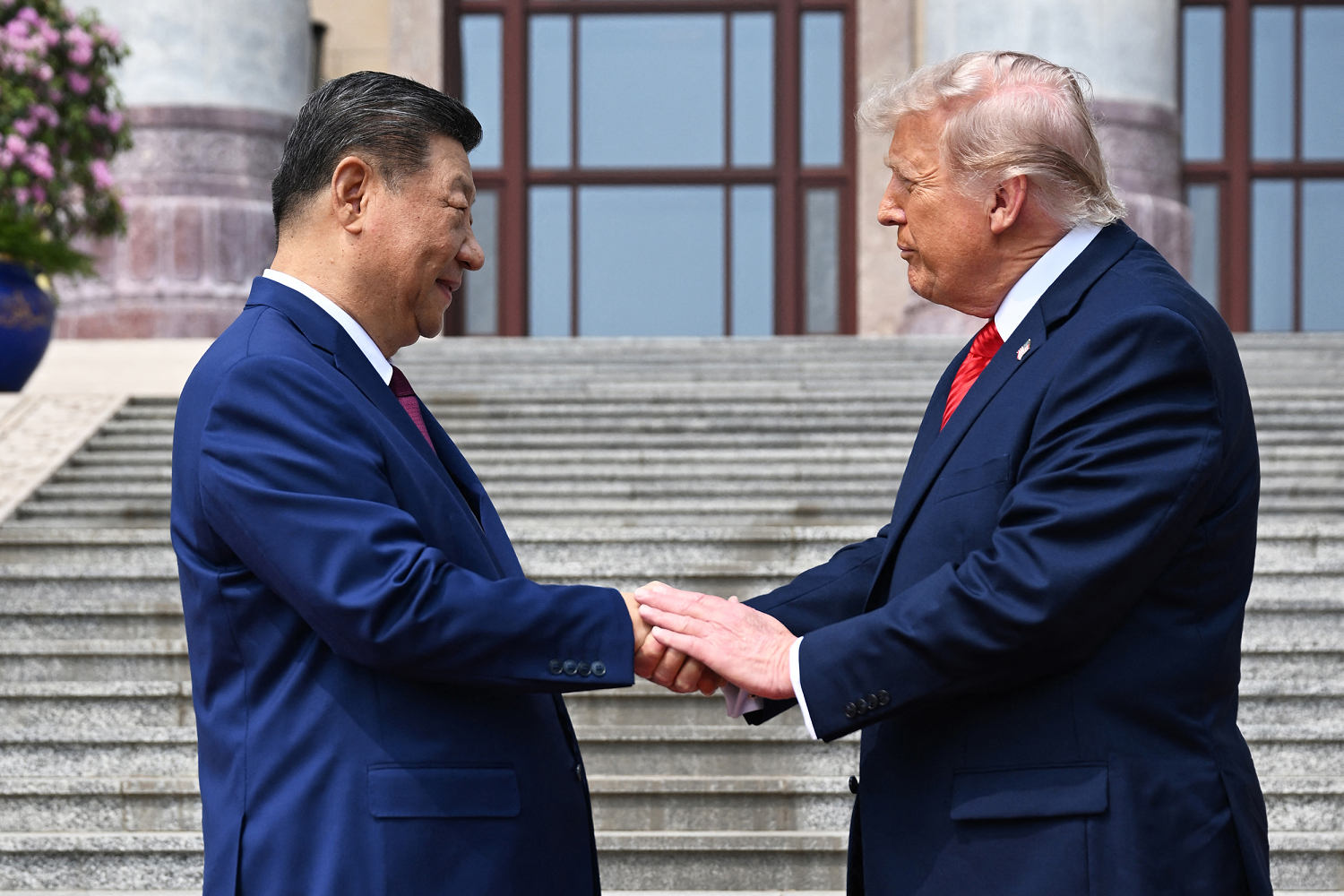
The room in San Francisco smelled faintly of polished wood and nervous energy. Outside, the November fog was rolling in from the bay, blurring the sharp edges of the skyline. Inside, two men sat across from each other. They smiled. They shook hands. The cameras flashed, a rapid-fire strobe that briefly illuminated the heavy, almost suffocating weight of global expectation.
When the leaders of the world’s two largest economies meet, we are trained to look at the macro. We look at the gross domestic product. We look at naval movements in the South China Sea. We analyze the sterile, bloodless prose of official press releases. If you enjoyed this article, you might want to check out: this related article.
But if you want to understand what actually happened at the recent U.S.-China summit, you have to look at something much smaller. You have to look at the pork. Or the flight schedules. Or the quiet sigh of relief from a soybean farmer in Iowa who can finally sleep through the night.
Global diplomacy is rarely a movie where a single pen stroke changes the world. It is a game of inches played by people who are terrified of losing a mile. What the headlines called a "modest trade boost" was something else entirely to the people living on the front lines of this economic cold war. It was breathing room. For another perspective on this story, see the recent coverage from USA Today.
The View from the Cab
Consider a hypothetical farmer named Marcus. He owns six hundred acres of dark, rich soil outside of Des Moines. Marcus doesn't read the financial wires at dawn; he checks the weather and the Chicago Board of Trade. For years, his livelihood has been a collateral casualty in a geopolitical chess match he didn't start and cannot control.
When Washington and Beijing trade blows, Marcus bleeds. A tariff isn’t just a percentage point on a spreadsheet. It is the reason he delays buying a new tractor. It is the reason his daughter’s college fund stays flat.
During the peak of the trade tensions, Chinese buyers walked away from American agriculture, turning instead to Brazil and Argentina. For American growers, that wasn't a policy shift. It was a vacuum.
So when the summit concluded not with a sweeping grand bargain, but with a series of quiet, incremental agreements—commitments to purchase American agricultural goods, promises to clear regulatory hurdles for specific exports—the reaction in the heartland wasn't a celebration. It was a exhale.
The deals touted after the summit were, by any traditional metric, modest. Beijing agreed to buy more American commodities. Washington agreed to ease certain restrictions. It was a transactional truce. To the pundits in Washington, it looked like a lack of ambition. To Marcus, looking out at a field that needs to pay for itself, it looked like a chance to survive another season.
The truth is, we have become addicted to the drama of the conflict. We expect every summit to be a geopolitical superpower showdown, a definitive victory or a catastrophic failure. But the global economy is too fragile for sudden movements.
The Machinery of the Status Quo
To understand why these small victories matter, we have to look at how deep the roots of interdependence actually go. It is easy to talk about "decoupling" when you are sitting in a television studio. It is a fashionable word. It sounds clean. It sounds decisive.
It is also an illusion.
Think about a standard medical device manufactured in Ohio. The plastic casing might be molded in Mexico, but the microchip inside requires rare earth elements refined in China. The software is written in California, but the final assembly happens in a facility outside Shanghai.
If you rip those two ecosystems apart, you aren't just changing a trade route. You are breaking the machine.
The summit’s true achievement wasn't the creation of a new economic paradigm. It was the mutual recognition that the old one cannot be easily destroyed without killing the patient. The "good vibes" reported by the press weren't just optics; they were the lubrication required to keep the gears from grinding to a halt.
Let's look at the numbers that define this reality. Even amidst the rhetoric of economic warfare, bilateral trade between the U.S. and China hovered near record highs in recent years, touching hundreds of billions of dollars annually. You cannot turn a ship that large on a dime. The modest deals announced—such as increasing weekly passenger flights between the two nations—are the logistical reality of that truth. More flights mean more businessmen interacting. More businessmen interacting means more deals. More deals mean fewer reasons to go to war.
It is a slow, tedious process. It lacks glamour.
The Illusion of the Reset
There is a profound vulnerability in admitting that we are stuck with each other. For a long time, the prevailing narrative in American politics was that engagement would inevitably lead to alignment. The idea was simple: if we traded with China, China would become more like us.
We were wrong.
China did not adopt Western political norms as its economy grew. Instead, it used that economic engine to build a formidable, state-directed competitor that challenges American hegemony at every turn. That realization caused a whiplash in Western capital cities. The optimism of the nineties curdled into the paranoia of the late 2010s.
Now, we are in the gray zone.
The subject is confusing because both things are true at once: China is a systemic rival that actively seeks to reshape the global order, and China is our indispensable economic partner. Holding those two conflicting ideas in your head at the same time is exhausting. It is much easier to choose a side. It is much easier to say they are the enemy, or they are the market.
They are both.
During the summit, the two sides agreed to open a working group on climate change and to discuss the regulation of artificial intelligence. These are not trade deals in the traditional sense. They are protocols for co-existing on a planet that is getting smaller and hotter. They are the rules of the road for two giants who know that a head-on collision is fatal for everyone else.
The Real Stakes
The real problem lies elsewhere, far from the cameras and the communiqués. The real problem is trust, or rather, the complete absence of it.
When you do not trust your counterparty, every concession looks like a trap. Every policy shift looks like a feint. If the U.S. restricts exports of advanced semiconductors, Beijing views it not as a national security measure, but as an attempt to choke its technological rise. If China subsidizes its electric vehicle industry, Washington views it not as green policy, but as an economic assault designed to bankrupt Detroit.
This is the climate in which these modest deals were struck. They were not designed to solve the structural imbalances of global trade. They were designed to prove that communication is still possible.
Imagine two people hanging onto opposite ends of a fraying rope over a gorge. They don't need to love each other. They don't even need to like each other. They just need to agree not to pull too hard at the same time.
The summit was that agreement. It didn't fix the rope. It didn't get them off the mountain. It just stopped the pulling for a moment.
The Quiet After the Cameras
The reporters have packed up their gear. The motorcades have left the hotel. The world has moved on to the next crisis, the next headline, the next outrage.
But in the ports of Long Beach and Shanghai, the containers are still moving. Huge, rusted steel boxes stacked twenty high on ships that stretch the length of three football fields. They carry iPhones and auto parts, grain and medical supplies, toys and solar panels.
They are the physical manifestation of our shared reality.
We want our foreign policy to be a story of triumph, a clean narrative with heroes and villains, victories and defeats. We want the summit to have been a breakthrough or a bust.
But history is rarely written in bold strokes. It is written in the margins. It is written in the quiet decisions of bureaucrats who decide to grant a license, or clear a shipment, or answer a phone call from a rival capital at three in the morning.
The relationship status between the world’s two superpowers hasn't been upgraded to "friends." It hasn't been downgraded to "enemies." It remains exactly what it has been for decades: complicated, dangerous, and utterly unavoidable.
The fog in San Francisco eventually cleared, revealing the bay beneath it, cold and deep. The ships kept coming. They always do. They have to, because the alternative is a silence that none of us can afford.