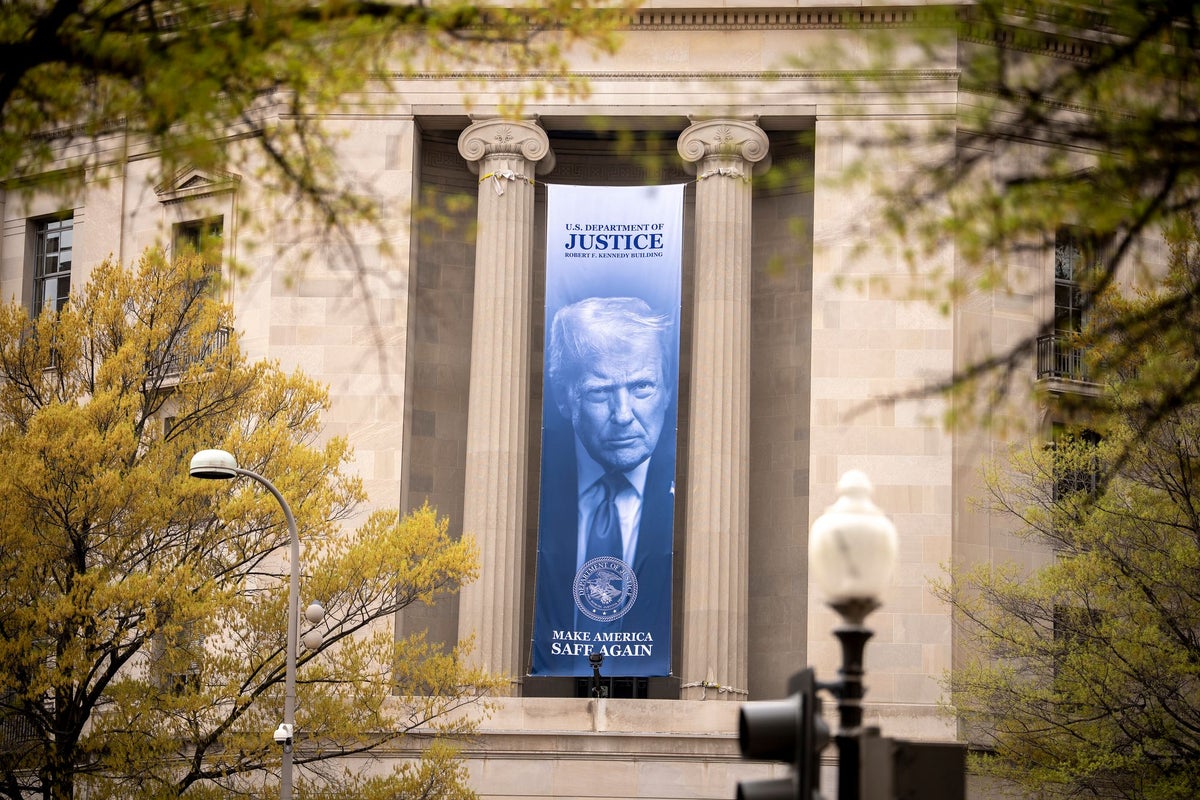
The media is having a collective meltdown over the Department of Justice announcing a $1.7 billion fund aimed at compensating individuals targeted in politically motivated congressional and federal investigations. The immediate, knee-jerk reaction from mainstream outlets has been entirely predictable: scream "slush fund," paint it as a corrupt payout to partisan allies, and move on.
They are missing the entire structural reality of how institutional law works.
This is not a partisan handout. It is an aggressive, overdue correction to a systemic flaw in American governance: the weaponization of the federal investigative apparatus without financial accountability. For decades, federal agencies and congressional committees have enjoyed total immunity while destroying the finances, reputations, and careers of private citizens and public servants alike. If a private corporation bankrupts you through a frivolous, bad-faith lawsuit, you can sue for malicious prosecution and abuse of process. If the federal government does it to score points before a midterm election, you get a polite handshake and a mountain of legal debt.
The corporate world calls this indemnification. The insurance world calls it risk mitigation. The legal world calls it tort reform. But because the current administration’s DOJ is implementing it, the pundit class calls it corruption.
Let us look past the partisan theater and dissect the actual mechanics of why this fund exists, why the corporate media’s narrative is legally illiterate, and why this framework will likely outlast the current administration.
The Financial Asymmetry of Federal Investigations
To understand why a fund like this is necessary, you have to understand the sheer financial violence of a federal investigation.
When the DOJ, the SEC, or a congressional committee issues a subpoena, they are backed by the unlimited resources of the United States Treasury. They have thousands of agents, forensic accountants, and lawyers on the payroll. They do not care about billable hours.
You, the target, must hire white-collar criminal defense attorneys. In Washington D.C. or New York, a competent defense partner costs anywhere from $1,200 to $2,500 an hour. A single response to a complex Subpoena Duces Tecum can easily require hundreds of hours of document review, privilege logging, and data production.
Imagine a scenario where a mid-level government official or a private contractor is swept up in a highly publicized congressional probe.
- Year 1: The target spends $400,000 on legal fees just to comply with discovery.
- Year 2: The target spends another $600,000 preparing for depositions and grand jury testimony.
- Year 3: The investigation is quietly dropped. No charges are filed. No wrongdoing is found.
The government walks away unscathed. The individual is left with a $1 million legal bill, a ruined credit score, and a un-Googleable name that prevents them from ever finding employment in their industry again.
I have watched executives and public servants lose their homes defending themselves against investigations that everyone in the room knew would lead absolutely nowhere. The process is the punishment. The $1.7 billion fund is the first structural attempt to shift that financial burden back onto the entity that caused the damage: the state.
Dismantling the Lazy Consensus
The primary argument against this fund is that it bypasses traditional judicial review and rewards political cronyism. Critics point to the Federal Tort Claims Act (FTCA) and argue that existing mechanisms already allow citizens to seek redress for government wrongdoing.
This argument is flatly wrong. It ignores the doctrine of sovereign immunity and the "discretionary function exception."
Under the FTCA, 28 U.S.C. § 2680(a), the federal government is completely immune from lawsuits based on a federal employee's performance or failure to perform a discretionary function. Prosecutors and investigators have almost absolute discretion when deciding whom to investigate, how to conduct the investigation, and when to bring charges. Case law is filled with instances where individuals were flagrantly targeted by federal agents, yet their lawsuits were thrown out because the court ruled the government's actions fell under "discretionary choice."
Furthermore, congressional committees operate under the absolute protection of the Speech or Debate Clause of the Constitution (Article I, Section 6, Clause 1). As established in landmark Supreme Court cases like Eastland v. United States Servicemen's Fund, the courts cannot hold members of Congress or their aides liable for actions taken within the "sphere of legitimate legislative activity." This means a congressional committee can intentionally leak your private financial records to the press, tank your company's stock, and force you into bankruptcy, and you have zero legal recourse.
The $1.7 billion fund does not bypass the law; it fills a massive statutory black hole where constitutional immunity shields government overreach from civil liability.
The Operational Mechanics: How It Actually Works
Despite the hysterical headlines suggesting that anyone with a MAGA hat can walk up to the DOJ and grab a duffel bag of cash, the operational reality of the fund requires a rigorous evidentiary standard.
The program mimics the structure of existing federal victims' compensation funds, such as the September 11th Victim Compensation Fund or the Vaccine Injury Compensation Program. To qualify for a payout, an applicant cannot merely claim they were "treated unfairly." They must clear three distinct hurdles:
- Demonstrable Financial Harm: Applicants must submit verified, itemized billing records from licensed legal counsel proving the direct financial cost of the investigation. Indirect economic damages, like lost future earnings, are strictly capped or excluded entirely to prevent speculative inflation of claims.
- Termination Without Conviction: The underlying investigation must have concluded with a formal declination of prosecution, a dismissal of all charges with prejudice, or a complete acquittal at trial. If an individual pled guilty to a minor misdemeanor to end the ordeal, they are disqualified.
- Evidence of Objective Irregularity: This is the highest hurdle. The applicant must demonstrate that the investigation deviated from standard operating procedures. This includes proving the existence of leaked grand jury material, verifiable political bias in internal communications (akin to the Peter Strzok-Lisa Page texts), or the use of falsified or unverified evidence to secure warrants.
+------------------------------------+
|       Applicant Submits Claim      |
+------------------------------------+
                  |
                  v
+------------------------------------+
|  Hurdle 1: Verified Legal Bills    | ---> No? -> CLAIM DENIED
+------------------------------------+
                  | Yes
                  v
+------------------------------------+
|  Hurdle 2: No Criminal Conviction   | ---> No? -> CLAIM DENIED
+------------------------------------+
                  | Yes
                  v
+------------------------------------+
| Hurdle 3: Objective Irregularity   | ---> No? -> CLAIM DENIED
+------------------------------------+
                  | Yes
                  v
+------------------------------------+
|        Compensation Awarded        |
+------------------------------------+
This is a highly structured, bureaucratic process managed by administrative law judges and independent special masters. It is designed to be cold, analytical, and metric-driven.
The Downside Nobody Wants to Admit
A truly honest assessment requires acknowledging the risks of this framework. The danger here is not that political allies will get rich; the danger is the creation of a moral hazard for white-collar defense firms.
When defense attorneys know that a federal fund exists to reimburse their fees, the incentive to negotiate an efficient, low-cost resolution disappears. Law firms will be incentivized to litigate every minor discovery dispute to the absolute maximum, running up massive bills with the expectation that the government will eventually foot the bill. The DOJ will need to enforce strict caps on billable hourly rates—pegged to standard Equal Access to Justice Act (EAJA) rates—to prevent the fund from becoming an involuntary subsidy for Big Law.
Additionally, this fund only addresses the symptoms, not the disease. Reimbursing someone after their life has been turned upside down for four years does not restore their mental health, their marriage, or their reputation. It is a financial band-aid on a structural bullet wound.
This is the Future of Institutional Accountability
The media wants you to believe this fund is a historical anomaly born out of pure political vengeance. The reality is that it represents the natural evolution of institutional accountability in a highly polarized era.
When the political pendulum swings—as it always does—the precedent set by this fund will not be dismantled by the opposing party. Instead, they will expand it. Future administrations will use this exact same framework to compensate their own constituents who feel targeted by the opposition's investigative committees.
The era of the cost-free federal investigation is over. By putting a literal price tag on government overreach, the DOJ has introduced a concept that Washington has resisted for a century: financial accountability for institutional warfare. If investigators have to start worrying about how their tactics will impact the agency's bottom line and trigger massive payouts, they might finally think twice before signing off on a fishing expedition. Stop viewing this through the narrow lens of the current election cycle and see it for what it truly is: a paradigm-destroying recalibration of state power.