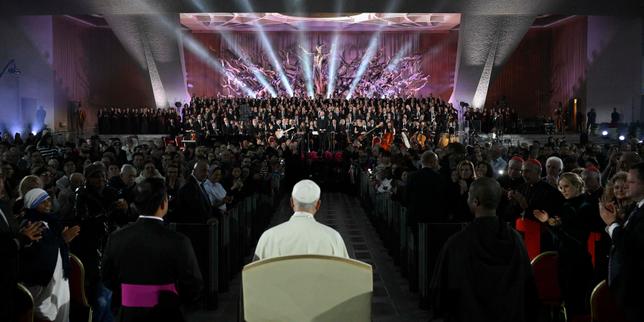
Pope Leo XIV steps onto French soil and immediately changes the room. Forget stiff diplomatic handshakes. Instead, we see an intentional nod to contemporary youth culture. Observers note his subtle incorporation of popular music references into his public itinerary. This isn't just a quirky personality trait. It is a calculated strategy to bridge a massive cultural gap between ancient tradition and modern secular youth.
When a religious leader leans into popular culture, skeptics cry gimmick. Yet, history tells a different story. The Vatican has always used the artistic medium of the moment to communicate its message. From Renaissance frescoes to broadcast television, adaptation is survival. Today, streaming playlists and pop stardom mechanics dictate cultural relevance. Pope Leo XIV understands this shift. By publicly acknowledging the emotional weight of mainstream music, he shifts the narrative from distant authority to shared human experience. Meanwhile, you can read other events here: The BBC Is Not Dying It Is Just Finally Running Out of Other Peoples Money.
Why Traditional Diplomacy Falls Flat With Younger Audiences
Traditional ecclesiastical diplomacy relies heavily on institutional gravity. Bishops speak in theological abstractions. Papal encyclicals address decades-long socio-economic trends with heavy prose. For a generation raised on TikTok algorithms and instant audio streams, this approach feels alien.
Young people in France live in a hyper-secularized society. Traditional religious structures often carry baggage or apathy. A papal visit risks becoming an echo chamber for the already faithful unless it breaks the mold. Bringing pop culture into the dialogue acts as a universal solvent. Music transcends language barriers and ideological divides. When a spiritual leader discusses contemporary artists, they signal cultural literacy. They prove they are paying attention to the world outside cathedral walls. To explore the full picture, we recommend the detailed report by Deadline.
Critics argue that sacred spaces should remain entirely separate from commercial entertainment. They worry about trivializing deep spiritual truths. However, ignoring contemporary culture creates a greater risk. Complete isolation turns an institution into a historical artifact rather than a living participant in society.
The Mechanics of Modern Papal PR
Public relations for the Holy See requires a delicate balance. Every public gesture undergoes intense scrutiny from global media outlets. When Pope Leo XIV highlights specific music tracks or youth-oriented cultural touchstones during his French tour, several objectives are met simultaneously.
- Humanization: It strips away the intimidating aura of absolute authority.
- Accessibility: It gives secular commentators a neutral entry point for discussion.
- Relevance: It positions the Church as a contemporary stakeholder rather than a relic.
Consider the parallels with past papal tours. John Paul II leaned heavily into athletic imagery and youth rallies. Benedict XVI emphasized intellectual rigor and theological depth. Pope Francis focused on grassroots activism and environmentalism. Pope Leo XIV is carving out his niche through cultural fluency. He recognizes that pop culture is the folklore of the twenty-first century.
Navigating the Secular Landscape of France
France presents a unique environment for any religious leader. The nation guards its principle of laïcité fiercely. Public expressions of faith operate under strict social boundaries. Any visit by the head of the Catholic Church demands immense tactical precision.
By engaging with popular culture rather than purely political or doctrinal talking points, the papal visit bypasses some traditional defensive walls. People who would never attend a mass might still catch a viral clip of the Pope discussing a popular song. That single moment punctures the indifference. It sparks curiosity. It opens a door that formal diplomatic channels keep securely locked.
This strategy does not dilute core messages. Instead, it acts as a trojan horse for empathy. Once an audience views a leader as culturally aware and approachable, they are far more likely to listen to harder truths about poverty, community, and ethics.
Looking at the Bigger Picture
We often underestimate the power of symbolic gestures in international relations. A Pope showing awareness of modern music trends isn't playing dress-up. He is acknowledging where people actually live. Culture isn't confined to museums and classical concert halls. It lives in the earbuds of millions of teenagers walking down the streets of Paris, Lyon, and Marseille.
The success of such a tour shouldn't be measured in immediate conversions. That metric belongs to a bygone era. Instead, success looks like changed perception. It looks like curiosity replacing cynicism.
Pay attention to how institutions adapt when their traditional audiences shrink. The ones that survive stop demanding that the world meet them on their terms. They step out into the noise, pick up the rhythm, and start a conversation where the audience actually is.