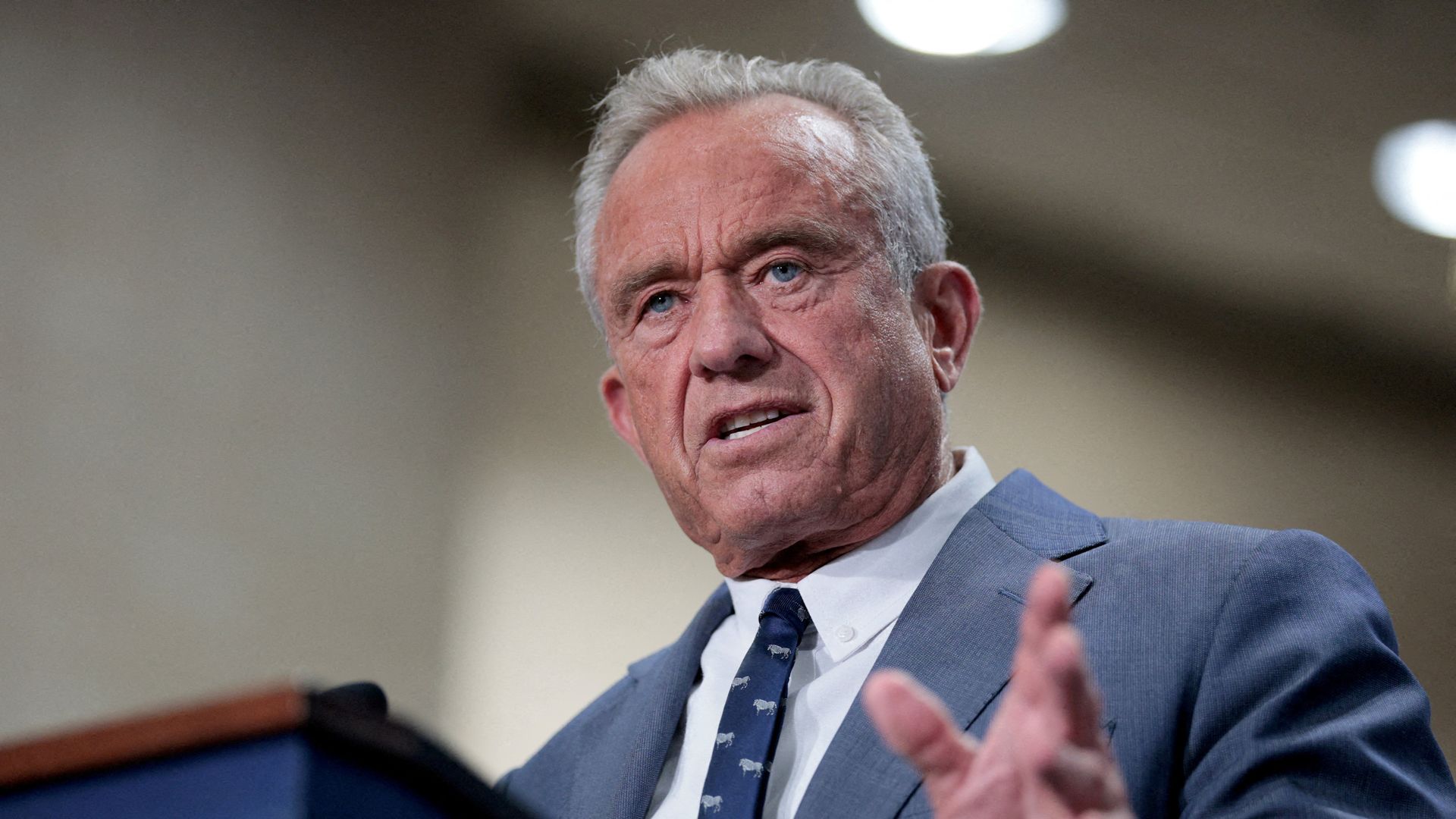
Public health discourse at the federal level operates through an institutional incentive structure where alignment between regulatory agencies and political constituencies dictates policy velocity. When rhetoric regarding vaccine safety shifts from traditional epidemiological consensus to populist skepticism, the mechanism driving this shift is not merely ideological; it represents a calculated realignment of institutional trust and stakeholder signaling.
The Structural Divergence of Regulatory Trust
Public trust in federal health institutions—such as the Food and Drug Administration and the Centers for Disease Control and Prevention—relies on an assumption of methodological neutrality. When political figures inside or adjacent to the executive branch openly question established immunization protocols, they exploit an existing vulnerability in this architecture: the perception of captured science. For a deeper dive into similar topics, we suggest: this related article.
To deconstruct this phenomenon, one must examine the cost function of public health messaging.
- The Consensus Model: Relies on top-down diffusion of guidelines, assuming high baseline compliance and minimal friction across state and local jurisdictions.
- The Populist Intermediary Model: Injects friction by reframing public health mandates as expressions of corporate and bureaucratic overreach, thereby substituting institutional authority with populist validation.
This divergence creates a fragmented information ecosystem. Communities that harbor historical or localized skepticism toward federal agencies receive external reinforcement from figures positioned within the apparatus of state power. The strategic objective behind signaling to vaccine-skeptical constituencies is coalition consolidation. By validating fringe or dissident viewpoints from a platform of institutional proximity, political actors convert generalized anti-establishment sentiment into a cohesive, mobilized voting bloc. For further details on this development, extensive coverage can also be found at NBC News.
The Mechanics of Institutional Alignment
When a high-profile surrogate or appointee signals ideological alignment with anti-vaccine advocacy groups, the impact reverberates across three distinct vectors: legislative prioritization, agency morale, and public compliance metrics.
[Political Signaling] ---> [Erosion of Baseline Compliance] ---> [Localized Outbreaks]
         |
         +---> [Regulatory Inertia] ---> [Erosion of Institutional Capital]
The primary consequence is the redistribution of institutional capital. Instead of deploying resources toward epidemiological monitoring and vaccine distribution efficiency, agencies must allocate administrative bandwidth to defensive communications, congressional oversight, and internal damage control. This operational drag reduces the overall efficacy of public health interventions.
Furthermore, the integration of dissident narratives into mainstream political discourse alters the risk-reward calculus for elected officials. Opposition to standard vaccine schedules ceases to be viewed as a fringe liability and becomes a viable differentiator in competitive electoral districts. This shift incentivizes the institutionalization of vaccine hesitancy, moving it from decentralized online forums into formal policy debates.
The Strategic Horizon
The intersection of populist politics and public health administration introduces permanent friction into federal intervention strategies. As long as public health messaging remains inextricably linked to partisan alignment, compliance rates will increasingly fracture along ideological lines rather than geographic or socioeconomic ones.
The immediate operational response from public health administrators must abandon the assumption of passive institutional authority. Rebuilding predictive models for disease outbreaks requires accounting for political polarization as a primary variable in epidemiological transmission vectors. Without factoring ideological signaling into outbreak forecasting, public health infrastructure will continually miscalculate the velocity and scale of preventable disease resurgence.