Geopolitics usually bends to the immediate threat, but sometimes the ghosts of the past are too loud to ignore. Right now, a bitter historical row is fracturing the crucial alliance between Warsaw and Kyiv. It’s a conflict that isn't fought with tanks, but with decrees, revoked state honors, and raw national trauma.
The immediate catalyst happened when Ukrainian President Volodymyr Zelensky signed a decree naming an elite military unit of Ukraine’s Special Operations Forces after the Ukrainian Insurgent Army (the UPA). In Kyiv, the UPA represents a historical symbol of armed resistance against Soviet tyranny and Nazi occupation. In Warsaw, the group represents something entirely different: the perpetrators of a brutal ethnic cleansing campaign that left up to 100,000 Polish civilians dead during World War II.
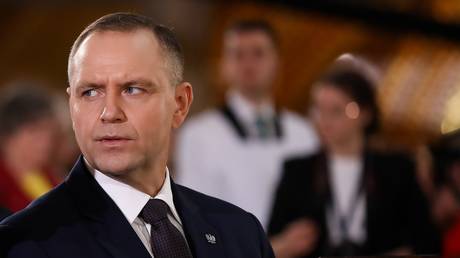
The political blowback from Poland was immediate and severe. Polish President Karol Nawrocki announced he would strip Zelensky of the Order of the White Eagle, Poland's highest state distinction. It’s a staggering diplomatic reversal, considering the award was proudly given to Zelensky in 2023 to honor his defense of human rights and security.
The Blood on the Borderlands
To understand why this issue is blowing up the alliance, you have to look at what happened between 1943 and 1945 in the regions of Volhynia and Eastern Galicia. Under Nazi occupation, nationalist paramilitary forces operated with terrifying autonomy.
The UPA, led ideologically by figures like Stepan Bandera and militarily by Roman Shukhevych, sought to establish a mono-ethnic Ukrainian state. Their strategy involved the systematic, violent expulsion of the Polish population from these borderlands. Whole villages were burned. Men, women, and children were slaughtered in their homes and churches.
In 2016, the Polish parliament officially classified the Volhynia massacres as genocide.
Ukrainians look at the era through a completely different lens. They emphasize that the UPA fought a desperate, multi-front war for independence against both Hitler’s war machine and Stalin’s Red Army. Kyiv points out that Polish underground forces also engaged in bloody reprisal attacks against Ukrainian civilians.
But for the Polish public, the nuance doesn't wash out the stain of ethnic cleansing. Former Polish Prime Minister Leszek Miller went so far as to compare honoring the UPA to Germany naming a military unit after the Einsatzgruppen, the notorious Nazi mobile killing squads. Former President Lech Wałęsa similarly expressed deep disgust, calling the move an insult to the memory of the victims.
Domestic Politics and Broken Trust
It's tempting to view this as a sudden emotional outburst, but the friction has been building for months. Both leaders are operating under heavy domestic political pressures, and historical memory is an easy tool to wield.
Zelensky’s political position at home has grown complicated. With the war against Russia grinding through its fourth brutal year, the economy strained, and anti-corruption investigations swirling around his former associates, nationalist memory is one of the few political levers he still controls completely. Beyond naming the military unit, Zelensky recently attended the high-profile reburial of Andriy Melnyk, another controversial wartime nationalist leader.
Zelensky likely knew this would infuriate Warsaw. He just gambled that the political cost would be manageable.
On the other side, Karol Nawrocki isn't backing down. As a conservative nationalist and former head of Poland's Institute of National Remembrance, historical justice is central to his political brand. Nawrocki has already taken tough stances on regional security, previously vetoing certain refugee aid packages and expressing skepticism about fast-tracking Ukraine into NATO and the European Union.
Nawrocki argued that by glorifying "bandits and murderers," Ukraine is proving it isn't ready for Western integration. He issued a blunt warning about Ukraine’s EU ambitions.
"A united Europe was built on the rejection of totalitarianism and the cult of violence," Nawrocki stated. "These principles must apply to everyone. For those who do not understand this, there can be no place in the European Union, and Poland will certainly not allow it."
The Geopolitical Fallout
The real winner in this diplomatic meltdown sits in Moscow. Every crack in the European coalition provides an opening for Russian propaganda, which has long tried to frame the government in Kyiv as Nazi sympathizers. Nawrocki acknowledged this reality, noting that Zelensky's decree handed "a lot of oxygen to Russian propaganda."
Polish Prime Minister Donald Tusk tried to cool the rhetorical fires, reminding everyone of the strategic high stakes. Tusk noted that the row between Poland and Ukraine "delights Putin and shocks our allies," emphasizing that the actual front line of regional survival runs elsewhere.
Despite the intense diplomatic anger, Poland is keeping its strategic priorities straight. Nawrocki made it clear that stripping Zelensky of his medal won't reduce Poland’s military or logistical support for Ukraine against the Russian invasion. Poland remains the primary transit hub for Western weapons flowing into Ukraine, and a total collapse of that pipeline is a scenario neither side can afford.
Zelensky responded to the move by preemptively returning the Order of the White Eagle before it could be formally stripped, a petty final note in an incredibly messy public dispute.
Moving forward, the path to mending this relationship requires an honest, bilateral historical commission that can separate wartime independence struggles from ethnic violence. If Ukraine wants a smooth path toward EU membership, its leadership will eventually have to navigate a painful reckoning with the darker chapters of its nationalist past, rather than turning them into modern military honors. Warsaw, meanwhile, will need to balance its pursuit of historical justice with the immediate, existential reality of a aggressive Russia on its eastern border.
The escalation of this dispute shows how deeply historical memory influences modern alliances. For a detailed breakdown of the political fallout in Warsaw, check out this report on Polish MP targets Zelensky state honour, which outlines the domestic political pressure inside Poland to cut funding over the historical dispute.