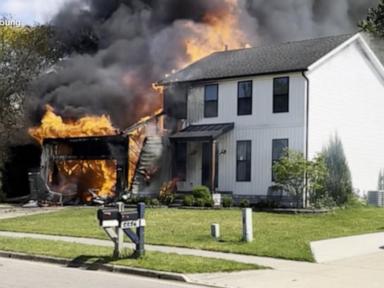
You are sitting on your couch, watching television or reading a book. Suddenly, the ceiling explodes. A private aircraft rips through your roof, bringing thousands of pounds of metal, aviation fuel, and chaos right into your living room. It sounds like a freak occurrence, the kind of rare disaster that only happens in movies.
It isn't. Aviation accidents in residential neighborhoods happen more often than you think.
When a pilot loses power or misjudges an approach to a local airfield, suburban backyards and rooftops become emergency runways. While the immediate focus of first responders rests on saving lives at the crash site, the homeowner is left standing on the sidewalk watching their life savings burn. The initial shock fades fast. Then the crushing reality of dealing with federal investigators, structural engineers, and insurance adjusters sets in.
Living through a plane crash into your home changes your perspective on safety, property rights, and the illusion of control. Here is what actually happens when the sky falls on your property, and how to survive the aftermath.
Surviving the First Forty Eight Hours After a Residential Plane Crash
The moments immediately following an impact are pure chaos. Your home is now a federal investigation scene, a hazardous material site, and a media circus all at once.
First responders will evacuate you and your neighbors. Aviation fuel poses an extreme risk. Aviation gasoline (Avgas) used in small piston-engine planes contains tetraethyl lead and burns incredibly hot. Jet fuel used in turborops is essentially high-grade kerosene that creates thick, toxic smoke. Even if the impact did not trigger an immediate explosion, the vapor cloud lingering in your shattered drywall can ignite from a single spark.
Do not expect to go back inside to grab your wallet, passports, or family heirlooms. The police will tape off your yard. You are officially locked out of your own life.
Within hours, representatives from the National Transportation Safety Board (NTSB) and the Federal Aviation Administration (FAA) will arrive. They run the show now. Local police and fire departments defer to them. The NTSB secures the wreckage to determine the probable cause of the accident, a process that takes months. They will document every piece of debris, examine the cockpit instruments, and eventually haul the wreckage away to a secure facility.
Until the NTSB releases the scene, your home remains frozen in time. You cannot start cleanup. You cannot put a tarp over the gaping hole in your roof. If it rains, your interior gets soaked. It is an infuriating, helpless feeling, but touching anything before federal clearance can compromise an active investigation.
The Insurance Nightmare Nobody Prepares You For
You probably assume your standard homeowner insurance policy covers this. It usually does. Most standard policies fall under the HO-3 form, which covers damage from aircraft under the falling objects provision.
The real problem is not coverage type. It is valuation and speed.
Your insurance company will not cut a check for a new house by next week. They will send an adjuster to look at the wreckage from outside the police line. Then the finger-pointing starts. Your insurer wants to mitigate their losses, so they will immediately look to subrogate the claim. This means they want to pay you out and then sue the pilot’s insurance company, the aircraft owner, or the charter corporation to get their money back.
Pilot insurance policies are vastly different from auto insurance. A private pilot flying a Cessna 172 might carry a smooth liability policy of $1 million, but many smaller policies have sub-limits. For example, a policy might cap property damage at $100,000 or limit payouts per passenger. If the plane destroyed a $500,000 suburban home and damaged two neighboring properties, that pilot's insurance pool empties out instantly.
You must advocate for yourself immediately.
- Demand an immediate cash advance from your insurer for loss of use. This covers hotel stays, clothes, and food while you are displaced.
- Document everything from behind the police line. Take photos of the exterior, the tail number of the aircraft if visible, and the surrounding debris.
- Hire a public adjuster if your insurance company drags its feet. A public adjuster works for you, not the insurance company, and takes a percentage of the settlement to maximize your payout.
- Do not sign anything from the pilot's legal team or insurance representatives without a lawyer. They want quick releases to cap their liability.
Structural Reality and Environmental Hazards
Even if the plane only clipped your roofline, the structural integrity of your house is compromised. The kinetic energy of a two-ton aircraft traveling at 70 miles per hour transfers directly into your framing.
Load-bearing walls shift. Foundations crack. Trusses splinter. A home that looks mostly intact from the street might actually be a total loss once a structural engineer examines the framing connections. You cannot trust a visual check by a standard contractor. You need a licensed forensic structural engineer to verify if the building is salvageable or requires a complete demolition.
Then comes the environmental cleanup. This is the hidden cost that shocks homeowners.
When aviation fuel seeps into your soil, your yard becomes a designated toxic waste site. Standard homeowners policies often have strict limits or total exclusions for land pollution and soil remediation. If three hundred gallons of fuel soaked into your front lawn, a specialized hazardous materials team must excavate the dirt, haul it away to a certified facility, and bring in clean fill dirt. This process can cost tens of thousands of dollars. If your policy excludes pollution cleanup, you must fight to get those funds directly from the aircraft owner's liability policy.
The Mental Toll of a Ruined Sanctuary
We view our homes as our ultimate safe zones. When that boundary is violated from above, the psychological impact hits hard.
Homeowners who survive these events often report a specific type of hypervigilance. Every time a commercial airliner flies overhead or a low-flying helicopter passes by, your heart rate spikes. The sound of a revving engine makes you tense up. It is a form of situational post-traumatic stress that turns your own property into a source of anxiety.
The media attention aggravates this stress. Local news stations will park broadcast trucks outside your house. Reporters will knock on your neighbors' doors asking for opinions. Drone footage of your ruined bedroom will broadcast on the evening news.
Set firm boundaries. You do not owe the public an interview. You do not need to explain how you feel to a reporter holding a microphone over your temporary fence. Focus your energy on your family, your legal representation, and your immediate physical needs.
Action Steps to Protect Your Rights After an Aviation Disaster
If you find yourself standing in your driveway watching emergency lights reflect off a fuselage wedged into your second story, take these steps to protect your future.
First, secure your displacement benefits. Call your homeowner insurance provider before you even book a hotel room. Tell them your home is uninhabitable due to an aircraft impact and demand an emergency funds transfer for immediate living expenses. Keep every single receipt for every meal, toothbrush, and night in a hotel room.
Second, establish contact with the NTSB investigator assigned to the case. They will provide an incident number. You need this number for every insurance claim, police report, and legal filing moving forward. The preliminary report usually goes live on the NTSB database within two weeks, which details the flight path, pilot credentials, and initial impact conditions.
Third, contact a specialized plaintiff's attorney who handles aviation law. General personal injury lawyers often lack the specific knowledge required to navigate the Federal Aviation Regulations (FARs) and the complexities of aviation insurance pools. You need someone who understands corporate aircraft ownership structures, maintenance logbook liabilities, and how to pressure aviation underwriters.
Do not wait for the system to take care of you. The federal government cares about why the plane crashed. The insurance companies care about their financial exposure. Only you care about rebuilding your life from the ground up. Take control of the process from day one, document every conversation, and prepare for a long fight to make your home whole again.