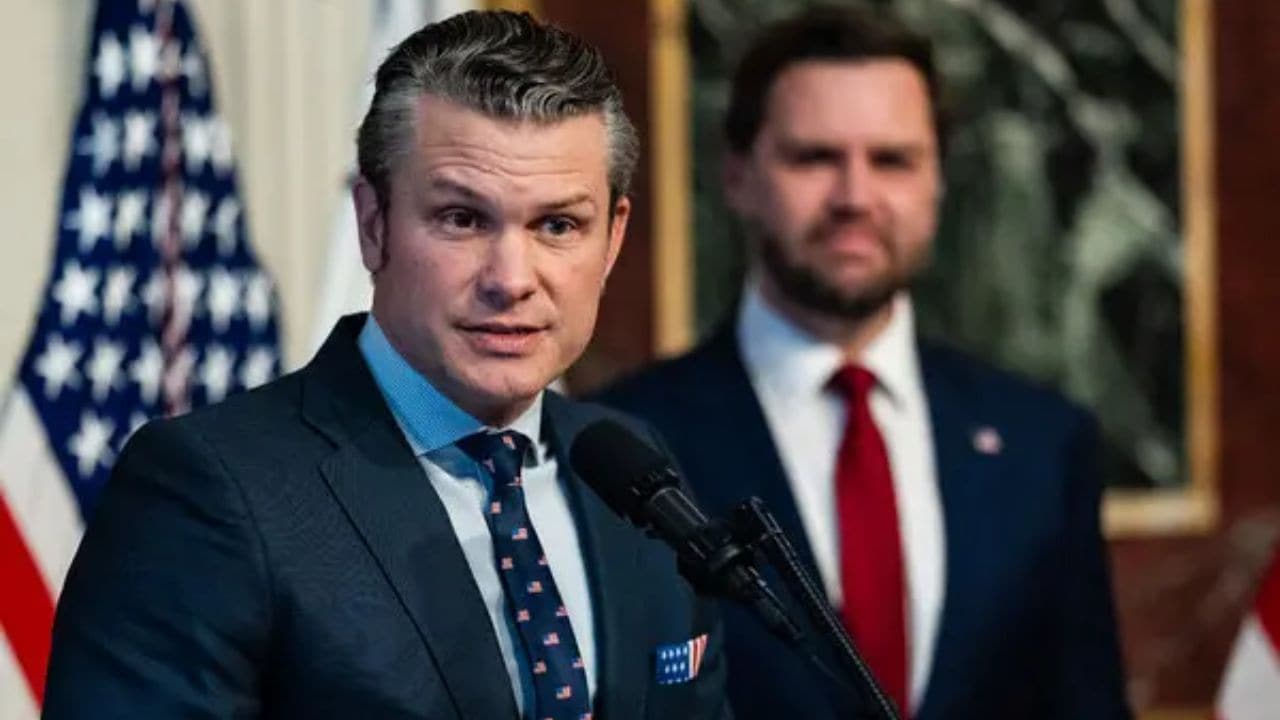
The days of polite, behind-the-scenes diplomatic wrist-slapping are officially over. US Defense Secretary Pete Hegseth just walked into NATO headquarters in Brussels and treated America's closest allies like underperforming regional managers facing a corporate audit.
Hegseth announced a sweeping, six-month Pentagon review of American force posture and basing in Europe. He didn't hide the intent behind it. The goal is to force European nations to take primary responsibility for their own conventional defense, stripping away the security blanket Washington has provided since the Cold War. In his own words, it is a test that "some countries will fail and others will pass with flying colors."
This isn't a vague threat. It is the tactical execution of the Trump administration's "NATO 3.0" doctrine, and it signals a fundamental restructuring of transatlantic security that will leave Europe exposed if it doesn't spend cash immediately.
The Extortion of NATO 3.0
For decades, European defense ministers relied on a comfortable routine. American officials would show up, grumble about the 2% GDP defense spending target, and then foot the bill anyway. Hegseth just broke that machine. The Pentagon has already started gutting its crisis-response pledges, telling allies it will no longer automatically provide an aircraft carrier, support ships, aerial refueling planes, or dozens of fighter jets during an emergency.
According to leaked military figures, the number of US F-15 and F-15E fighter jets available to NATO is dropping by a third to 99. Reaper drone allocations are being slashed in half to just 12.
Europe is panicking because replacing these highly specialized assets takes years, not weeks. You can't buy an integrated aerial refueling fleet on Amazon. Hegseth is leveraging this panic. He openly threatened to withhold US dues to NATO if "free-riding" nations don't pay up. The message is clear: if you don't build a hardline military capable of conventional deterrence on your own soil, the US footprint in your country will dry up.
The Shocking Iran War Grievance
The most brutal part of Hegseth's Brussels tirade wasn't about money. It was about payback.
He lambasted European allies for denying the US military basing and overflight rights during the recent war with Iran, a campaign dubbed Operation Epic Fury. Hegseth called their refusal to cooperate "shameful" and accused them of putting American soldiers at risk by forcing longer, more dangerous flight paths.
"These allies, they put America's sons and daughters, our sons and daughters, at risk by denying them the predictable access, basing and overflight that never should have been in question at all," Hegseth told the silent room.
🔗 Read more: The Political Theater of Beijing Presser Photo Ops
The upcoming six-month review will explicitly grade countries on whether they grant Washington unconditional military access when the US goes to war globally. If a country wants American troops protecting its eastern border from Russia, it must allow American bombers to use its airfields for conflicts in the Middle East or Asia. It's a transactional, quid-pro-quo approach to alliance management that ignores traditional diplomatic boundaries.
Ideological Warfare at Headquarters
Hegseth didn't stop at military hardware and airspace. He launched into a cultural critique of Western Europe that left diplomats visibly stunned. Echoing sentiments previously voiced by Vice President JD Vance, Hegseth claimed European nations had hollowed out their own societies by prioritizing progressive social policies over raw hard power.
Instead of buying tanks, fighters, and air defense systems, Hegseth argued that Europe focused on gender equity, climate change, and defense austerity. He claimed that wide-open borders and expanding welfare states cratered Europe's belief in its own civilization.
NATO leadership tried to put a brave face on the disaster. Secretary-General Mark Rutte pointed out that European allies and Canada increased defense spending by 20% over the last year, pouring an extra $90 billion into the pot. Most European nations have also drastically tightened their borders over the last decade. But facts mattered less than the political theater. Hegseth wanted a public shaming, and he delivered one before leaving early, flying back to Washington before Ukrainian President Volodymyr Zelenskyy even arrived to plead for weapons.
Washington's Real Target
The administration's aggression toward Europe isn't just about spite or isolationism. It's driven by cold math. The Pentagon is actively restructuring to fight a two-theater conflict, and its eyes are fixed firmly on China and the Indo-Pacific region.
General Alexus Grynkewich, NATO's top American commander, stated that the goal is to end an "unhealthy co-dependence" on US forces. Washington simply does not have the naval or aerial capacity to sustain a massive deterrent presence in Europe while simultaneously preparing for a high-intensity clash with Beijing.
The US nuclear umbrella will remain intact, backstopping the continent's ultimate survival. But when it comes to boots on the ground, tanks in the mud, and fighter jets patrolling the skies, the US is telling Europe that it is on its own. NATO's founding treaty contains Article 5, which states an attack on one is an attack on all, but it doesn't actually specify how a country must respond. The US is rewording its commitment: we will help you, but no longer with the massive conventional arsenal we used to bring.
European defense ministries must immediately adapt to this shift. Waiting for the Trump administration to moderate its tone is a losing strategy. Nations need to re-evaluate their domestic defense industrial bases, pivot funding away from legacy administrative costs, and directly procure the high-end enablers—like refueling tankers and long-range drones—that the US is pulling out of the theater. The audit has begun, and the Pentagon is holding all the cards.


