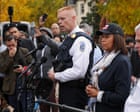
Everyone outside the Deep South thinks they already know how a statewide election in Mississippi ends before the polls even open. They look at the electoral maps from the last thirty years, see a solid wall of red, and write off any Democratic challenger as a sacrificial lamb. Then Scott Colom stepped up to the podium, claimed victory, and told the crowd, "I had the courage to believe in Mississippi."
That quote instantly blew up across national political feeds. Yet most pundits covering the live updates missed the actual mechanics of how we got here. You can't understand this upset by looking at standard cable news talking points. It wasn't a sudden ideological miracle, and Mississippi didn't wake up one morning and turn into Massachusetts. Instead, it was the result of a very specific, multi-year shift in prosecutorial politics, rural voter fatigue, and a candidate who refused to run from his own zip code.
Who Is Scott Colom and Why Did His Message Land
If you haven't followed Mississippi state politics closely, Scott Colom didn't materialize out of thin air for this U.S. Senate run. He built his reputation in the trenches of the state's 16th Circuit Court District, serving as the District Attorney for Lowndes, Oktibbeha, Clay, and Noxubee counties. That's a massive geographic footprint in the Golden Triangle region of east-central Mississippi, covering everything from Starkville—home to Mississippi State University—to deep rural agricultural communities.
Before becoming DA, Colom worked as a prosecutor in Columbus and served as a justice court judge. He wasn't a coastal activist or a D.C. transplant trying to lecture locals on how to live. When he campaigned, he talked like a guy who actually knew what happens at a county courthouse on a Tuesday morning.
Most Democratic candidates in red states make one fatal mistake. They spend half their energy apologizing for their party's national brand and the other half trying to sound like moderate Republicans. Voters hate that. They can smell the insecurity from a mile away, and given a choice between a real Republican and a watered-down imitation, they'll pick the original every single time.
Colom took the opposite route. He leaned directly into the idea that loving Mississippi means demanding better governance from the people running it. When he said he had the courage to believe in the state, he wasn't offering a cheesy Hallmark slogan. He was calling out a political establishment that had grown comfortable taking voters for granted while infrastructure crumbled and rural hospitals closed their doors.
The Structural Shift Behind the Historic Senate Win
Let's be honest about the math in Mississippi. For decades, elections in the Magnolia State have been heavily polarized along racial lines, with white voters backing Republicans at overwhelming margins and Black voters forming the backbone of the Democratic base. Because white voters hold a demographic majority in the state, Republicans maintained a reliable lock on statewide offices—including U.S. Senate seats held by figures like Cindy Hyde-Smith and Roger Wicker.
So how does a Democrat break through a ceiling that held firm for generations? You don't do it with one magic speech. You do it by changing three distinct variables on the ground.
First, turnout in the Black belt and urban centers like Jackson, Hattiesburg, and the Delta has to exceed presidential-year benchmarks. Historically, midterm and off-cycle drop-offs killed Democratic chances in Mississippi. Colom's team treated voter registration and ballot access like a year-round logistics operation rather than a frantic October scramble.
Second, you have to shave margins in suburban and college-town counties. Oktibbeha County, Lafayette County, and parts of DeSoto County near Memphis have seen demographic and economic shifts that make them far less predictable than they were in 2010. You don't need to win every rural county by twenty points if you're running up the score in university hubs and cutting Republican margins in the suburbs from thirty points down to twelve.
Third, candidate quality still matters when things get messy. Scandals, stagnant local economies, and frustration over state-level management—like the long-running fallout from the state's welfare spending controversies—created an opening for an outsider with clean credentials. As a prosecutor, Colom had a built-in shield against the lazy "soft on crime" attacks that usually sink Democrats in the South. It's hard to paint a sitting District Attorney as an anti-police radical when he's spent years putting violent offenders behind bars while simultaneously championing smart diversion programs for nonviolent youth.
Why National Pundits Constantly Misread Southern Elections
Watching national reporters try to decode Mississippi politics is always a little painful. They tend to view the entire South through a monochrome lens, assuming every voter between the Atlantic coast and the Texas border shares the exact same priorities.
Here's what the Beltway crowd usually gets wrong about places like Lowndes or Noxubee County:
- Economic populism isn't owned by one party. Rural Mississippians care deeply about healthcare access, public school funding, and agricultural stability. When rural hospitals shut down, nobody asks whether the emergency room was partisan. They just want to know why they have to drive ninety minutes to get stitches.
- Faith and community ties matter more than ideological labels. Colom understood how to speak the cultural language of the state without pandering. Having roots in the community—and a family history tied to civic and legal service in Mississippi—gave him credibility that no outside super PAC could buy.
- Nationalizing every race backfires. Voters in Mississippi are tired of being treated like pawns in a cable news shouting match. By keeping his focus relentlessly local—talking about jobs in the Golden Triangle, broadband access, and public safety—Colom forced his opponent to defend a concrete record rather than hide behind national culture-war talking points.
It's a lesson that political strategists in Washington constantly preach yet rarely follow. You can't run a cookie-cutter digital ad campaign designed in Brooklyn and expect it to move needles in Tupelo.
The Real Meaning Behind Having Courage to Believe in Mississippi
When a candidate says they had the courage to believe in their state, it sounds inspirational on a bumper sticker. Look closer, though, and it's actually a pretty sharp indictment of political fatalism.
For years, the biggest obstacle facing progressives and moderate reformers in Mississippi wasn't just the opposing party—it was resignation. Young people left the state after graduating from Ole Miss or Mississippi State because they assumed nothing would ever change. Donors refused to invest in local races because the polling models told them the return on investment was zero. Even dedicated local organizers burned out after watching promising campaigns stall out five points short of the finish line.
Breaking that psychological barrier is huge. History in Southern politics doesn't move in smooth, predictable lines; it stays frozen for decades and then cracks all at once. Think back to how quickly the political landscape shifted during the civil rights era, or how abruptly conservative realignment swept the region in the late twentieth century. Once voters realize an outcome isn't predetermined, the entire dynamic of future elections changes overnight.
Colom's background gave him a unique vantage point on this. Growing up as the son of Wilbur Colom, a prominent civil rights attorney and community leader in Columbus, Scott saw firsthand how legal and political battles in Mississippi are fought over the long haul. You don't win in the Deep South by expecting an easy ride. You win by showing up in counties other candidates ignore, listening to people who feel invisible, and refusing to concede a single precinct before the ballots are counted.
What Happens Now for Mississippi Politics and the Senate
Winning the race is one thing; governing from Washington while representing a deeply divided state is another beast entirely. Nobody should pretend that one historic election magically erases decades of political polarization in Mississippi.
Colom will step into the U.S. Senate facing immediate pressure from both sides. National Democrats will want him to fall in line on major legislative priorities, while conservative critics back home will scrutinize every single vote, committee assignment, and public statement for signs that he's "gone Washington."
To survive and actually deliver for the people who took a chance on him, he'll have to walk a tightrope that very few modern senators manage to balance. That means securing tangible federal investments for Mississippi infrastructure, protecting agricultural subsidies that keep Delta farmers afloat, and fighting for rural healthcare funding without getting dragged into pointless partisan theater.
For anyone watching American politics from the sidelines, the takeaway here is simple. Stop treating entire regions of the country as lost causes based on outdated electoral maps. Pay closer attention to local prosecutors, mayors, and state legislators who are quietly building coalitions in places the national media ignores. If you want to track where the next major political shockwaves are coming from, start looking at county-level turnout data and local news outlets in states everyone else has already written off.