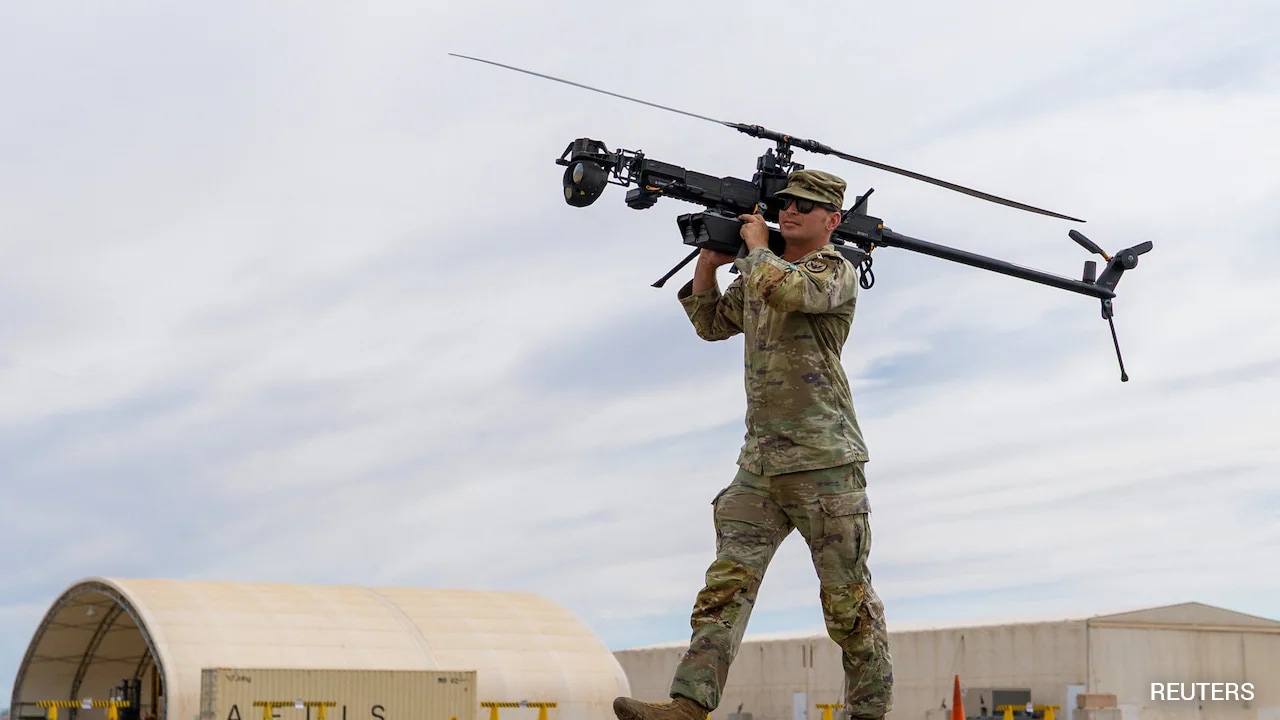
Most defense tech startups spend a decade burning through venture capital before they ever land a meaningful government contract. Powerus flipped that script entirely, turning a high-profile political nod into a $300 million drone business in record time.
If you've been watching the American drone industry lately, you know how messy it actually is. On one side, you've got massive legacy defense contractors charging millions for single aircraft. On the other, you've got cheap foreign hardware—mostly from Chinese manufacturers like DJI—that dominates commercial markets while triggering nonstop national security alarms in Washington. Right in the middle of that squeeze sits Powerus, a company that figured out how to turn political momentum and urgent military demand into serious valuation numbers.
People love to reduce this story to a simple headline about political favoritism or lucky timing. That's lazy analysis. While a shoutout from Donald Trump certainly acted as rocket fuel for brand awareness and investor interest, you don't build a $300 million enterprise on a passing mention alone. You get there by solving a massive supply chain bottleneck at the exact moment the Pentagon and commercial buyers are desperate for alternatives.
Why Powerus Exploded Onto The Scene
Let's look at the mechanics behind the hype. When a major political figure publicly highlights a domestic manufacturer, two things happen immediately. First, retail and institutional capital starts looking for ways to buy into the narrative. Second, procurement officers and commercial partners suddenly treat the company as a serious contender rather than a risky startup.
Powerus capitalized on this attention by positioning itself squarely inside the "Made in America" defense and industrial tech wave. For years, U.S. lawmakers have been pushing legislation—like the American Security Drone Act—to ban federal agencies from buying drones made in China. That created a giant vacuum. Thousands of police departments, infrastructure inspectors, and military units suddenly needed compliant hardware, and very few domestic companies could build at scale without charging exorbitant prices.
Here's what separates Powerus from the dozens of other startups chasing those same contracts:
- Speed to market over endless R&D. Instead of spending five years designing proprietary chips from scratch, they focused on rapid assembly, modular payloads, and software integration that works out of the box.
- Dual-use appeal. They didn't rely solely on slow-moving Pentagon bureaucracy. By targeting energy, agriculture, and public safety buyers simultaneously, they kept revenue flowing while waiting on larger defense deals.
- Narrative mastery. They understood that in modern defense tech, perception drives valuation. Aligning their brand with domestic manufacturing independence made them an easy story for investors to back.
Honestly, most founders in this space are engineers who hate talking to the press or dealing with politics. Powerus leaned into the spotlight instead of hiding from it.
The Reality Behind A $300 Million Valuation
Valuation numbers in private tech get thrown around like confetti, so it pays to look closely at what $300 million actually means in the drone sector. It doesn't mean Powerus has $300 million sitting in a checking account. It means investors are pricing the company based on forward revenue multiples, contract backlogs, and the assumption that domestic drone spending will keep climbing.
To put that number in perspective, look at competitors like Skydio or Red Cat Holdings. Skydio reached unicorn status by locking down major U.S. Army contracts and pivoting aggressively away from consumer drones toward enterprise and defense. Red Cat, a publicly traded peer, saw massive swings in its market cap purely based on Pentagon short-range reconnaissance contract awards.
Powerus sits in a sweet spot between early-stage startups and established mid-tier contractors. At $300 million, the company is big enough to survive supply chain shocks and fund serious manufacturing expansion, yet small enough to move faster than giants like AeroVironment or Northrop Grumman.
Still, there's a catch. High valuations create massive pressure to deliver hardware on tight deadlines. In the drone business, software demos are easy, while manufacturing thousands of reliable airframes with zero non-compliant foreign components is brutal. One delayed shipment or component audit failure can stall momentum overnight.
What Competitors Missed About The Domestic Drone Boom
If you talk to veteran aerospace executives, many of them initially dismissed the current wave of smaller drone companies. They assumed the big defense primes would simply acquire the best tech or underprice newcomers until they went bankrupt.
They misread the market completely. Modern warfare and industrial inspection don't require $10 million aircraft anymore. They require attritable, low-cost systems that operators can deploy in minutes and replace without an act of Congress.
The Supply Chain Trap
Building an NDAA-compliant drone—meaning it meets the strict sourcing rules of the National Defense Authorization Act—is way harder than it sounds. Even if you assemble a drone in Florida or Texas, where did the flight controller come from? What about the brushless motors, the camera sensors, or the lithium batteries?
For years, almost all of those sub-components flowed through Shenzhen. Companies that tried to build 100% American-sourced drones early on got crushed by unit costs that were three or four times higher than foreign equivalents. Powerus benefited from entering its growth phase just as domestic and allied component suppliers finally started reaching reasonable price points.
Political Tailwinds Are Real
Like it or not, defense and industrial tech are deeply political industries. When Donald Trump and allied policymakers emphasize reshoring manufacturing and cutting reliance on foreign supply chains, capital follows those signals. Investors know that federal grants, Defense Production Act funds, and state-level procurement budgets tend to flow toward companies that fit the prevailing political priority.
Powerus didn't invent this playbook. SpaceX, Palantir, and Anduril all mastered the art of navigating Washington while building commercial-style tech organizations. Powerus simply applied that same formula to the mid-market drone space.
What This Means If You Invest In Or Buy Drone Tech
Whether you're looking at Powerus as a potential partner, a competitor, or a case study in modern business growth, there are clear lessons you can apply right now.
If you're an enterprise buyer or public safety procurement lead, stop waiting for prices to drop back to 2019 levels. Cheap foreign drones are effectively dead for any organization that touches government funding or critical infrastructure. Lock in relationships with domestic suppliers like Powerus early, because manufacturing capacity is still tight and lead times stretch out fast whenever a major federal contract drops.
If you're watching the defense tech market as an investor or founder, pay attention to unit economics rather than flashy flight videos. A $300 million valuation only holds up if gross margins improve as production scales. Watch for concrete indicators like factory expansion announcements, repeat orders from existing municipal or military clients, and verified NDAA compliance audits.
Powerus proved that a well-timed political spotlight combined with aggressive positioning in a protected market can compress years of growth into months. Now comes the harder part—proving they can out-manufacture the competition when the headlines fade.


