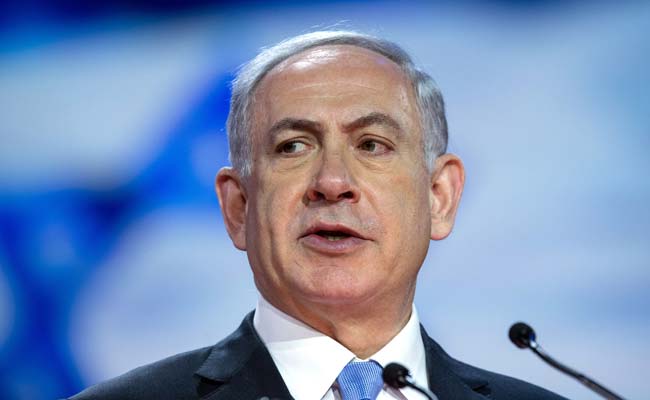
Benjamin Netanyahu knows how to control a news cycle before a single vote is even counted. When he leveled his "poll stolen" charge at Arab parties amid a fractured mandate, most international commentators treated it like a fresh, isolated outburst.
They missed the point entirely.
If you've followed Israeli coalition math over the past decade, you recognize this exact playbook. It isn't just angry rhetoric thrown out in the heat of an election night. It's a calculated political survival mechanism designed to do two things at once: delegitimize a potential opposition coalition before it can form, and scare right-wing voters into consolidated obedience.
Let's strip away the cable news noise and look at what's actually happening under the hood of Israel's parliamentary system.
Why the Fractured Mandate Makes Every Seat Lethal
Israel doesn't have winner-take-all districts. Voters cast ballots for party lists, and the 120 seats in the Knesset are distributed proportionally to any party that clears the 3.25% electoral threshold.
Sounds simple enough on paper. In practice, it creates a permanent state of legislative trench warfare.
To govern, a prime minister needs a coalition of at least 61 seats. When the electorate splits almost evenly between pro-Netanyahu and anti-Netanyahu blocs—which has happened repeatedly across Israel's consecutive election cycles—a swing of two or three seats changes everything.
Here's the math that keeps Likud strategists awake at night. Arab-majority parties, whether running together as the Joint List or separately as Ra'am (the United Arab List) and Hadash-Ta'al, typically command between 10 and 15 seats in the Knesset.
For decades, an unwritten rule governed Israeli politics. Zionist parties from both the left and the right refused to include Arab parties in a governing coalition. They stayed in the opposition. Their seats were functionally neutralized in coalition arithmetic, meaning the Jewish majority parties only needed to fight over the remaining 105 to 110 seats to hit that magic number of 61.
That taboo shattered when Mansour Abbas, leader of the Islamist Ra'am party, decided to play kingmaker. By joining the short-lived "change government" led by Naftali Bennett and Yair Lapid in 2021, Abbas proved that Arab parties didn't have to sit on the sidelines anymore.
Suddenly, those 10 to 15 seats were live ammunition. And Netanyahu realized that if Arab turnout surged, his path to 61 seats would vanish overnight.
The Anatomy of Netanyahu's Poll Stolen Charge
When Netanyahu accuses Arab parties or election monitors of stealing the vote, he's tapping into a very specific grievance among his base. You can trace the modern version of this tactic directly back to the 2015 election, when he famously warned supporters via video that "Arab voters are heading to the polling stations in droves," bused in by left-wing organizations.
It worked then, and Likud has refined the messaging ever since.
During subsequent election cycles, Likud operatives deployed hidden body cameras to polling stations in Arab towns, claiming they were trying to prevent widespread voter fraud. Israel's Central Elections Committee (CEC), chaired by a Supreme Court justice, banned the unauthorized cameras. The CEC and the Israel Police repeatedly investigated Likud's claims of systemic ballot stuffing in Arab communities.
What did they find? Isolated irregularities, the exact same kind of minor administrative errors that happen in Jewish municipalities every election day. No systemic fraud. No stolen polls.
Yet the accusation sticks because it exploits a deeper ideological divide inside Israel.
The Legitimacy Question
To understand why the phrase "poll stolen" resonates with right-wing voters, you have to understand how they view the state. Many Likud and Religious Zionist voters believe that decisions regarding Israel's security, borders, and identity as a Jewish state should only be made by a "Jewish majority."
In their view, if a center-left bloc only reaches 61 seats by relying on Arab parties—some of whom identify as anti-Zionist or vocal critics of Israeli military operations—that government lacks moral legitimacy. Even if it's 100% legal under Israeli Basic Law.
Netanyahu blurs the line between political illegitimacy and literal electoral fraud. By using words like "stolen," he transforms a standard parliamentary maneuver into a criminal conspiracy.
Honestly, it's brilliant political framing, even if the factual basis doesn't hold up under scrutiny. It puts his opponents on the defensive immediately. Instead of debating inflation, housing costs, or judicial reform, opposition leaders spend days explaining why Arab citizens voting in high numbers isn't a crime.
What Happens Inside Arab Communities When Turnout Drops
While Netanyahu shouts about stolen polls, the reality on the ground in cities like Nazareth, Umm al-Fahm, and Rahat is usually the exact opposite. Arab voter turnout is notoriously volatile, and it frequently lags well behind the national average.
Why? Frustration. Plain and simple.
Arab citizens make up roughly 21% of Israel's population. If they voted at the same rate as Jewish Israelis, they would easily hold 20 or more seats in the Knesset. Instead, voter apathy regularly hands the right-wing bloc a massive structural advantage.
When turnout in Arab towns drops below 50%—as it did in March 2021 when it hit a historic low of 44.6%—it shrinks the anti-Netanyahu bloc's ceiling. Fewer Arab votes mean fewer Arab seats. Fewer Arab seats mean the 3.25% threshold becomes a graveyard for smaller parties, wasting tens of thousands of anti-Netanyahu ballots.
Think about that irony for a second.
Netanyahu's rhetoric paints Arab voters as a hyper-organized machine stealing elections. Meanwhile, Arab politicians are begging their own constituents just to walk down the street and cast a ballot.
The Split Between Ra'am and Hadash-Ta'al
The fractured mandate isn't just a problem between Jews and Arabs; it's tearing Arab politics apart from the inside. You can't look at Arab parties as a single monolith anymore.
- Mansour Abbas and Ra'am take a pragmatic, conservative approach. They focus on bread-and-butter issues: municipal budgets, housing permits, and fighting violent crime in Arab towns. Abbas is willing to sit with almost anyone—including Netanyahu, whom he quietly negotiated with before joining Bennett and Lapid—if it brings resources back to his voters.
- Ayman Odeh and Ahmad Tibi (Hadash-Ta'al) take a much harder ideological line. They refuse to join any Zionist coalition that continues the military occupation of the West Bank, preferring to push for structural equality and Palestinian statehood from the opposition benches.
- Balad, the Palestinian nationalist party, rejects the framework of Israel as a Jewish state entirely. When Balad runs independently and fails to clear the 3.25% threshold, those burned votes directly hand extra seats to Likud and its far-right allies.
When Netanyahu attacks "the Arab parties" as a single block stealing the mandate, he deliberately erases these massive internal divisions. It's much easier to rally your base against a unified phantom enemy than to explain the granular policy disagreements between an Islamist pragmatist and a secular Arab socialist.
How the Electoral Threshold Magnifies Every Accusation
If you want to understand why Israeli elections feel like high-wire acts without a net, look at the 3.25% threshold. Back in 2014, the Knesset raised the minimum vote share required to enter parliament from 2% to 3.25%—ironically, at the urging of right-wing politician Avigdor Lieberman, who wanted to weaken small Arab factions.
It backfired spectacularly on everyone.
Because the threshold is so high, a party needs roughly 140,000 to 150,000 votes just to get four seats. If a party gets 3.1% of the vote, they get zero seats. Those 140,000 ballots are simply thrown in the trash, and the remaining parties divide up the seats proportionally.
This creates a hair-trigger environment where a tiny shift in turnout completely alters the Knesset map.
- The Surplus Vote Agreements: Israeli parties sign "Bader-Ofer" agreements before the election to share leftover votes that aren't enough for a full seat. If one partner fails to clear the threshold, the surplus agreement collapses, costing the bloc a crucial 61st seat.
- The Precinct Panic: On election night, when the first exit polls come out showing a 60-60 deadlock, every single ballot box in remote areas suddenly becomes front-page news.
- The Delegation of Blame: If a party falls short by a few thousand votes, blaming "irregularities" in Arab precincts is the fastest way to keep disappointed supporters mobilized for the post-election coalition talks.
I've watched this play out in real time during vote counts. The Central Elections Committee counts "double envelopes"—ballots cast by soldiers, diplomats, hospital patients, and prisoners—last. Those final 400,000 or so votes take two days to tally. During that window, politicians flood the airwaves with claims of stolen mandates to shape the narrative before the final numbers are certified by the president.
The Role of the Central Elections Committee
People outside Israel often assume the prime minister or the interior ministry runs the elections. They don't.
Israel's elections are administered by the Central Elections Committee, an independent body staffed by representatives of the current Knesset parties—meaning Likud, Yesh Atid, Shas, and the Arab parties all have eyes on the process—and chaired by a sitting Supreme Court justice.
Every polling station is staffed by a committee composed of representatives from rival political parties. For a ballot box to be "stolen" on a systemic level, representatives from Likud, Labor, Shas, and Ra'am sitting at the exact same table would all have to conspire together to fake the count.
Does petty fraud happen? Occasionally. A local activist might try to stuff a few envelopes in a poorly monitored rural station, or an identity card might be misused. When that happens, the CEC invalidates the specific ballot box and hands the file to the police.
In recent cycles, the CEC also introduced "purity of elections" inspectors equipped with cameras specifically authorized by the committee to monitor high-risk stations. That completely neutralized the excuse that party activists needed to bring their own covert recording gear.
Yet the "poll stolen" narrative survives because it isn't actually about ballot boxes. It's about power.
What You Should Watch for Next
If you're tracking Israeli politics right now, stop getting distracted by the daily shouting matches over polling station cameras or accusations of stolen mandates. Those are smokescreens.
Instead, keep your eyes on three concrete metrics that actually decide who sits in the prime minister's chair:
- Arab turnout percentage at 4:00 PM on election day: The CEC releases turnout updates every two hours. If Arab turnout is tracking below 45% by late afternoon, Netanyahu's bloc is almost guaranteed a structural advantage, regardless of what he says on television. If it pushes past 55%, the anti-Netanyahu bloc has a realistic shot at blocking him.
- The fate of parties hovering near 3.25%: Watch the final polls for Balad on the Arab side and smaller nationalist or left-wing factions on the Jewish side. The bloc that wastes fewer votes below the threshold wins the mandate.
- President's consultations after certification: Once the final results are handed to the President of Israel, party leaders have to publicly recommend a candidate for prime minister. Watch whether Arab factions actually recommend an opposition leader or abstain—abstaining effectively lowers the bar for a right-wing majority without them ever casting a vote for Netanyahu.
Don't fall for the noise about rigged ballot boxes. Watch the turnout numbers, track the threshold math, and pay attention to who actually shows up to recommend a candidate when the dust settles.


