The margins between a shaky diplomatic breakthrough and a catastrophic regional war are thinner than anyone wants to admit. While public headlines highlight sudden troop movements and dramatic pronouncements of imminent peace deals, the reality behind closed doors tells a far more perilous story.
We recently witnessed just how close the world came to a massive, uncontrollable escalation. Also making headlines recently: The Mechanics of Cultural Assimilation: Deconstructing Early-Stage Institutionalization in Tibet.
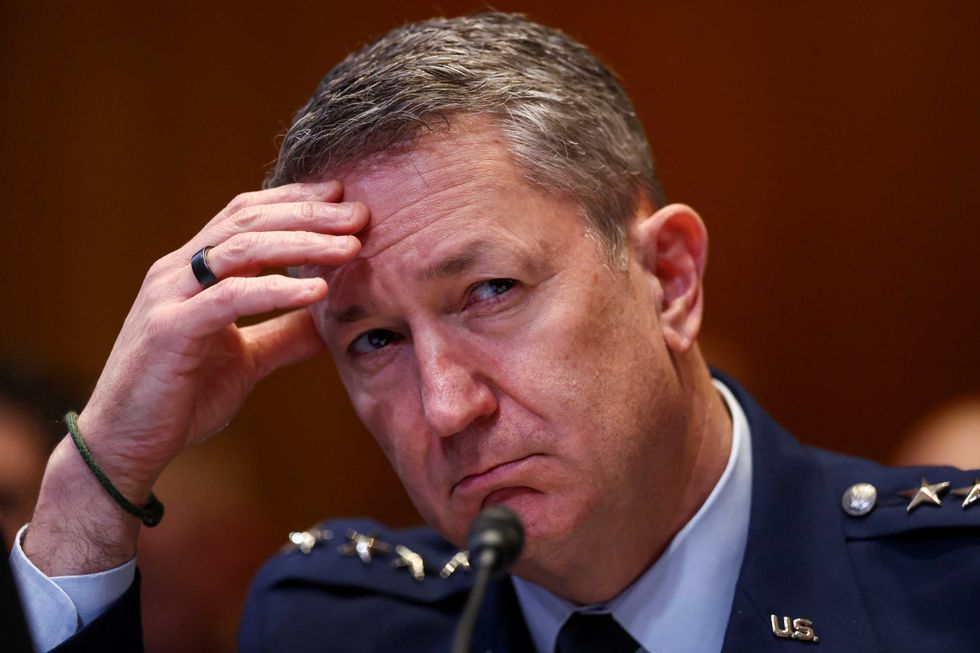
Gen. Dan Caine, the Chairman of the Joint Chiefs of Staff, made a frantic, unannounced trip to the US Central Command headquarters in Tampa, Florida. He didn't just hop on a scheduled flight. Caine literally rushed out of a high-level NATO summit in Brussels, crossing the Atlantic in a hurry to review highly sensitive, advanced military plans.
The objective? A rushed ground operation inside Iran to forcibly seize its stockpile of highly enriched uranium. Additional details into this topic are explored by NBC News.
While political leaders project confidence about ongoing negotiations, the military has been quietly preparing for the ultimate worst-case scenario. This sudden scramble by the Pentagon's top brass proves that despite the talk of a breakthrough, the threat of an all-out explosion in the Middle East is terrifyingly real.
The Secret Scramble for Iran's Uranium
The sheer urgency of Caine's sudden travel schedule reveals the true anxiety gripping military planners. You don't abandon top European allies mid-meeting unless a crisis is brewing. Central Command had been ordered to finalize a plan to send American special operators directly into hostile Iranian territory.
The goal was straightforward but staggeringly dangerous: find, secure, and extract Iran's weapons-grade nuclear material before it could be weaponized or hidden deeper underground.
For months, the White House has danced on a razor's edge. On one hand, there is a public push to finalize an agreement that would reopen the strategic Strait of Hormuz and dismantle Iran's nuclear infrastructure. On the other hand, the military reality forced commanders to draw up plans ranked between "High" and "Extreme" on the Pentagon's acceptable risk scale.
An operation like this isn't a clean, surgical strike. It requires hundreds of elite special forces to drop into a heavily fortified sovereign nation.
Intelligence briefs indicate that the highly enriched uranium is stored in gaseous form within deep, booby-trapped underground tunnel complexes. Nuclear experts are deeply skeptical that a sudden ground assault could safely locate, verify, and remove volatile chemical compounds under heavy fire.
If American boots hit the ground to raid those facilities, the result wouldn't just be an exchange of airstrikes. It would be an immediate, bloody transformation of the conflict into a full-scale ground war.
The Mirage of a Peace Deal
The timing of this secret military rush clashes sharply with the political theater coming out of Washington. President Trump has repeatedly claimed that a massive settlement with Iran is "largely negotiated" and could be signed over a weekend in Europe. The proposed terms look great on paper:
- The complete destruction and removal of Iran's highly enriched uranium.
- The total reopening of the Strait of Hormuz to international shipping.
- A permanent halt to Iranian regional aggression.
But don't let the optimistic rhetoric fool you. Iran's negotiators have publicly pushed back, warning that nothing is finalized and accusing the US of trying to force a lopsided protection racket.
This diplomatic friction is playing out against a backdrop of active violence. Just days ago, an Iranian drone downed a US Army AH-64 Apache gunship off the coast of Oman. The response was a wave of American airstrikes targeting Iranian air defenses, communication nodes, and surveillance sites.
Every time a political figure claims peace is around the corner, the underlying friction triggers another cycle of explosions. The Pentagon didn't draw up the uranium seizure plan as an intellectual exercise. They did it because they realized the diplomatic track could fall apart at any second.
Kharg Island and the Strategic Endgame
The proposed ground raid to grab uranium isn't the only high-stakes option that has been sitting on the president's desk. High-level discussions have also centered on an aggressive plan to capture or completely destroy Kharg Island.
Located in the Persian Gulf, Kharg Island is the beating heart of Iran's oil export infrastructure. It's basically the economic lifeblood of the entire regime.
Taking out Kharg Island would instantly bankrupt Iran, destroying its ability to fund its military or its regional proxy networks. Prominent political voices, like Senator Lindsey Graham, have championed this move as the ultimate way to regain absolute leverage over Tehran.
Yet, the Pentagon has repeatedly urged caution. Capturing the island would require a massive amphibious invasion, a permanent occupation force, and would almost certainly result in heavy American casualties.
More importantly, the economic blowback would be global. If Iran feels its survival is directly threatened, it still holds the ultimate wildcard: the complete disruption of global energy corridors.
The closure of the Bab-al-Mandab strait and the total blockading of the Strait of Hormuz would spark an unprecedented global energy shock. Oil prices, already volatile, would skyrocket instantly, dragging the Western economy into a massive recession.
Reading Between the Lines
What does this tell us about where the conflict actually stands? It means the current status quo is completely unsustainable. We are looking at a situation where a single miscalculation, an anxious commander, or a stray missile will trigger an escalation that no one can walk back.
The fact that the Chairman of the Joint Chiefs had to personally fly across the ocean to review ground invasion plans shows that the military has zero faith in empty political promises. They know that a piece of paper signed in Europe won't automatically neutralize the threat on the ground.
If you want to understand where this crisis is headed, look past the press conferences. Stop focusing on the optimistic statements designed to calm the stock market. Instead, keep your eyes on the logistics, the emergency deployments, and the sudden movements of top generals. The true story isn't found in what politicians say they want to happen—it's written in the extreme measures the military is actively preparing to execute.


