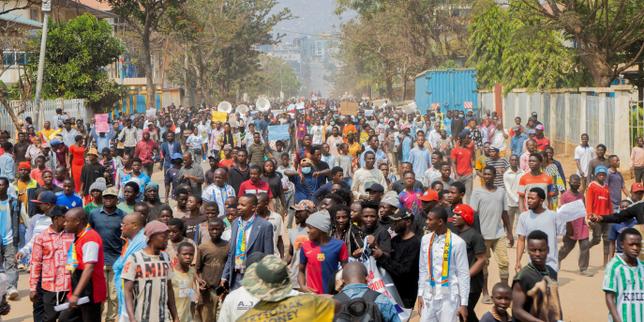
Another piece of paper signed in a luxury hotel. Another high-flown press release about a newly minted roadmap for peace between Kinshasa and the M23 insurgency. The standard international commentariat claps politely, hails a diplomatic triumph, and immediately ignores the structural mechanics keeping the region ablaze.
Stop pretending these summits alter ground realities.
For decades, international mediators and regional capitals have recycled the exact same script. They assemble delegations, force handshakes for the cameras, draft dense security protocols, and label it progress. Meanwhile, the actual incentives driving the conflict remain completely untouched. If a peace process relies on the goodwill of actors whose entire political and economic survival depends on instability, that roadmap is not a solution. It is a suicide pact disguised as statesmanship.
I have watched billions in international aid and countless hours of diplomatic theater burn through Central Africa while institutional actors refuse to diagnose the real disease. The conventional analysis frames the M23 crisis as a simple territorial dispute or an isolated ethnic rebellion. That narrative is lazy, comforting, and dangerously wrong.
The Economics of Permanent Disorder
Let us define the actual architecture of this conflict. This is not an ideological civil war. It is a violent corporate restructuring of mineral supply chains.
The eastern provinces of the Democratic Republic of Congo sit atop some of the richest deposits of coltan, cobalt, gold, and tin on earth. In a functional state with a monopoly on violence, extraction is taxed, regulated, and funneled through national treasuries. But the Congolese state has never possessed administrative reach across its vast eastern frontier. Into that vacuum steps a hyper-lucrative gray market.
Paramilitary groups, corrupt military brass, and external proxy networks do not fight for ideological supremacy. They fight for logistically sound smuggling routes.
When a roadmap proposes immediate demobilization without addressing the parallel economy of artisanal mining and cross-border mineral laundering, it demands that warlords voluntarily trade millions of dollars in untraceable cash flow for vague promises of integration into a dysfunctional national army. Expecting a heavily armed commander to surrender his revenue streams because a mediator used diplomatic language is economic illiteracy.
Imagine a scenario where corporate executives are asked to liquidate their entire company for a handshake and a certificate of good citizenship. They would laugh you out of the boardroom. Yet diplomatic envoys expect armed syndicates to do precisely that every single time a new round of talks convenes in Luanda or Nairobi.
Dismantling the Sovereignty Myth
The second major flaw in the standard narrative is the obsession with the territorial integrity of the Congolese state as a functioning administrative entity.
International law treats all recognized borders as sacrosanct. Realpolitik treats them as lines drawn by colonial cartographers that bear zero relation to ethnic realities, trade corridors, or security zones. Kinshasa treats the east as a distant frontier to be exploited or contained, while neighboring states view it as a necessary security buffer and an open-air extraction zone.
When the Congolese government signs a peace roadmap, its primary objective is rarely sustainable governance. It is domestic political survival. A peace deal allows Kinshasa to project strength to an exhausted domestic electorate, buy time for military rearmament, and deflect international pressure about corruption and human rights abuses. The rebels use the exact same pause to rotate troops, secure new supply lines, and rebrand.
Both sides treat the roadmap as a tactical pause in an ongoing war of attrition, not the end of hostilities.
The High Cost of Diplomatic Denial
The downside of maintaining this polite fiction is catastrophic. Every failed peace deal deepens the humanitarian emergency on the ground, displacing hundreds of thousands of civilians who become perpetual pawns in a cynical geopolitical game. When the international community validates sham agreements, it shields regional power brokers from accountability.
Real solutions require brutal honesty. You cannot negotiate a lasting settlement with entities whose existence is sustained by the absence of law.
True reform in the Kivus will not emerge from another high-level summit brokered by foreign diplomats who fly in for forty-eight hours and leave before the ink dries. It requires hard economic enforcement: tracking mineral supply chains with absolute transparency, sanctioning the financial networks that fund illicit extraction, and dismantling the cross-border smuggling ecosystem that makes insurgency profitable.
Until the international community stops rewarding performance art and starts targeting the balance sheets of the men with guns, every new roadmap is just another worthless souvenir.
Stop reading the press releases. Follow the money.


,webp/011/949/559/1280x720.6.jpg)