Inside a windowless room in Whitehall, the air smells of stale coffee and the ozone tang of high-end servers. A civil servant—let’s call him Arthur—stares at a spreadsheet that should be a blueprint for a new era of global security. Instead, it looks like a ledger of missed opportunities. Arthur isn't a soldier, but he knows that the ink on the AUKUS pact is drying into a pattern of cracks.
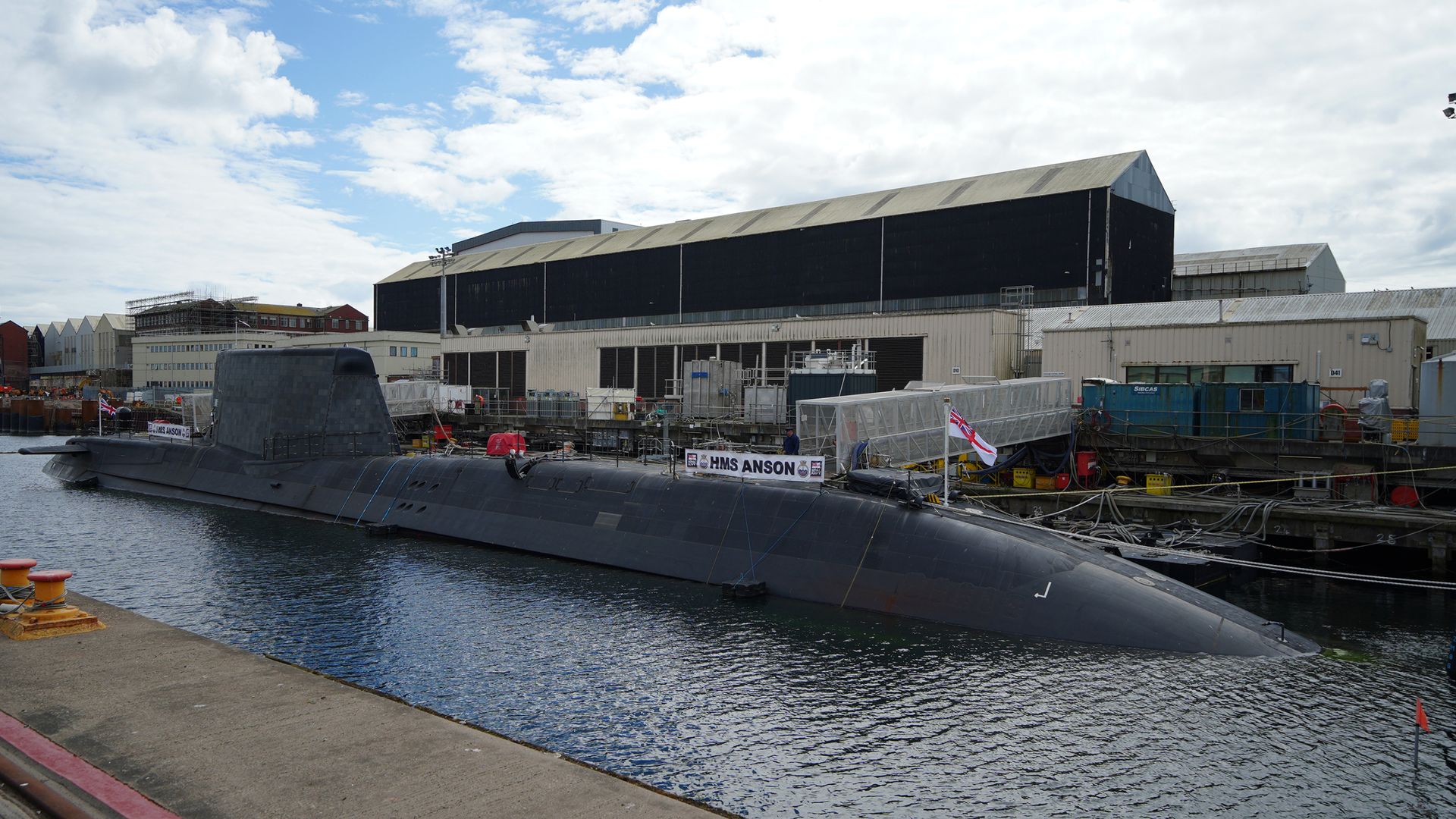
The promise was simple. Three nations—the United Kingdom, the United States, and Australia—would forge a bond so tight that no adversary would dare test it. They called it a "landmark" deal. It was supposed to be about nuclear-powered submarines and a shared technological edge in AI and quantum computing. It was meant to be a wall of steel around the democratic world.
But walls are only as strong as the mortar holding them together. Right now, that mortar is crumbling under the weight of bureaucratic inertia and a staggering lack of industrial urgency.
The Friction of Sovereignty
AUKUS is split into two "Pillars." Pillar I is the big, shiny hardware: the submarines. Pillar II is the invisible stuff: cyber capabilities, undersea drones, and hypersonic missiles. While the submarines get the headlines, the invisible tech is where the immediate battle is being lost.
The problem isn't a lack of brilliance. British labs are humming with ideas that could change the nature of modern conflict. The problem is a concept called ITAR—International Traffic in Arms Regulations. It is a thicket of American export controls designed during the Cold War to keep secrets safe. Today, it acts as a digital chokehold.
Consider a hypothetical engineer in a garage in Bristol. She develops a sensor that can detect a submarine’s wake from miles away using quantum gravity. Under the current friction, sharing that data with an Australian counterpart involves months of vetting, thousands of pages of compliance, and a legal bill that would bankrate a small country. By the time the paperwork clears, the "cutting-edge" tech is yesterday’s news.
We are trying to fight a lightning-fast digital war with the speed of a Victorian post office.
A Factory Without a Floor
Move from the labs to the shipyard. The UK’s defense infrastructure is tired. For decades, the mantra was "efficiency," which is often just a polite word for "cutting things until they break." Now, we are asked to build the most complex machines in human history on a timeline that borders on the miraculous.
The workforce is greying. The master welders and nuclear technicians who understand the soul of a hull are eyeing retirement. Behind them, the pipeline is a trickle. We talk about high-tech jobs, yet we haven’t built the social or educational machinery to produce the people who actually turn the wrenches.
It is easy for a politician to sign a treaty in a well-lit atrium. It is much harder to convince a twenty-year-old in Barrow-in-Furness that their future lies in the cramped, oily belly of a sub-assembly rather than a sleek tech startup in London. Without those hands, the pact is just a very expensive piece of stationery.
The Cost of Hesitation
The numbers are dizzying. We are looking at a commitment that spans decades and hundreds of billions of pounds. But the "failures" being whispered about in the corridors of power aren't just about money. They are about trust.
Australia took a massive geopolitical gamble by canceling a French submarine contract to join AUKUS. They burned bridges because they believed the Anglo-American alliance offered a superior shield. If the UK cannot meet its production targets, or if the US Congress remains paralyzed by protectionist instincts, Australia is left holding a check for a ship that may never sail.
This isn't just a "defense" issue. It's a credibility crisis.
If we cannot cooperate with our closest allies—nations that share our language, our legal systems, and our history—how can we hope to lead on the global stage? The failure to streamline these processes suggests we are more afraid of our friends seeing our blueprints than we are of our enemies winning the race.
Beyond the Steel
The stakes are often framed in terms of "deterrence," a cold, academic word. Let's make it warmer. Deterrence is the reason your children don't have to learn the geography of a frontline. It is the silence of a sea where no shots are fired.
When a pact like AUKUS falters, it sends a signal. It tells the world that the West is too tangled in its own red tape to move. It suggests that our industrial base is a ghost of its former self, capable of imagining great things but unable to forge them in fire and steel.
The fix isn't another committee. It isn't a new "framework" or a "strategic review." It is a fundamental shift in how we view the border between a laboratory and a battlefield. It requires the US to trust its partners with the "crown jewels" of technology, and it requires the UK to treat its industrial capacity not as a legacy to be managed, but as a vital organ that is currently failing.
Arthur, back in that windowless room, closes his laptop. He knows that the ghost of the pact is haunting the halls of Westminster. The "failures" aren't inevitable, but they are becoming the default.
We are currently building a paper shield in an age of hypersonic arrows. The tragedy isn't that we don't have the tools to fix it; the tragedy is that we are still arguing over who is allowed to hold the hammer.